
When: 5 November, 15:00–16:00
Where: Linxs @ the Loop (Rydbergs torg 4, Lund, tram stop “ESS”) and via Zoom.
Title: From the Big Bang to ESS BOT – a history of neutron scattering
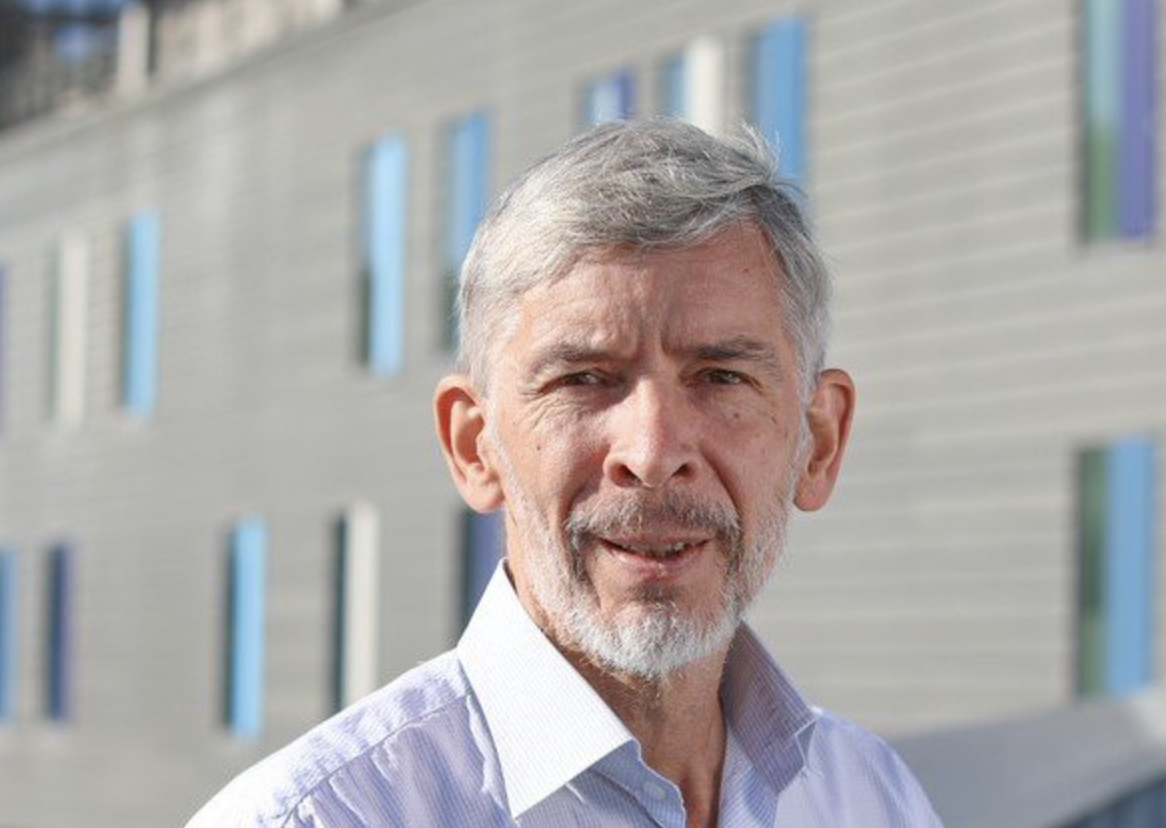
Speaker: Robert McGreevy, STFC Rutherford Appleton Laboratory, UK
Abstract
2032 will be the 100th anniversary of the discovery of the neutron. Although neutron diffraction was already demonstrated as early as 1937 it was not until the late 1940’s that the development of nuclear reactors produced intense enough neutron beams to make neutron scattering a useful technique. The expansion of research reactors worldwide in the 1950’s following the ‘Atoms for Peace’ initiative led to a corresponding expansion of neutron scattering applications. It also led to the growth of a ‘user community’, where neutron users were one of the early exemplars of this now common concept. The first accelerator based source of neutrons was actually in 1936, before fission reactors, but it was not until the 1980’s that these became competitive with reactors, and in almost all cases they were built as ‘second choices’ after the cancellation of reactor projects. If some of those reactor projects had been completed then the technology development that has led to ESS would have been much delayed, and there would be no LINXS to host this seminar ...
Biography
Robert graduated and received his PhD from Oxford University (UK) and was a Royal Society research fellow and lecturer there until 1992. From 1992-2002 he was director of the Studsvik Neutron Research Laboratory at Uppsala University (Sweden). He was appointed Professor of Neutron Scattering Physics in 2001. From 2002-2011 he was Division Head at the ISIS facility at the STFC Rutherford Appleton Laboratory (UK). From 2011-2012 he was Deputy Director for Neutron Sciences at Oak Ridge National Laboratory (USA). In 2012 he returned to ISIS and was Director there until 2021. He is now working part time as a consultant for STFC, responsible for UK in-kind contributions to the ESS project and helping to establish the Ada Lovelace Centre, providing data and software capabilities for STFC national facilities.
Robert is author of over 180 research papers in the fields of neutron scattering and computer modelling. He specialised in studies of the structures (including magnetic structures) of all types of disordered materials, from high temperature superconductors to liquid metal alloys. He has a special interest in the development and integration of data analysis and data management tools with experiment. He is the developer of the reverse Monte Carlo (RMC) method of structural modelling; over 2000 papers have been published using this technique.
Robert has been particularly active in the promotion of European and international scientific collaboration. He was coordinator of EU projects between 1990 and 2010, including the Integrated Infrastructure Initiative for Neutron Scattering and Muon Spectroscopy (NMI3) and the I3-Network. He is currently chair of the League of advanced European Neutron Sources (LENS).
During our events we sometimes take photographs and short film clips to profile our activities. Please let us know if you don’t want to be in any photos/films before we start the event. Some webinars are recorded to be used for educational purposes in the LINXS website.
By registering for our events you give your permission to LINXS, according to the General Data Protection Regulation (GDPR), to: (1) send you newsletters and information about LINXS activities, and (2) share your contact details (name and email address) with the event organizers for event-related communications. You can withdraw your consent at any time by contacting josefin.martell@linxs.lu.se or unsubscribing from our emails.
If you don’t receive a registration confirmation please check your spam mail.