
Meet AMBER postdoc Cindy Yunxin Xiao
Cindy Yunxin Xiao is an AMBER postdoc based at the Department of Experimental Medicine at Lund University. Relocating from Australia to Sweden to take up the position, she highlights how the AMBER programme is an opportunity to contribute to — and learn from — a dynamic and interdisciplinary research environment.
What attracted you to the AMBER position?
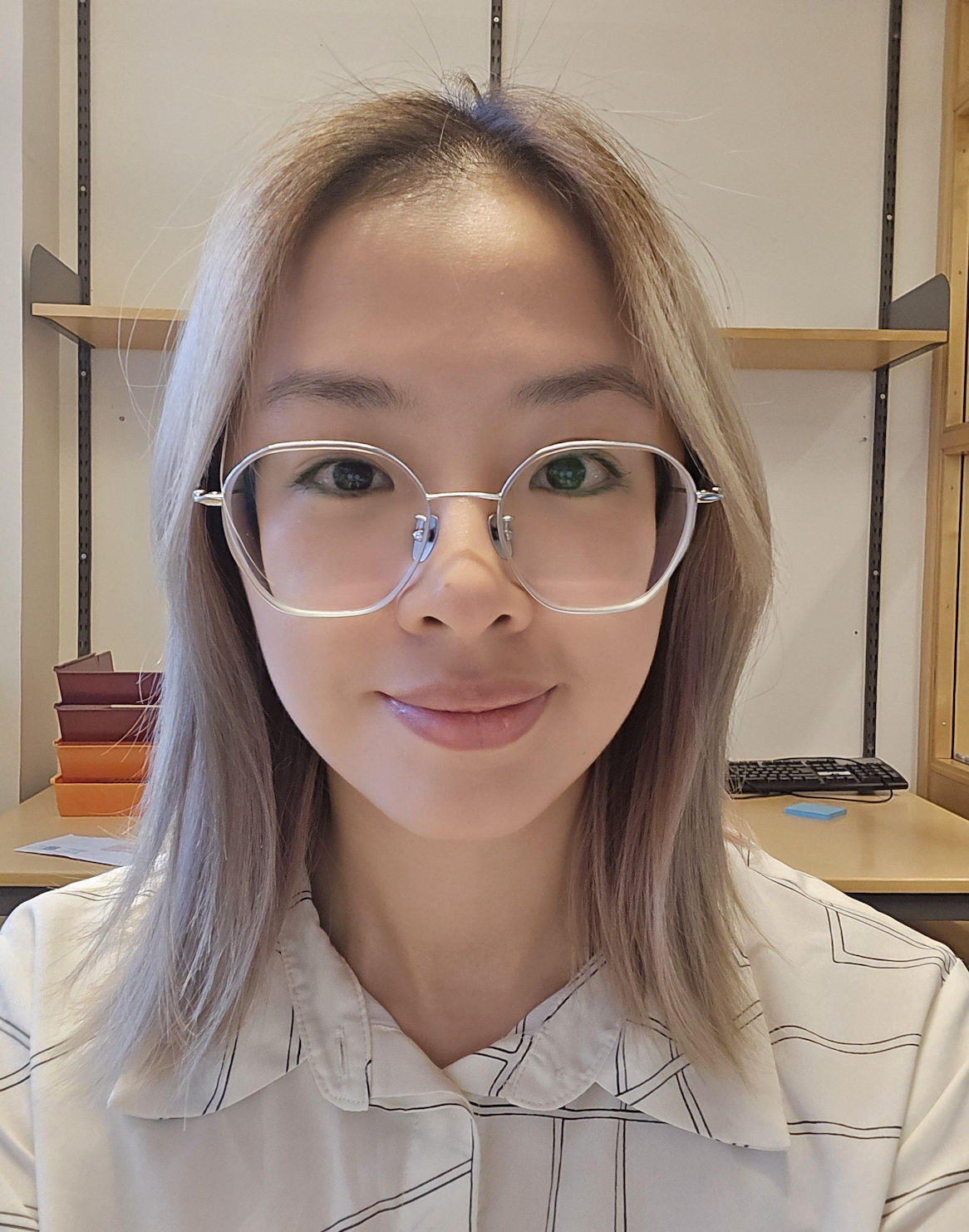
Cindy Yunxin Xiao hopes to strengthen her academic track record by producing impactful research that integrates her background with new insights from the programme.
What really attracted me to the AMBER position is how closely the research focus aligns with both my expertise and my genuine passion. I’ve spent years working with SAXS, SANS, and advanced microscopy to study biological structures and nanoparticle systems, and the idea of applying these techniques to investigate therapeutic nanoparticles feels like a perfect continuation of what I love doing. It’s the kind of research that excites me on a day-to-day basis.
Another major factor for me is the collaborative nature of AMBER. I truly believe science is only possible through teamwork. This programme brings together world-leading industrial partners, cutting-edge scattering and microscopy facilities, and an inspiring network of scientists working toward shared goals. Being able to contribute to—and learn from—such a dynamic and interdisciplinary environment is something I value immensely.
And finally, the three-year duration is important. It gives me the time and space to fully explore the field, develop meaningful collaborations, and really deepen my understanding of the research area. It feels like the right environment to grow in a sustainable way.
What do you hope to gain from the programme?
Through the three years in AMBER, I hope to strengthen my academic track record by producing impactful research that integrates my background with new insights from the programme. I am excited about the opportunity to learn how industrial partners approach real-world challenges—things like manufacturability, stability, regulatory constraints, and scalability. Understanding how these considerations shape research will help me develop a “ready for the world” mindset, which I think is crucial for making science meaningful beyond the lab.
I also hope to significantly expand my network in Sweden and across Europe. Being part of AMBER means being surrounded by experts in different domains, and I want to build relationships that continue long after the program ends. For me, it’s as much about growing as a scientist as it is about becoming part of a community that is passionate about solving important problems.
What will you research, and what is the societal relevance?
My research will focus on lipid nanoparticles designed for mRNA delivery. These systems play critical roles in vaccine development, inflammation control, and cancer immunotherapy. We’ve seen how powerful mRNA therapeutics can be, but there is still much to understand about how nanoparticles behave at the structural and molecular levels. By using techniques like SAXS, SANS, and microscopy, I aim to uncover how lipid arrangement, morphology, and membrane interactions influence delivery efficiency.
The societal relevance of this work is clear. Lipid nanoparticle systems underpin some of the most important therapeutic breakthroughs of our time, and improving their design could make treatments safer, more effective, and more accessible. Whether it’s preventing pandemics, modulating chronic inflammation, or enhancing cancer immunotherapy, the impact of better delivery systems is global and long-lasting.
What is your background?
I come from a pharmaceutical science background and completed all my degrees, including my PhD, at Monash University in Australia. Over the years, my research has focused on engineering lipid and polymeric nanoparticles—sometimes in elongated or unconventional shapes—to improve how therapeutics are delivered.
A big part of my interest lies in understanding structure. Techniques such as SAXS, SANS, and cryo-EM have been central to my work, and I’ve learned how important it is to characterize nanoparticles thoroughly rather than relying purely on trial-and-error formulation. Unfortunately, structural analysis is often overlooked in the field, even though it plays a major role in determining how particles perform biologically.
One of my long-term goals is to establish frameworks and methods that make extensive structural characterization more routine—so that future designs can be guided by informed, sensible choices rather than guesswork.
What motivates you in your personal and private life?
A big motivation for me, both personally and academically, has been the decision to relocate from Australia to Sweden. I wanted to experience life in Europe—to explore different cultures, broaden my horizons, and immerse myself in an environment that challenges me to grow. Living in a new country brings a sense of curiosity and openness that I find incredibly energising.
This motivation extends to my scientific life as well. I’m inspired by environments that push me to learn, adapt, and see the world from different perspectives. Being in Sweden allows me to build a new network, learn a new language, and experience research in a completely different academic landscape. All of this feeds into my commitment to becoming not just a better scientist, but a more well-rounded person.
About AMBER
The EU-funded research project AMBER, Advanced Multiscale Biological imaging using European Research infrastructures, will address scientific and sectoral gaps in biological imaging ranging from molecular, through cellular, to tissue, organ and organism levels of organisation.
AMBER’s partner organisations are: Lund University/MAX IV, Sweden, the European Spallation Source (ESS), Sweden, the European Molecular Biology Laboratory (EMBL), Institut Laue-Langevin (ILL), France, the International Institute of Molecular Mechanisms and Machines, (IMOL), Poland, and the Leicester Institute of Structural and Chemical Biology, United Kingdom.
AMBER is coordinated by LINXS Institute of advanced Neutron and X-ray Science.
Read more on AMBER’s website