
The very first Nordic Sub-Micron IR Microscopy conference initiated discussion and pointed to new potential
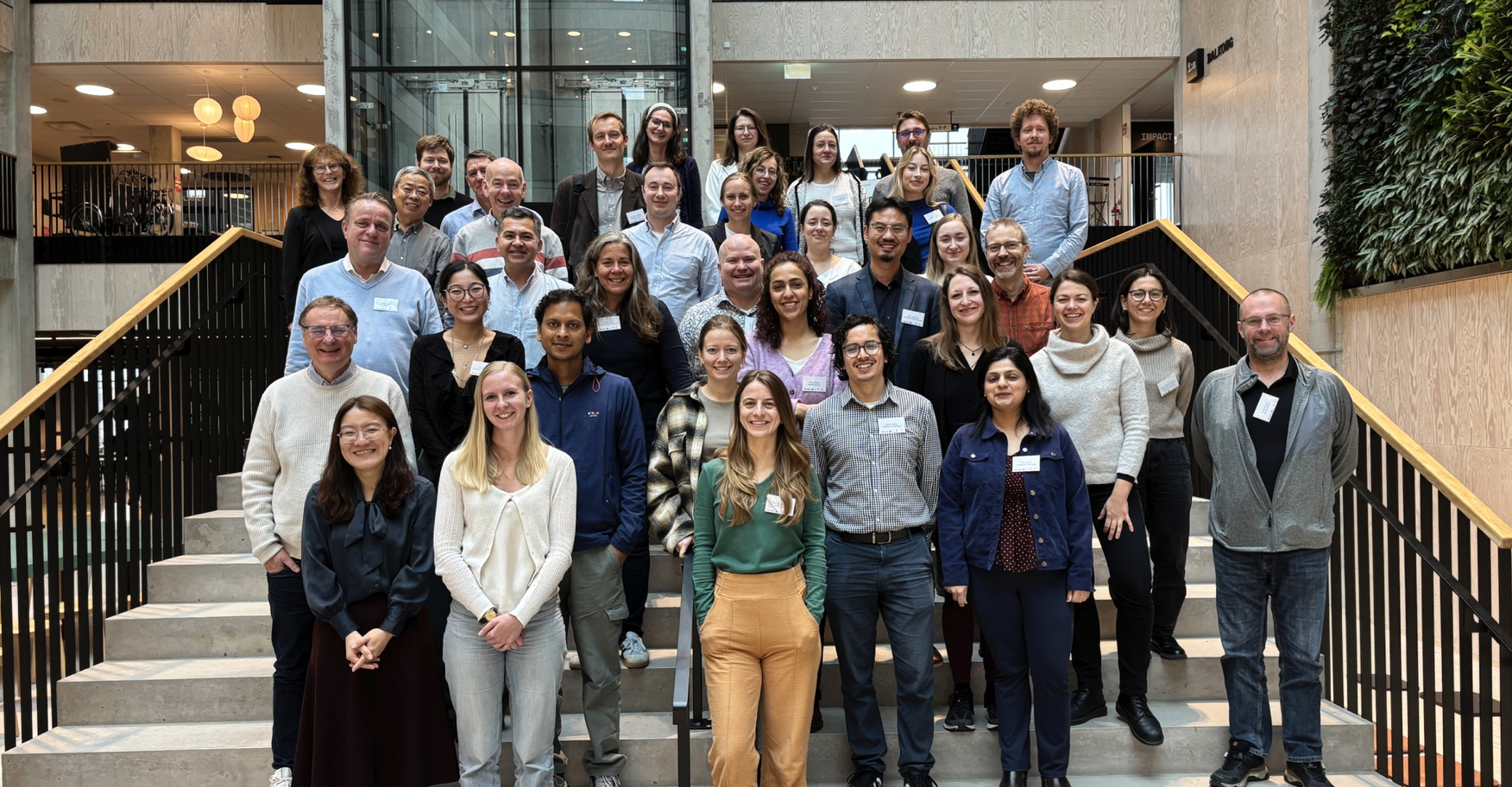
The participants at the conference were a mix of both experienced users and newbies to the techniques. This made for interesting and rewarding discussions on applications, pros and cons and data analysis.
The very first Nordic Sub-Micron IR Microscopy conference was held at LINXS in October, in collaboration with the Environment and Climate and AIDA themes. It aimed to introduce and discuss Sub-Micron Infrared (IR) Microscopy techniques with researchers from different fields. These techniques enable the characterisation of structures in environmental science, heritage science, materials science and in the biomedical field – by providing high resolution molecular information linked to processes, material compositions and contaminants.

Karina Thånell is excited about the outcomes of the conference, especially the possibilities to maybe modify the Diagnostic beamline on the 1.5 GeV ring at MAX IV to perform experiments.
– I have never taken so many notes at a conference before, says Karina Thånell, co-leader for the AIDA theme, and co-organiser of the event. She works as a researcher and group manager for the Imaging unit at MAX IV.
– I also really enjoyed the excellent discussions after each talk. The atmosphere extended beyond "just politeness" questions, and the perfectly sized group made meaningful interchange possible, both in the conference room and during the breaks.

Milda Pucetaite was the main organiser of the conference, and sees the event as part of important first steps towards establishing a potential infrared (IR) spectroscopy beamline at MAX IV.
Milda Pucetaite, researcher at the Biology Department at Lund University, was also delighted with the outcomes. She was the one initiating the conference at LINXS.
– Even though the speakers and participants were from very diverse science backgrounds, I think we had great discussions and shared knowledge on sample preparation, techniques, their pros and cons, and data analysis, and this was very exciting.
She continues:
– One of our aims was to connect experts with newbies who are relatively unfamiliar with the techniques but interested in their applications. The participants included both, and we had very nice discussions on how one can begin to use the techniques.
Introduce the open access facility MJOLNIR: the MAX IV Joint Offline Lab for NanoIR
Another goal with the event was to introduce the open access facility MJOLNIR: the MAX IV Joint Offline Lab for NanoIR , placed at MAX IV. The conference thus coincided with the official opening of the platform that contains the two main instruments to pass the micron barrier with IR spectroscopy: an O-PTIR and AFM-IR.
– This possibility generated a lot of excitement in terms of what you can do! The lab is also an important first step towards establishing a potential infrared (IR) spectroscopy beamline at MAX IV, says Milda Pucetaite.
The visit to MAX IV brought even more positive news. During this tour several of the speakers and experts at the conference highlighted that it could be quite straightforward to modify the Diagnostic beamline on the 1.5 GeV ring with a change of window and lens, to take out IR light instead.
– My jaw just dropped! If it is this easy, maybe it is possible to start testing these types of experiments well before we get the flagship IR beamline, says Karina Thånell.
Milda Pucetaite agrees:
– I never thought the conference would generate such concrete outcomes as this. For me this shows the value of LINXS, that we can organise events around really specific topics, and bring together people who can progress and take forward ideas!
And plans for the future are already in the making. To build on the enthusiasm generated at the conference, the organising group intends to invite some of the speakers back in spring 2026 for continued discussions.
– This time, we will make it hybrid. The interest in this area is growing, and we want to ensure that colleagues from different universities and beamlines can attend, says Milda Pucetaite.
Facts
O-PTIR = Optical photothermal IR, using a laser of around 500nm wavelength to ‘probe’ the IR response of a material. Resolution is then also around 500 nm.
AFM-IR = Atomic Force Microscopy + IR, using an AFM tip to ‘probe’ the IR response of a material. Resolution depends on the tip-sample interaction, but can be around 10-20nm guaranteed.
MjolnIR is jointly funded by MAX IV (VR), LU Faculty of Science, LU Faculty of Medicine and Spectroversum: Vilnius University.