
Welcome Professor Markus Braden, new SAB member with focus on Hard Matter
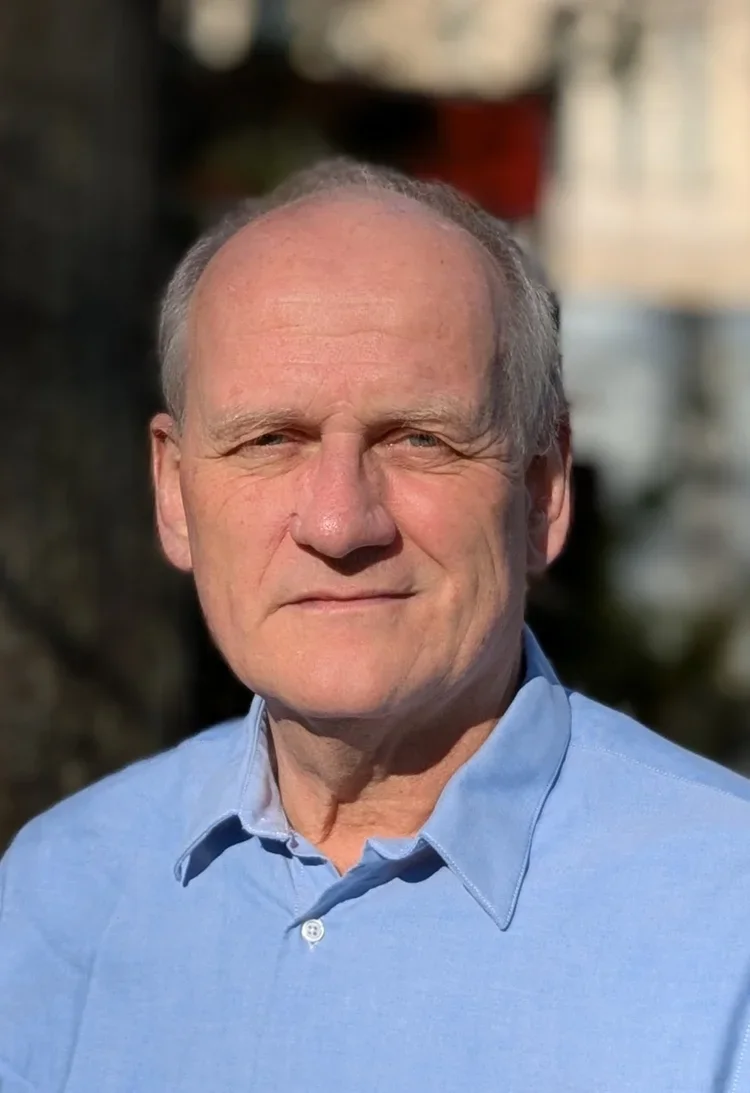
Markus Braden hopes his connections to German and French neutron communities as well as to the German correlated matter activities can provide valuable advice to LINXS..
We are happy to introduce Markus Braden, Professor of Physics at the University of Cologne, Germany, as a new Scientific Advisory Board (SAB) member with focus on the area of Hard Matter. He will sit on the SAB until 2028.
After studying physics and mathematics in Cologne University, Markus Braden went to the Laboratoire Léon Billouin in Saclay (France) for his PhD work on neutron scattering investigations of cuprates. He stayed in Saclay in various roles studying mostly correlated electron systems till he accepted a professorship in experimental condensed matter physics at Cologne University in 2001.
How would you like to contribute as SAB member?
I hope my connections to German and French neutron communities as well as to the German correlated matter activities can provide valuable advice to LINXS. The landscape of European neutron sources is fully changing with many sources having been closed while the start of the new European neutron flagship is only approaching. For neutron scatterers it is a difficult time right now, and a focus must lie on maintaining and even developing the neutron communities.
What do you see as the value of LINXS?
LINXS helps to improve the use of the unfortunately very expensive synchrotron and neutron sources. Promoting the science that is or can be investigated with these techniques to a broader community is primordial to pay back the enormous societal efforts by new knowledge, which can open the path to new technology. Connecting scientists of different interest and of different background can be the start of something truly new, but within the typical science projects there is neither money nor time left for looking beyond the horizon.
How would you like to see LINXS develop?
LINXS has developed already very well in my view and I see huge potential for similar institutions with other facilities. Of course, it will be important to further expand the scientific fields connected to LINXS and to reach even more communities as potential users for the two main techniques. It will also be important to connect communities that are not obvious to connect. I appreciate the spirit of freedom I already felt in LINXS. Only with the freedom to try nonconventional paths one can find new directions. LINXS should develop as such a platform as independently and as openly as possible.
What are your main research interests?
My group is interested in the connection between magnetic and lattice degrees of freedom and the physical properties of a material. In particular we investigate magnetic correlations in unconventional superconductors and their potential role in the pairing. Frustrated systems and multiferroics form another focus. We synthesize samples in various form, characterize them and study their crystal and magnetic structure as well as the corresponding excitations combining in-house and mostly neutron scattering techniques. Together with the group of Peter Böni we constructed a new cold neutron spectrometer at the FRM-II in Garching.