
The first joint Young Researchers’ Initiative showcases the potential of X-rays and neutrons for Soft Matter, Hard Matter and Life Science
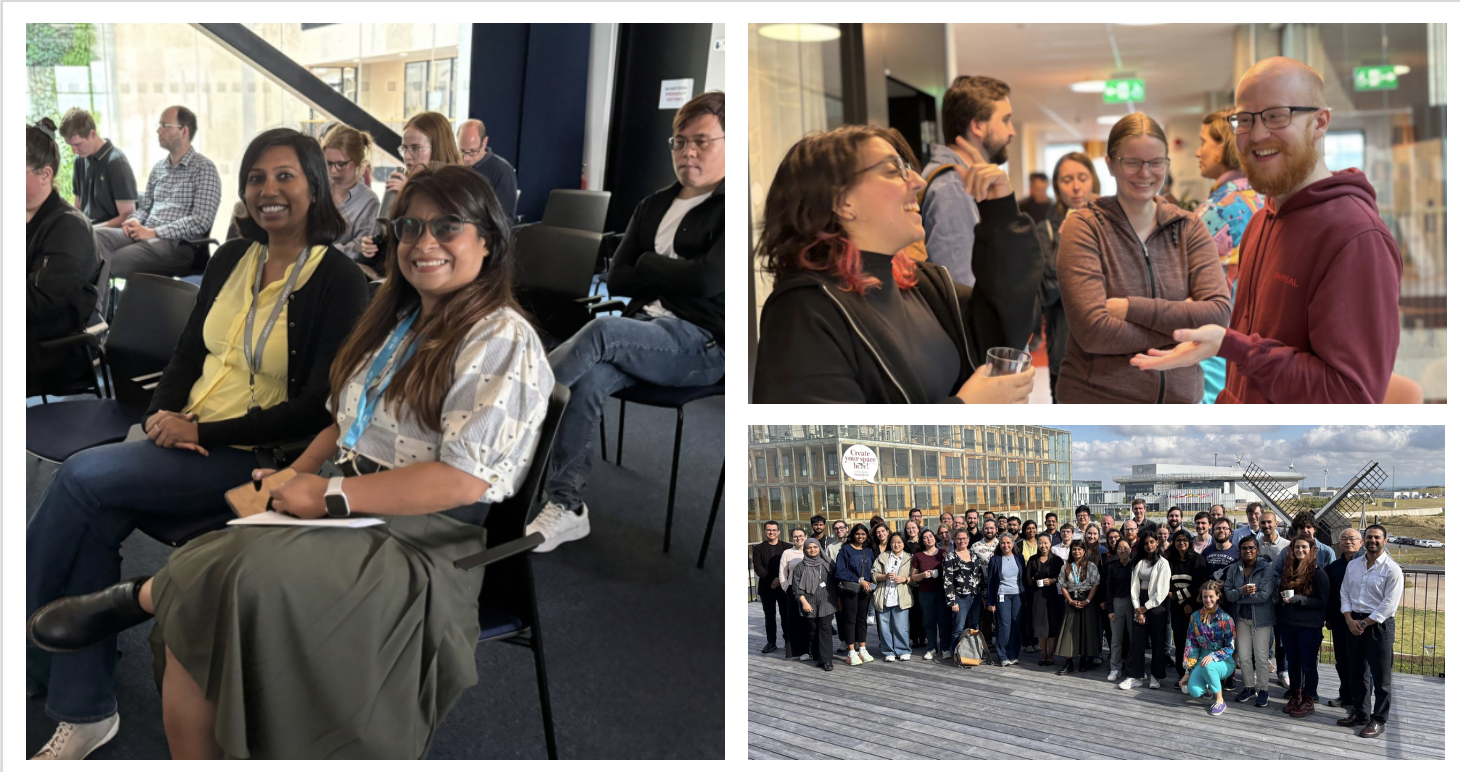
More than 60 people joined the very first YRI event at LINXS - combining science on Soft Matter, Hard Matter and Life Science.
On 8th September, we welcomed over 60 early career researchers to our first combined LINXS Young Researchers' Initiative – Hard Matter, Soft Matter and Life Science. Two of the organisers, LINXS postdoc Daniel Sarabi, and ESS researcher Swati Aggarwal, reflect on outcomes and on lessons learned.

Daniel has long experience of organising YRI events, and highlights the importance of developing activities that encourage interaction and networking amongst participants.
What are your main reflections?
Daniel: In our eyes it was successful! We aimed to cover the majority of X-ray and neutron techniques relevant for biophysical methods, so we had sessions on spectroscopy, diffraction and scattering (both X-rays and neutrons).
It was great to hear examples of how these techniques have been applied in hard matter, soft matter and life science. As we had a broad group of researchers, the idea was to get a snapshot of what you can do with X-rays and neutrons in a variety of fields.
Swati says that it is very rewarding to hear the positive feedback from the participants.
Swati: In my view, organising an interdisciplinary event is always a challenge, but as organisers, we strive to address the needs of a diverse audience and cover the wide spectrum of research areas spanning both neutron and X-ray applications.
It is truly rewarding when participants share positive feedback and carry valuable learnings back to their peers and departments.
We intend to continue planning such events in the future and hope the community will engage even more actively by contributing with their knowledge to their organisation.
Personally, I gained a great deal of knowledge about scattering techniques and their applications—something I had been eager to learn for quite some time.
Finally, none of this would have been possible without the financial and organisational support of LINXS.
Why did you decide to combine hard matter, soft matter and life science?
Daniel: We took inspiration from LINXS Science Day which usually mix these topics. They are also LINXS focus areas. For me, it is interesting to bring together people from different fields as they often use the same technique but for different research questions. The networking between people can bring about many new ideas and perspectives.
This year you made an effort to include undergraduate and graduate students, why?
Daniel: The earlier you learn about X-rays and neutron, the better. This knowledge can help steer your PhD direction, and later career. We need more people who can see the potential to generate new science, and more users of the facilities.
You always include a career session; how come?
Daniel: Life in academia can be very precarious and it is important to build a good network for your future career. Many people are also hoping to work in industry. We wanted to provide a setting to help young researchers make contacts. This time, we decided to have a panel with people from academia, MAX IV, Camurus, and Big Science Sweden so people could discuss possible paths after academia.
You have both organised these events several times, what are lessons learned?
Daniel: I increasingly realise the importance of networking. Having knowledgeable and interesting speakers is of course important, but giving space for informal chats is equally so. It is during these times bonds between different people form, and where early career researchers can also approach more experienced speakers. That is why we always include a BBQ or other event at the end. Especially if there have been delays in the scientific programme.
Another lesson is the need for marketing; to actively approach communities, universities, departments and organisations. Getting a lot of people on board takes a lot of effort, it is simply not enough to just focus on the programme itself.
Finally, for each event one needs to reflect on what makes it useful to young researchers: what can we offer that makes them want to put aside a full day to join us? For me, this question is at the centre of every event.