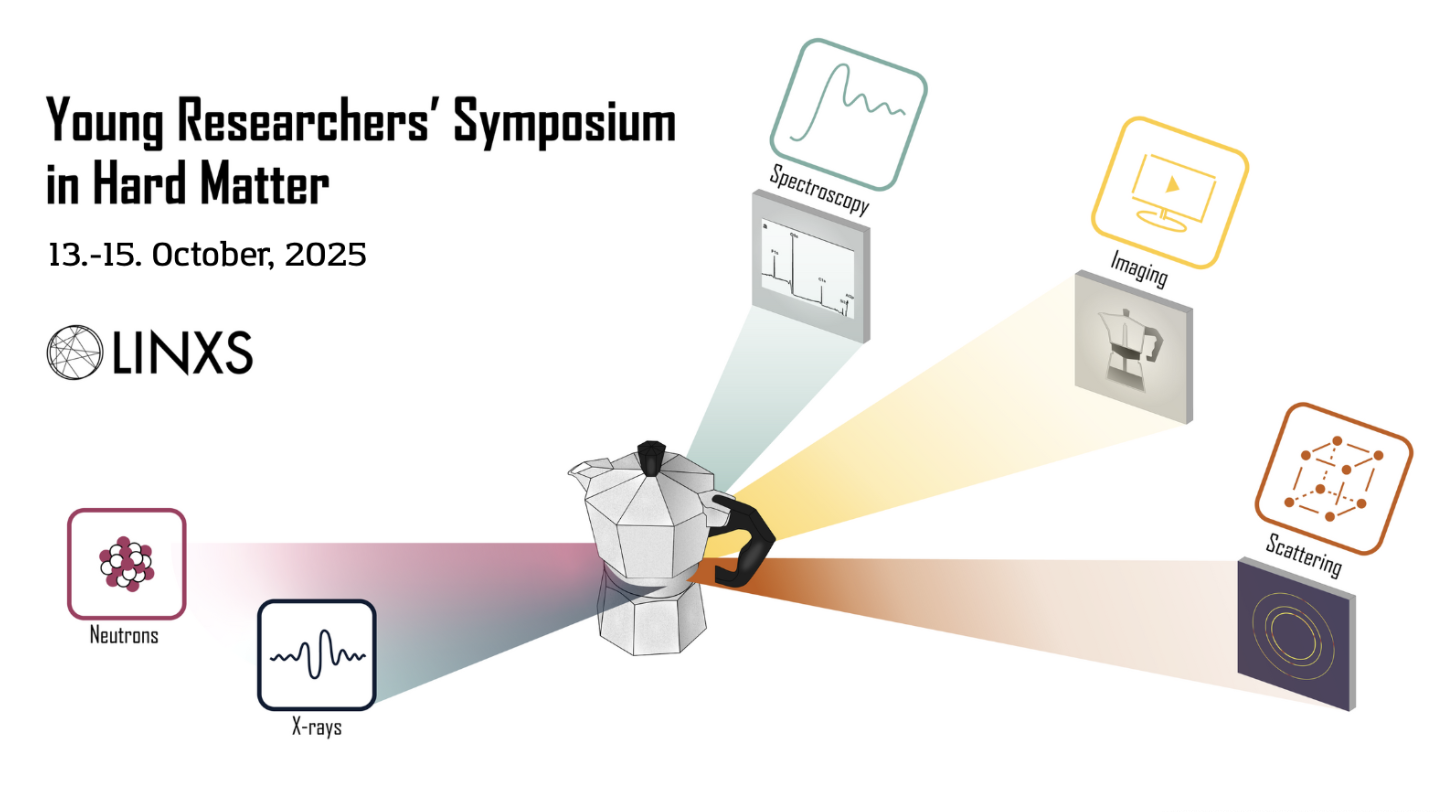
Learn about multimodal approaches and career opportunities at the Hard Matter Young Researchers' Initiative, 13-15 October
The third Young Researchers' Symposium on Hard Matter is taking place 13 - 15 October at LINXS. Building on the two previous events, it aims to create opportunities for networking with peers and to explore new X-ray and neutron techniques. We spoke to Konstantin Werner, postdoc at the Grenoble Institute of Technology, who is one of seven researchers who has organised and planned the event.
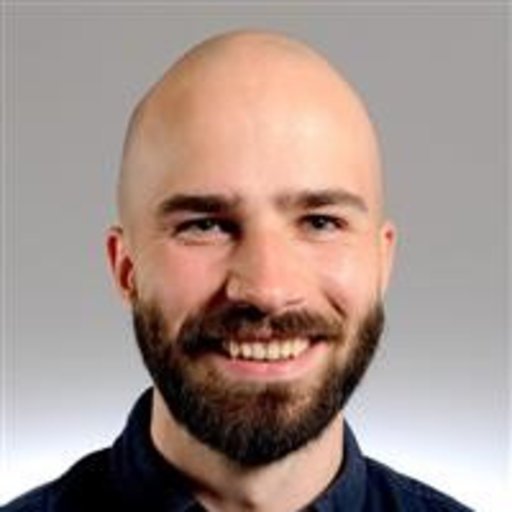
Konstantin emphasises that they hope that the event will offer an informal space to address topics that maybe are not discussed at more traditional conferences.
What is the focus of this year’s event?
This year's event has two main focus areas:
Day 1 is about career opportunities and professional development. We are trying to unveil some myths about jobs in academia and industry. The invited speakers will talk about their recent professional development and why they have decided to either stay in or leave academia. The day concludes with a poster session.
Day 2 focuses on the aspect of using multimodal approaches (i.e. using different but complimentary X-ray and/ or neutron techniques) highlighted by our speakers. Additional beamline staff of different X-ray and Neutron instruments will give insights on common obstacles encountered during beamtime. The whole symposium is designed a bit different than a standard conference with a strong focus on the engagement between the audience and speakers with lots of opportunities to discuss science, network and develop ideas.
What do you hope to achieve?
We hope the symposium provides an open and inclusive environment for attendees. Our goal is to create opportunities to network with peers, explore new X-ray and neutron techniques, and also to address topics that are rarely part of traditional conferences –where the focus is often only on the “successful and unwavering scientist.”
Why are you part of organising this symposium?
I believe it’s important to provide early-career scientists with opportunities to exchange openly, build networks, and discover new ideas, techniques, and perspectives. It’s also about creating space for conversations that don’t usually fit into regular conference programs – for example, doubts about pursuing an academic career, concerns about transitioning to industry, or the pressures of only showcasing success stories. Ultimately, today’s early-career researchers will become independent professors and managers. Offering them the chance to reflect early on about the culture and expectations in science is, I think, highly valuable.
What are you most looking forward to?
That the participants enjoy the event and that the symposium’s open and inclusive spirit comes across.
Organising group
For questions about the agenda etc, please contact any of the organisers:
Annika Stellhorn, ESS, annika.stellhorn@ess.eu
Axl Eriksson, Lund University, axl.eriksson@chemphys.lu.se
Isaac Appelquist Løge, Technical University of Denmark, isacl@kt.dtu.dk
Dalini Maharaj, Forschungszentrum Jülich, d.maharaj@fz-juelich.de
Fiona Nermark, Lund University, fiona.nermark@chem.lu.se
Sandra Benter, ESRF, sandra.benter@esrf.fr
Konstantin Victor Werner, Institut Polytechnique de Grenoble, konstantin-victor.werner@grenoble-inp.fr