
Exploring microfossils and cereal grains with micro-computed tomography (µCT)
Helena Filipsson, member of the Environment and Climate theme at LINXS, and professor at the Department of Geology, Lund University, has received seed funding from Lund University for the project: From Microns to Models: Leveraging μCT and Machine Learning for High-Resolution Morphological Diversity Analysis (MICROMORPH). It will be implemented in collaboration with InfraVis, the National Research Infrastructure for Data Visualization, and LINXS, and brings together expertise in geology, biology, mathematics, and statistics.
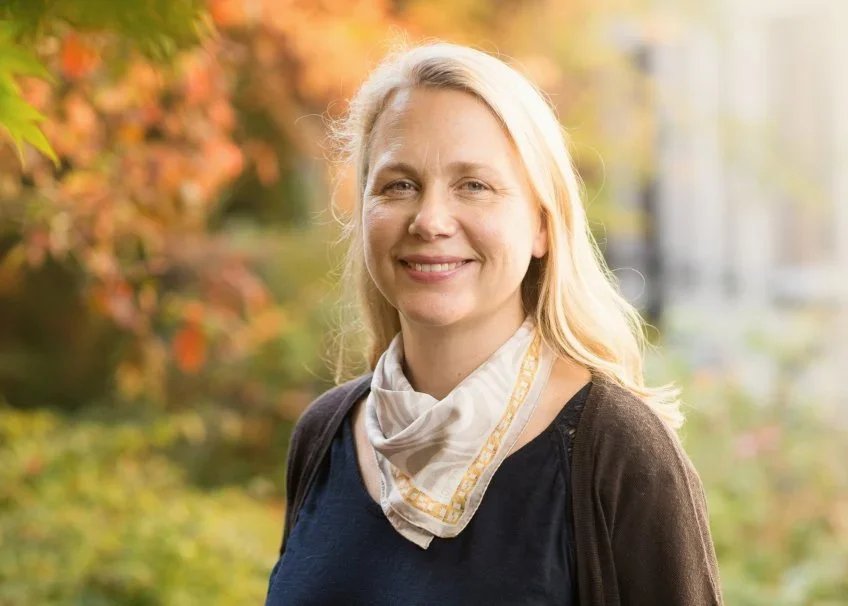
Helena Filipsson is looking forward to explore the use of micro-computed tomography in more detail.
What is the project about?
Our aim is to gain more in-depth knowledge of the form and structure of microfossils and cereal grains such as oats and barley. We will use micro-computed tomography (µCT), a technique that creates three-dimensional images in extremely high resolution, in combination with machine learning.
In marine paleoecology, for example, we can use µCT to study how foraminifera have responded to past climate change, and in plant biology, we can use it to gain new insights into the properties of barley and oats.
The project involves me; Mats Hansson, professor in plant molecular biology at the Biology Department; Behnaz Pirzamanbein, senior lecturer at the Department of Statistics; Alexandros Sopasakis, senior lecturer at the Centre for Mathematical Sciences, and LINXS Co-Director, researcher Emanuel Larsson. Behnaz Pirzamanbein is also a member of the Environment and Climate theme.
What do you hope to achieve?
An important aspect of this project, apart from the science, is to develop new methods and approaches for machine learning-based segmentation and image analysis. As the project gathers expertise from different fields such as geology, biology, mathematics, and statistics, we are in a good position to develop better 3D-models for large and complex datasets, create better workflows to handle data, and in general broaden the use of machine learning and image processing.
Currently, image processing and data analysis presents a barrier for many people performing X-ray experiments, and we hope to be able to not only learn more about microfossils and grains but also to develop practices and tools.
What role did LINXS and Infravis play in the genesis of this project?
Well, it was through InfraVis in Lund, which is one of eight national nodes to support researchers to visualise and work with data, that I met Mats Hansson, who is the other PI. We were brought together by Emanuel and Alexandros, who both work for Infravis, who identified that we had very common research interests.
We both felt that it would be interesting to do a joint project where we could work more closely with InfraVis and LINXS. The seed money will now allow us to recruit a researcher who can practically test and develop our ideas.
In general, being at LINXS, and being part of the Environment and Climate theme, has meant a lot to get this off the ground, as the events we have organised have given me both invaluable knowledge in terms of what X-ray methods would be most suitable for this type of research, and important networks which we can make use of.
What do you look forward to the most with the project?
Both Mats and I said the same thing: we have devoted so much time to our research, and it is great that we can now explore micro-computed tomography in more detail, and to have dedicated support for image processing. I am really excited to see what this can bring, and how our data can be interpreted!
What advice would you give to researchers interested in trying out X-rays and neutrons in their science?
There is great value in going to events and meetings even if your work is not directly related to the topic. By being open to learn more broadly about the potential of X-rays and neutrons, one can better decide what technique or approach might be good to use.
This goes for both senior and early career researchers. Sometimes it is easy to stop challenging yourself as you progress in your career, but if you do, you can gain so much from looking beyond your immediate field or expertise.
LINXS plays an important role here, as many of its events are for beginners, and the experts leading them are usually happy to answer questions.
Within our own theme, the Environment and Climate theme, we have worked a lot with bringing different people together to highlight what you can do with various techniques, how to work with data, and what is involved in getting access and prepare for beamline experiments.