
Young Researchers' Event on Soft Matter highlighted the versatility of X-ray and neutron techniques across different soft matter systems
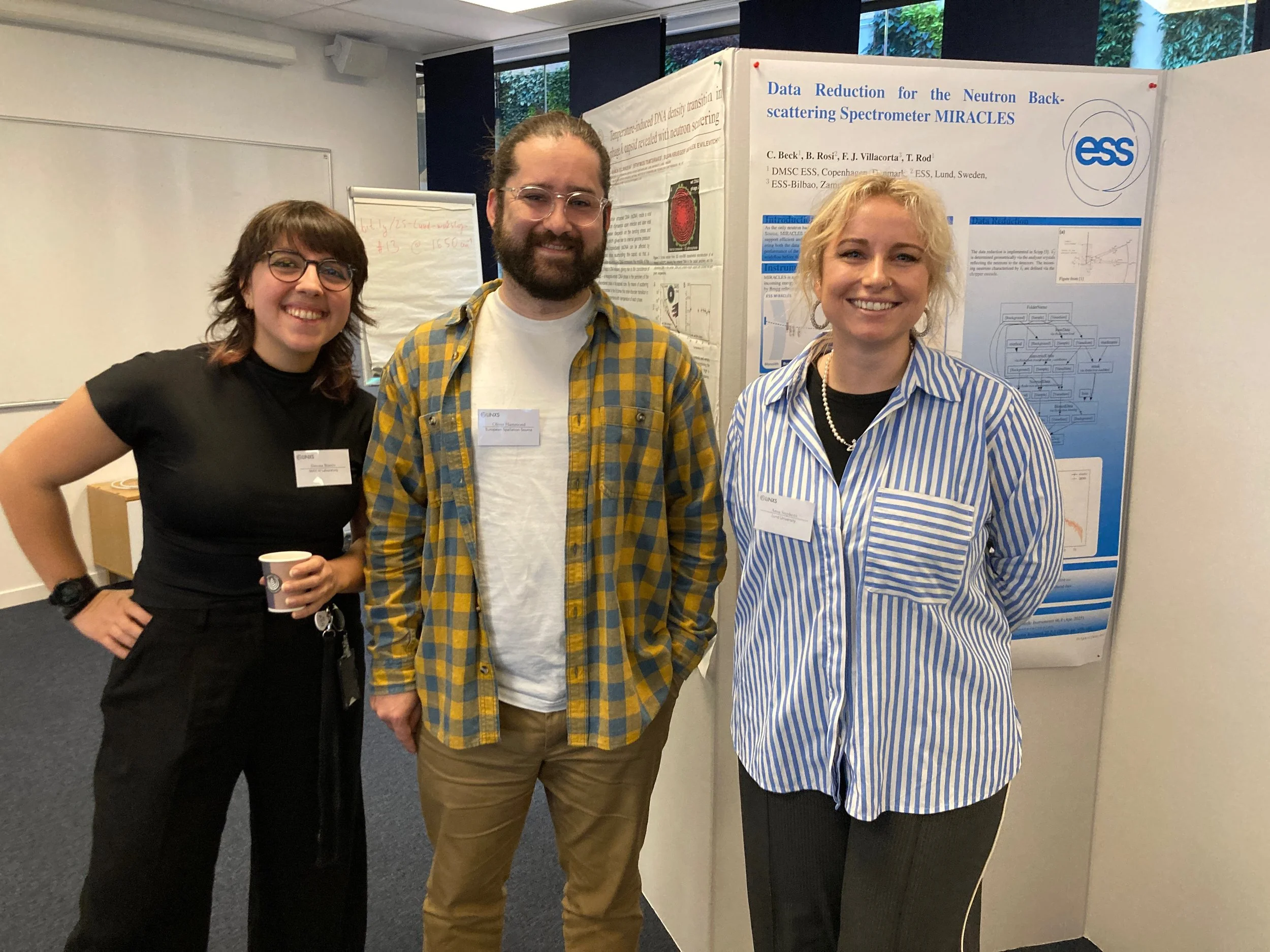
Simona Bianco, Oliver Hammond and Anna Stephens organised the Soft Matter Young Researchers’ Initiative for the first time this year. They were surprised and delighted at the level of engagement from the audience.
The third Young Researchers’ Initiative on Soft Matter was held at LINXS in early December and gathered around 40 researchers from different scientific fields.
The organising group had strived to bring together early-career researchers in a relaxed and welcoming environment, where they could hear about cutting-edge research and feel comfortable engaging in discussion.
“By removing some of the pressure that can come from more senior-led meetings, particularly during question sessions, we created a space where participants felt at ease to ask questions and interact openly,” says Anna Stephens, postdoctoral researcher at Physical Chemistry at Lund University.
Broad applications of X-ray and neutron reflectometry within soft matter research
In their programme, they aimed to reflect the broad range of applications of X-ray and neutron reflectometry within soft matter research. Thus, they invited speakers who use a wide range of approaches: experimental, theoretical, and computational to higlight how different methods can be complementary when probing complex soft-matter systems.
Introducing such broad approaches is important as a major challenge within soft matter research is the intrinsic complexity of soft-matter systems, emphasises Anna Stephens. They often involve multiple length scales, dynamic rearrangements, and components that interact in subtle ways. Interpreting scattering data from such systems can require sophisticated modelling and careful experimental design.
“We included examples on how soft matter techniques can contribute crucial pieces to a wider scientific story. To us, the talks successfully demonstrated the versatility and impact of these methods across different systems.”
Anna Stephens and her co-organisers: Oliver Hammond, instrument scientist at ESS, and Simona Bianco, postdoctoral researcher at MAX IV, were surprised and delighted at the level of engagement from the audience. There were so many questions after each talk that often the five minutes allocated were not enough to accommodate them all.
“The consistently lively question sessions following each talk indicate that the research presented resonated strongly with the audience and sparked broad interest across the programme,” says Anna Stephens.
Building a sustained and supportive community is a key priority
Going forward, Anna, Simona and Oliver would like to maintain the momentum by encouraging new attendees to return to future events, while also continuing to engage those who have participated in previous meetings. Building a sustained and supportive community of early-career researchers is a key priority.
Anna Stephens highlights how she is particularly interested in organising a special event on “Young Researchers: Women in Soft Matter” event later in 2026 – featuring talks from leading female scientists in the field.
“Support from LINXS in helping to organise, host, or promote such an event would be greatly appreciated,“ says Anna Stephens.
Why did they decide to join the Young Researchers’ Initiative on Soft Matter?
“I am part of this initiative to foster a sense of community within the soft-matter field, especially among early-career researchers working across different institutions and career stages. Soft matter research can sometimes feel fragmented, so creating spaces where people can connect, share ideas, and support one another feels both valuable and necessary,” says Anna Stephens.
She studies a promising anti-cancer peptide that also shows strong antibacterial activity. Her focus is on understanding how it interacts with model bacterial membranes, and she is currently collecting preliminary data to support a proposal for the SUPERADAM instrument at the ILL. At ILL, she aims to use magnetic reference layers and isotopic contrast variation to learn exactly where the peptide is distributed within the membrane model.
Simona Bianco currently work at the CoSAXS beamline in collaboration with the RIANA European project. As part of her position, she assists users coming to the CoSAXS beamline and help in the development of the beamline together with the team.
“I have an interest in the design of stimuli-responsive functional soft materials and I will work on continuing the development of sample environments to study them, with a particular focus on rheology. With RIANA, I assist inexperienced users looking to perform techniques related to SAXS/WAXS for nanoscience and nanotechnology research across Europe.”
She joined the organising group as she would like to contribute to LINXS’ mission of promoting science and education based on the use of X-ray and neutron techniques.
“I believe that these techniques should be made more approachable and understandable to prospective scientists and this can only be achieved through collaborations, talks and workshops!”
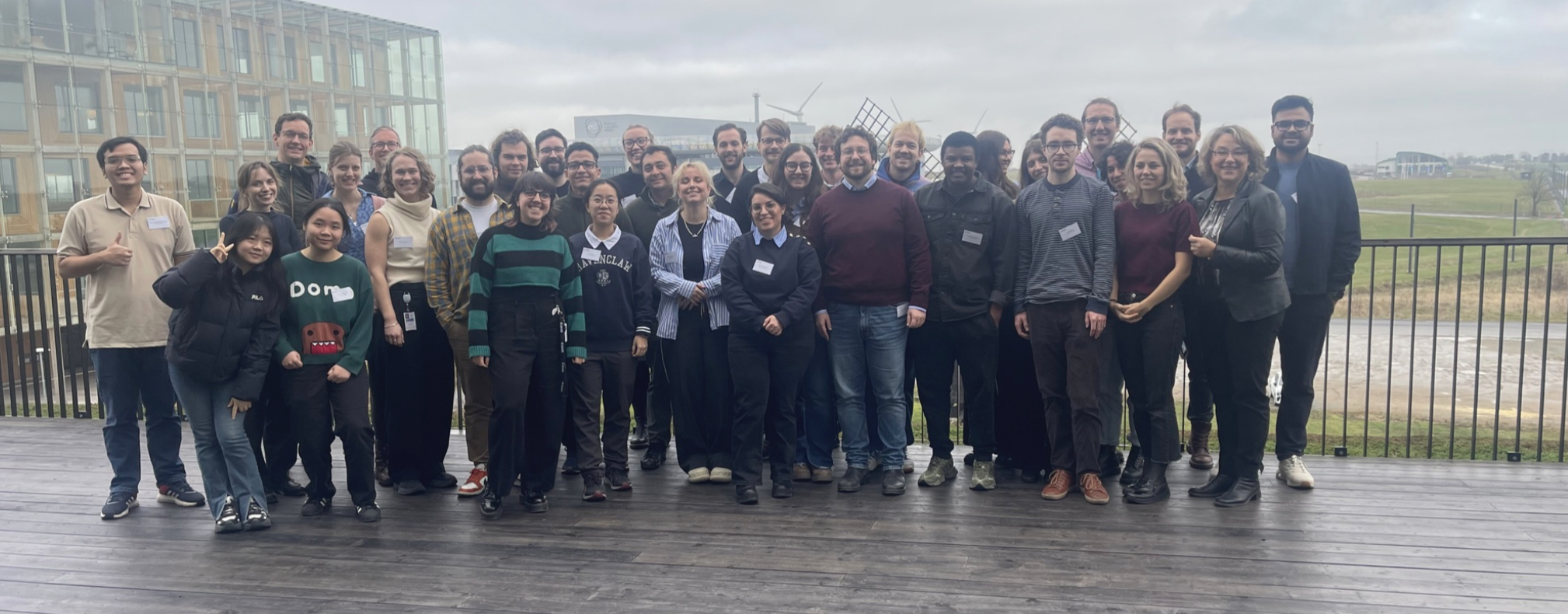
Around 40 early career researchers from different universities and countries attended the event at LINXS in December 2025.