
Professor Lars Tranvik: new guest researcher with the Environment and Climate theme
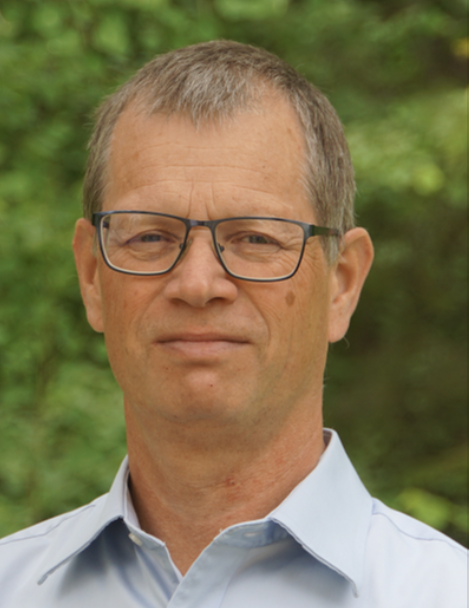
Professor Lars Tranvik likes the intellectual environment at LINXS, and how the institute is close to both the large scale research facilities and Lund University.
Lars Tranvik is a professor of limnology at Uppsala University, and a new guest researcher with the Environment and Climate theme. In late autumn, he spent two weeks at LINXS and is now planning to return in the spring.
Why did you want to come to LINXS?
”I have ongoing collaborations with researchers in Lund, so this felt like a good fit. Being near to both the large-scale research facilities and Lund University is great. This is also a lovely space to work in.”
What project are you working on with colleagues in Lund?
”We are very interested in the fate of organic matter in lakes and oceans that originates from dead microorganisms, plants, algae, and animals.”
“We want to investigate why some of this matter turns into methane and carbon dioxide and is released into the atmosphere, while other parts of it persist for a very long time. Thus, we are aiming to study the structure of organic matter with the help of different techniques such as Small Angle X-ray Scattering, Atomic Force Microscopy and Cryogenic Electron Microscopy. The dissolved organic matter in the water is, to some extent, aggregated into tiny particles and colloids. We are particularly interested in how this might protect the organic matter from degradation and result in a long-term carbon sink in the sediment.”
“This research is important for our understanding of how much carbon is emitted from inland waters and their roles as carbon sinks. Today, inland waters actually emit almost as much carbon dioxide as the oceans take up – so maintaining this aspect of the carbon cycle is important. The carbon cycle is Earth’s natural recycling system for carbon, continuously moving it between the atmosphere (mainly as carbon dioxide), oceans, lakes, land (plants and soil), and the Earth's interior. The distribution of carbon between land, water, and atmosphere is changing due to human activities, and understanding these shifts is essential to assess the impacts on the biosphere and their feedbacks.”
What are your first impression of LINXS?
”I like the intellectual environment at LINXS. It is nice that the institute is close to many of the instruments and facilities we are using in our project.”
What is the value of someone from Uppsala University visiting LINXS as a guest researcher?
”I had very little knowledge of these types of techniques before I started this project. If we can successfully highlight what is available here in Lund, and that LINXS welcomes researchers for work and experiments, then I think many more people will be interested in coming here!”
What will you do when you return to LINXS?
”Once I return, we will focus on completing the experiments and analyzing the data. I am hopeful that they will reveal some interesting results that we can explore further!”
Read more about Lars Tranvik at uu.se