
Meet the AMBER postdocs: Lea Tamara Bertgen and Shuvasis das Gupta

Lea Tamara Bertgen and Shuvasis das Gupta are both postdoctoral researchers in AMBER. She is based at the International Institute of Molecular Mechanisms and Machines, Polish Academy of Sciences, whereas Shuvasis das Gupta works at Lund University.
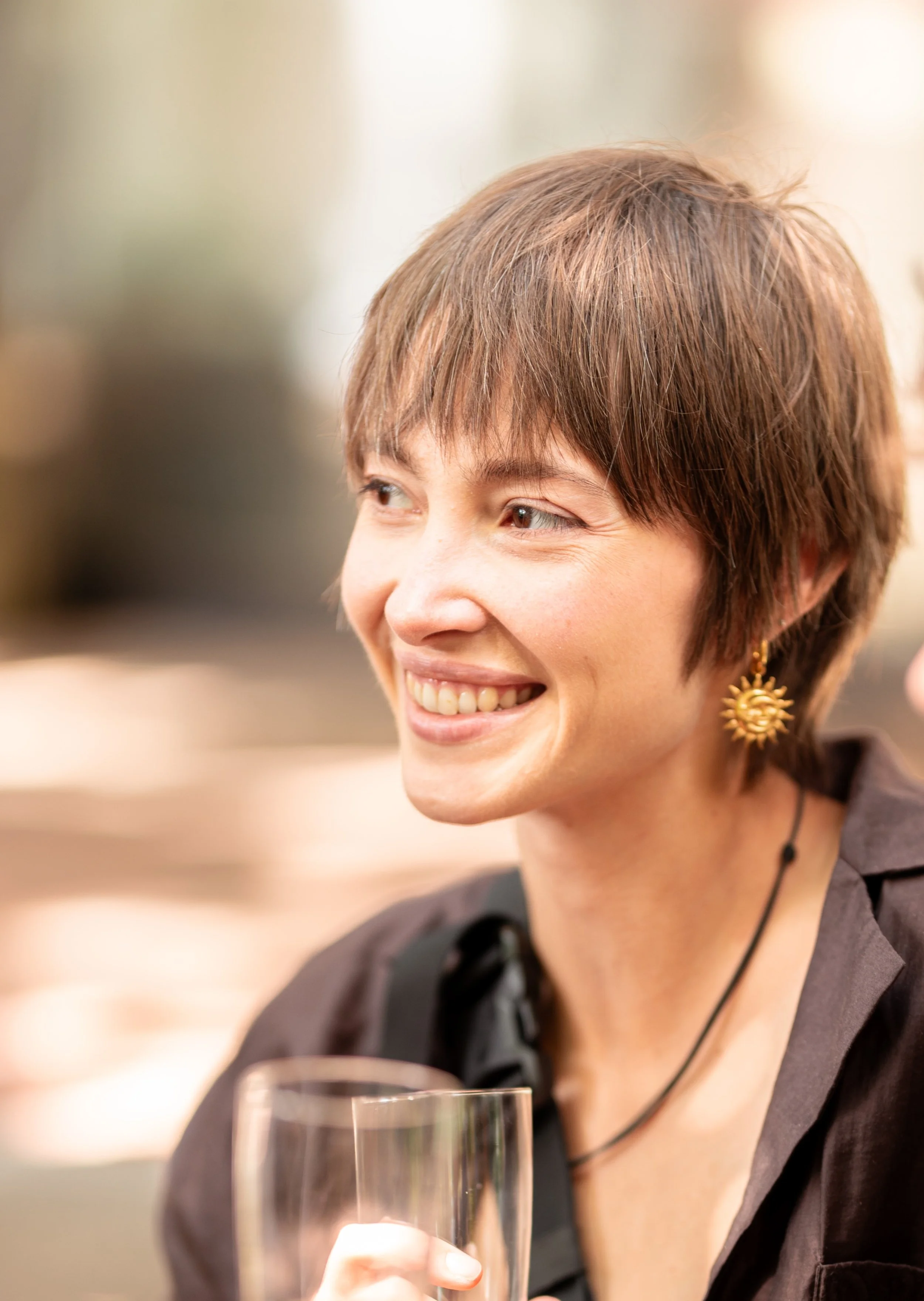
Lea Tamara Bertgen is based at IMOL in Poland, and researches functional alterations of protein import into mitochondria.
Lea Tamara Bertgen researches functional alterations of protein import into mitochondria. What she enjoys about the AMBER postdoctoral programme is the strong emphasis on collaboration, international mobility, and personal development.
– I really like how it provides an interdisciplinary framework for addressing fundamental biological questions that span multiple scales, ranging from molecules and cells to tissues and the function of whole organisms. Working alongside researchers from diverse backgrounds encourages me to think outside the box, significantly advancing both my scientific research and personal growth.
She completed her PhD in molecular cell biology, at the University of Kaiserslautern-Landau (RPTU) in Germany, focusing on proteostasis and cellular stress responses in yeast cells. In particular, she has studied factors involved in the formation of proteinaceous aggregates within the mitochondrial matrix.
As part of the AMBER programme, she studies the biogenesis of mitochondria in human cells.
– Given that mitochondrial dysfunction is linked to numerous diseases, including neurodegeneration and cancer, I aim to understand how protein translocation into mitochondria is fine-tuned under stress conditions. This research will provide insights into cellular adaptation mechanisms and may reveal targets for therapeutic intervention, says Lea Tamara Bertgen.
In her research, and in her personal life, she is motivated by curiosity and the thrill of discovery, both in understanding complex systems at a molecular level and in everyday life.
– I love exploring nature, whether by bike or on foot, and connecting with creativity through art and music. I value supportive environments and am motivated by opportunities to learn, grow, and help others do the same.
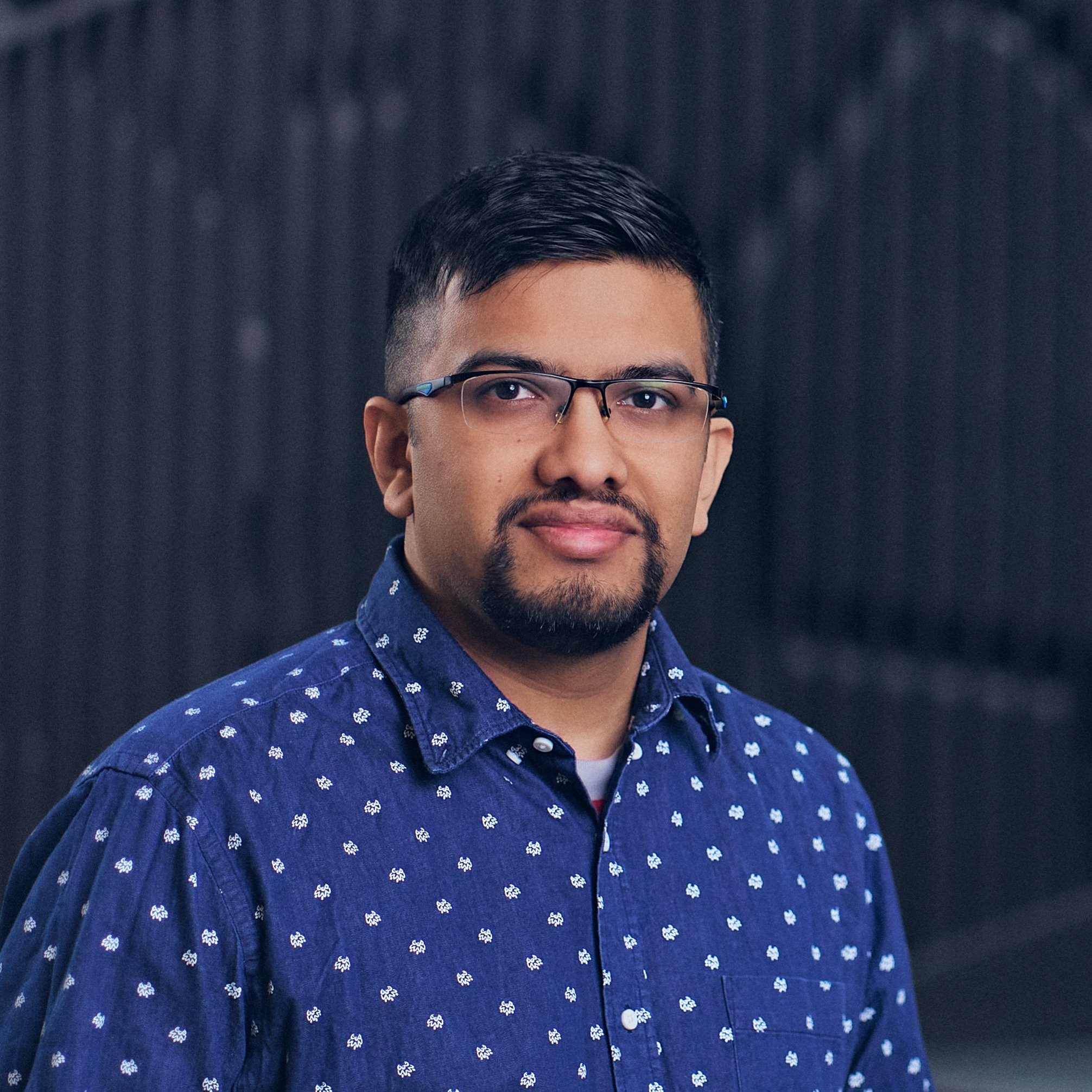
Shuvasis das Gupta researches the role of bone-cartilage interfaces in debilitating conditions like osteoarthritis.
Opportunity to work in a collaborative environment
Shuvasis das Gupta was motivated to join the AMBER programme as it provides an opportunity to work in a collaborative environment, with access to world-class research infrastructures like MAX IV.
– In my field, we frequently encounter the challenge of studying hierarchical and often composite musculoskeletal tissues in both healthy and diseased states. The AMBER programme is designed to tackle precisely this challenge, and offers the perfect next step to expand my research with a multiscale, multimodal imaging approach, says Shuvasis das Gupta, postdoc at the Department of Biomedical Engineering at Lund University.
As part of his postdoc, he will focus on understanding the role of the bone-cartilage interface in debilitating conditions like osteoarthritis.
– Healthy joints rely on a strong connection between cartilage and bone through this interface, which is crucial for maintaining joint health by providing both biological and mechanical support, says Shuvasis das Gupta.
– To examine the hierarchical structure of the bone-cartilage interface, I plan to generate multimodal images of the interface by combining several synchrotron-based X-ray imaging techniques.
Over the next three years, he will receive expert training in synchrotron imaging from the Biomechanics group in the Department of Biomedical Engineering. He will also collaborate with the Clinical Epidemiology Unit in the Department of Clinical Sciences at Lund University.
– I hope that my postdoc will reveal the crosstalk between bone and cartilage in osteoarthritis development and provide detailed structural endpoints for preclinical trials—essential steps for discovering and validating disease-modifying osteoarthritis drugs!
In his daily work and in his personal life, Shuvasis das Gupta is motivated by the challenge of learning, and applying new techniques and skills in his research.
– On a personal level, I have the same drive—whether it's learning new skills in a video game or engaging with people from different backgrounds.
PhD and postdoc from the University of Oulu: research on musculoskeletal tissues
He competed his PhD at the University of Oulu, Finland, focusing on advanced microimaging of soft and hard musculoskeletal tissues. After that he worked as a a senior application engineer for a Finnish startup, before taking up a postdoc position, also at the University of Oulu, where he expanded his research to tackle the multi-tissue complexities of osteoarthritis. His work included developing 3D histopathology of synovial inflammation, identifying pain-related sensory structures, and exploring the connection between pain and inflammation in osteoarthritis.
About AMBER
The EU-funded research project AMBER, Advanced Multiscale Biological imaging using European Research infrastructures, will address scientific and sectoral gaps in biological imaging ranging from molecular, through cellular, to tissue, organ and organism levels of organisation.
AMBER’s partner organisations are: Lund University/MAX IV, Sweden, the European Spallation Source (ESS), Sweden, the European Molecular Biology Laboratory (EMBL), Institut Laue-Langevin (ILL), France, the International Institute of Molecular Mechanisms and Machines, (IMOL), Poland, and the Leicester Institute of Structural and Chemical Biology, United Kingdom.
AMBER is coordinated by LINXS Institute of advanced Neutron and X-ray Science.
Read more on AMBER’s website