
The golden age for heritage science is now!
Theme leader Mikael Fauvelle is excited about how his Theme is supporting new knowledge and scientific developments in heritage science.
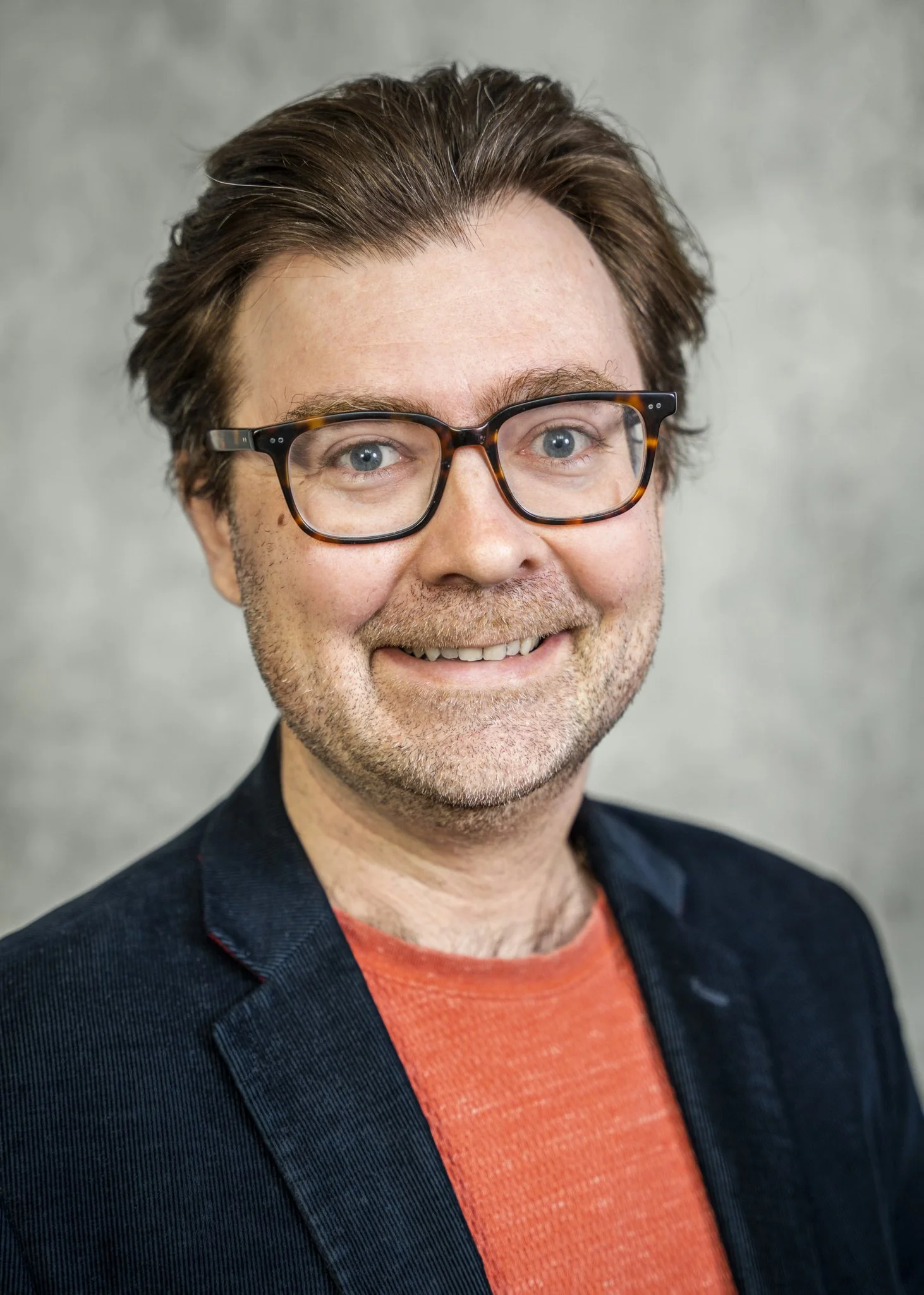
Mikael Fauvelle emphasises that the golden age for heritage science is only starting! He leads the Heritage Science Theme at LINXS.
– I would say that the golden age for archaeology is only really starting! We have so many techniques that are able to completely revolutionise the study of human history through material remains, says archaeologist Mikael Fauvelle, researcher at the Department of Archaeology and Ancient History, Lund University.
These techniques include X-ray and neutrons methods that allow for the imaging and study of artefacts down to the nanometer scale, as well as recent advances in the use of isotopes, where carbon isotopes are used to determine the age of organic materials, whereas stable isotopes are used to reconstruct diet, migration and environmental history by analysing carbon ratios in material such as bone, teeth and charcoal. The use of DNA to gain new insights into human development and premodern humans has also increased.
Through various workshops and events, the Heritage Science theme has focused on building capacity to apply for X-ray and neutron beamtime, perform experiments and analyse data. An important aspect of the work is to highlight the possibilities afforded by X-rays and neutron techniques. To shed light on the composition of complex materials in artefacts to learn more about trade patterns or economic and cultural systems: to drill into the origins of natural materials such as wood to find out where something was made.
– Everyone has this idea that there are these new methods that you can use to study heritage science, but knowledge is low when it comes to what kind of questions you can ask; what type of experiments you can do, says Mikael Fauvelle.
With each activity the theme organises, Mikael Fauvelle notices how new researchers are joining, and how people are returning to learn more. To him, this shows how great the need for such a theme is. It also underscores how large the field is: heritage science gathers diverse groups from all over Europe working in archaeology, geology, art history and conservation.
The most recent event, which took place in October focused on presenting suitable X-ray and neutron techniques for heritage science. The speakers presented on cases with focus on neutrons, X-rays, 3D models, and visualisation. The workshop ended with a Q&A where participants asked detailed questions on the set-up of the experiments; including feasibility and lessons learned.
– We aim to create networks and help open doors to new possibilities. As these methods develop so rapidly, and the heritage science field is so broad, we need to continuously educate people in how to access for example beamtime.
– Another aspect is the collaborative nature of heritage science. You cannot do everything yourself, you have to work with other experts, whether you are an archaeologist, art historian or geologist. So broad networks, where you perform experiments together are more important than ever.
Upcoming conference on ethics connected to the use of X-rays and neutrons in heritage science
He is glad that the event was so well attended; and excited about next steps, which includes a workshop focusing on ethics in connection to the use of X-ray and neutron techniques to study artefacts, in particular human remains.
– Often, we talk about these methods as being non-destructive, but you are exposing human remains to analysis. You also have to move them to the beamlines for experiments, which raises tough ethical questions.
As the use of X-ray and neutron techniques is not standard practice yet within heritage science, discussing issues like these is very important.
– We need to talk about this now, before these methods become normative. When and how should we do experiments? What types of considerations do we need to think about: what type of standards can we create? All of this we need to discuss in detail.
Read more about the Q&A for heritage science
Rea more about the Heritage Science theme