
The third Young Researcher Initiative (YRI) on Hard Matter: interactive, engaging and stimulating!
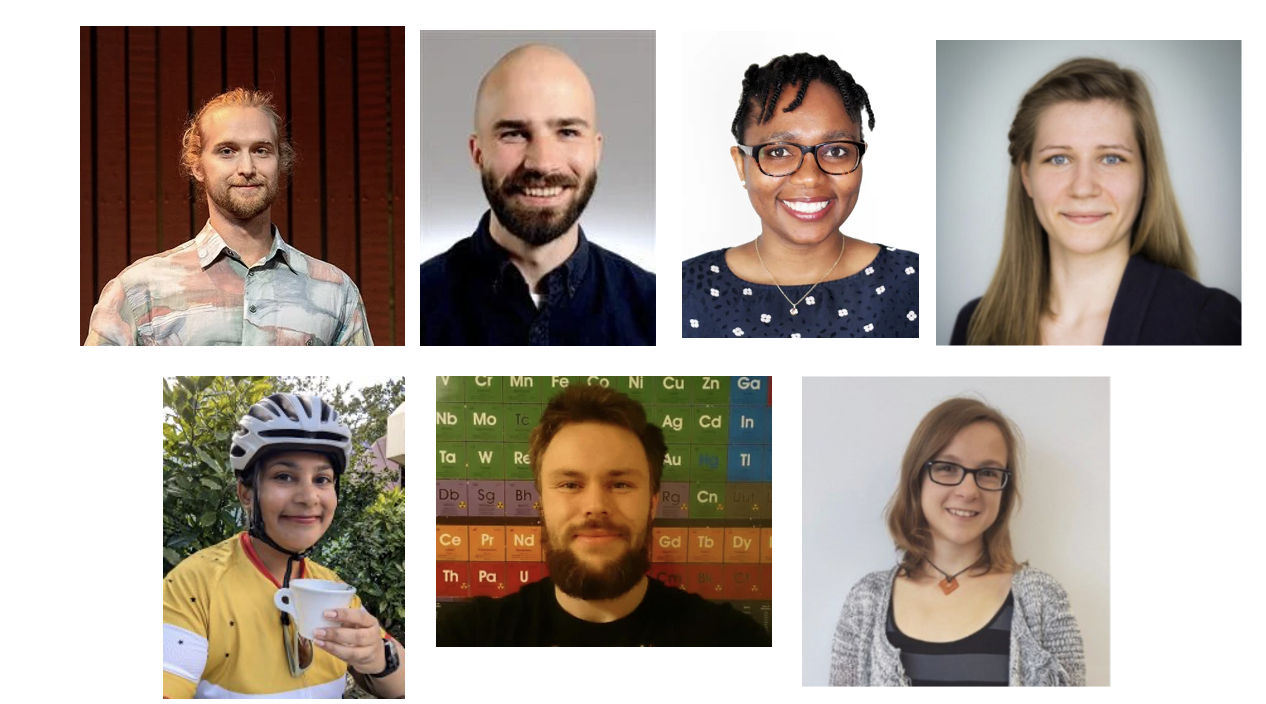
The YRI Hard Matter organising group: from left to right, top to bottom: Isaac Appelquist Løge, Konstantin Werner, Fiona Nermark, Sandra Benter, Dalini Maharaj, Axl Eriksson, and Annika Stellhorn.
The third Young Researcher Initiative (YRI) on Hard Matter was a great success. Its focus on encouraging interaction, engagement and discussion really resonated with the early career researchers who attended.
– In the beginning of the year, we brainstormed around topics for the symposium and we identified two topics that needed to be explored in the community: understanding what career paths there exists for academics in our field, and how different synchrotron techniques can complement each other. I think we managed to make an event that met these needs, says Isaac Appelquist Løge, postdoctoral fellow at the Technical University of Denmark.
The organising group put a lot of effort into creating an event with ample of opportunity for discussions and interchange between the speakers and participants; as they wanted the symposium to offer an informal, inclusive space to share knowledge and ideas.
– The goal was ultimately to have an enjoyable event that also gives the attendees something to return to. We received very positive feedback, especially on the interactive sessions, such as the career panel Q&A, which is a step in the right direction, says Axl Eriksson, PhD student at the Department of Chemistry, Lund University.
Sandra Benter, postdoctoral fellow at ESRF, adds:
– Talking to people, I have the feeling that everyone that participated had a great experience and engaged with people that otherwise would have not crossed their paths, which is one of our aims with these events: to build networks.
Konstantin Werner, postdoctoral fellow at the Institut Polytechnique de Grenoble, agrees and highlights how some of the speakers said that they would have liked to attend a symposium like the YRI when they were doing their own PhD or postdoc.
– This to me shows the need for events like ours that do not focus just on science, but also on other aspects such as career planning and social skills.
The organising group were glad to see that researchers with diverse scientific backgrounds, and from different places attended the event, as the YRI aims to have a broad reach and to encourage interaction across and in between disciplines.
The third YRI Hard Matter event: a mix of science and soft skills
For many people in the group, this is the third YRI they are part of organising. Being able to build on previous events is a great strength they say.
– Generally, the symposium has evolved from a very science focused event to a mix of scientifical input and development of soft skills. I am very happy that we never dropped the active mingle activities sprinkled into the schedule, as they really help to create an interactive and vibrant atmosphere, says Sandra.
Annika Stellhorn, instrument scientist at ESS, adds:
– Now we have a lot of knowledge about the interests of the young researchers in and around Lund: networking sessions have shown to be of high value, and deeper insights into preparing, organising, and conducting neutron and X-ray beamtimes seems to be a favored topic as well.
Konstantin Werner agrees:
– After trying out different things during the last three symposia we definitely learned a lot when it comes to organising such an event and what attracts people and what not. I’m happy that the participants enjoyed the social and interactive aspect of the symposium throughout the years and voiced how they liked that the symposium is not just “another conference”.
Why are the members in the organising group part of the YRI on Hard Matter? And what advice would they give to other researchers joining?
– I’m part of this initiative because networking and collaboration are essential in the relatively small neutron and X-ray research community in and around Sweden. Workshops like the YRI symposium contribute to building a stronger, more connected community—which benefits both ESS, MAX IV, and everyone’s research. My advice for anyone interested is to take part, be open to new contacts and ideas, and actively contribute. The more engaged we are as young researchers, the more we shape the future of our science, says Annika Stellhorn.
– I joined the YRI because I really enjoy connecting with people across different fields and finding common ground between disciplines. It offers a unique opportunity to meet motivated, curious researchers who genuinely want to make a difference and contribute to a broader scientific community. If you’re thinking about joining, my advice would be: don’t be shy! The YRI is a welcoming space where you can get involved in LINXS’ mission, share ideas, and build meaningful connections, says Dalini Maharaj, postdoctoral fellow at Forschungszentrum Jülich.
– It’s quite simple why I joined: I was interested in the field of hard matter and just wanted to help others. Since I joined the YRI a year ago, I have met plenty of great and supporting people with similar interests through networking and just talking to people. I agree with Dalini, don't be shy. It's more rewarding to have the experience than not to, says Axl Eriksson.
– For me, these events offer a unique opportunity to help create and shape a science community that does not only showcase and highlight scientific breakthroughs and well-established scientists, but rather builds on support, honest exchange and networking among your peers, says Sandra Benter.
She continues:
– Since the outline of each symposium is completely decided by the organizing team, it is possible to have a mix of scientific input and soft skill development, which are often overlooked. It is very gratifying to develop a concept for the symposium and actually seeing it pay out and people enjoying participating, despite the event working differently than standard conferences. For anyone that is curious and motivated, contact the organizing team.
– I joined this initiative because, even though I work in a different field, I wanted to broaden my network and learn from scientists who use different methods and perspectives. Being part of the organising team showed me how valuable it is when researchers from different areas collaborate, great ideas often come from mixing disciplines, says Fiona Nermark, postdoctoral fellow at the Department of Chemistry, Lund University.
She adds:
– My advice to anyone interested in joining the YRI is: don’t worry about your background. If you’re curious and willing to contribute, you’ll gain a strong network, learn a lot, and help create opportunities that inspire other young researchers.
Read more about the YRI event
Read more about the Young Researchers’ Initiative on Hard Matter
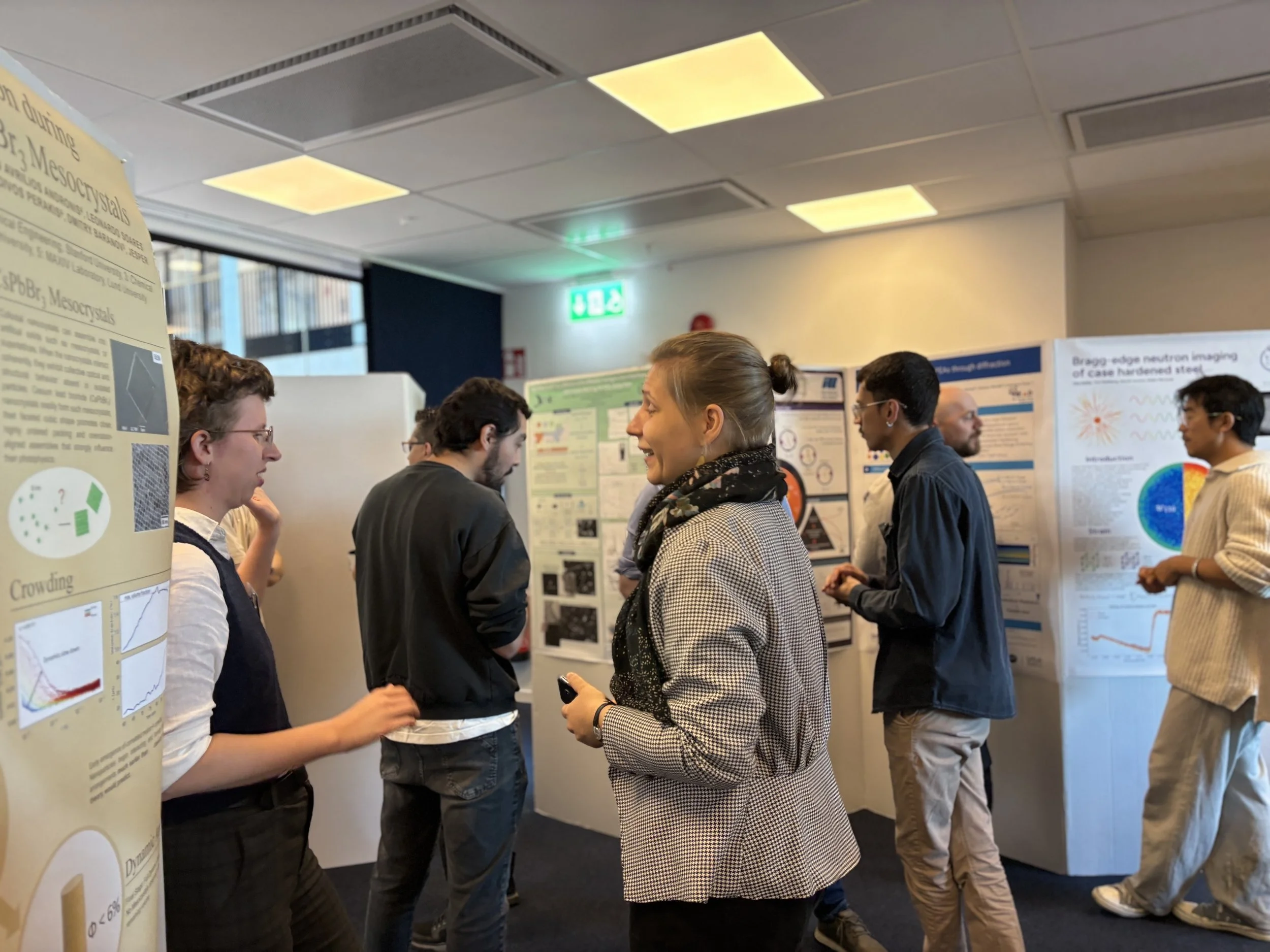
Participants pictured during the poster session a the YRI event on Hard Matter at LINXS in October.