
Quasar instructors visit LINXS to teach data analysis with the help of modern machine learning
Ferenc Borondics and Stuart Read, two of the people behind the open-source Quasar project aimed at data analysis with the help of modern machine learning, recently visited LINXS to host a workshop to teach early career researchers how to visualize and process data, build visual workflows, and apply multivariate and machine learning methods to spectroscopy and microscopy datasets.
The workshop was organised by the Environment and Climate and AIDA Themes.
Dr. Ferenc Borondics from the SOLEIL synchrotron facility in France, and Dr. Stuart Read from the Canadian Light Source, in Canada, created Quasar together with other colleagues from around the world to support researchers gain better insight into their data through visualisation, machine learning methods and combining datasets. Quasar grew out of already developed tools for machine learning, the Orange Data Mining toolbox.
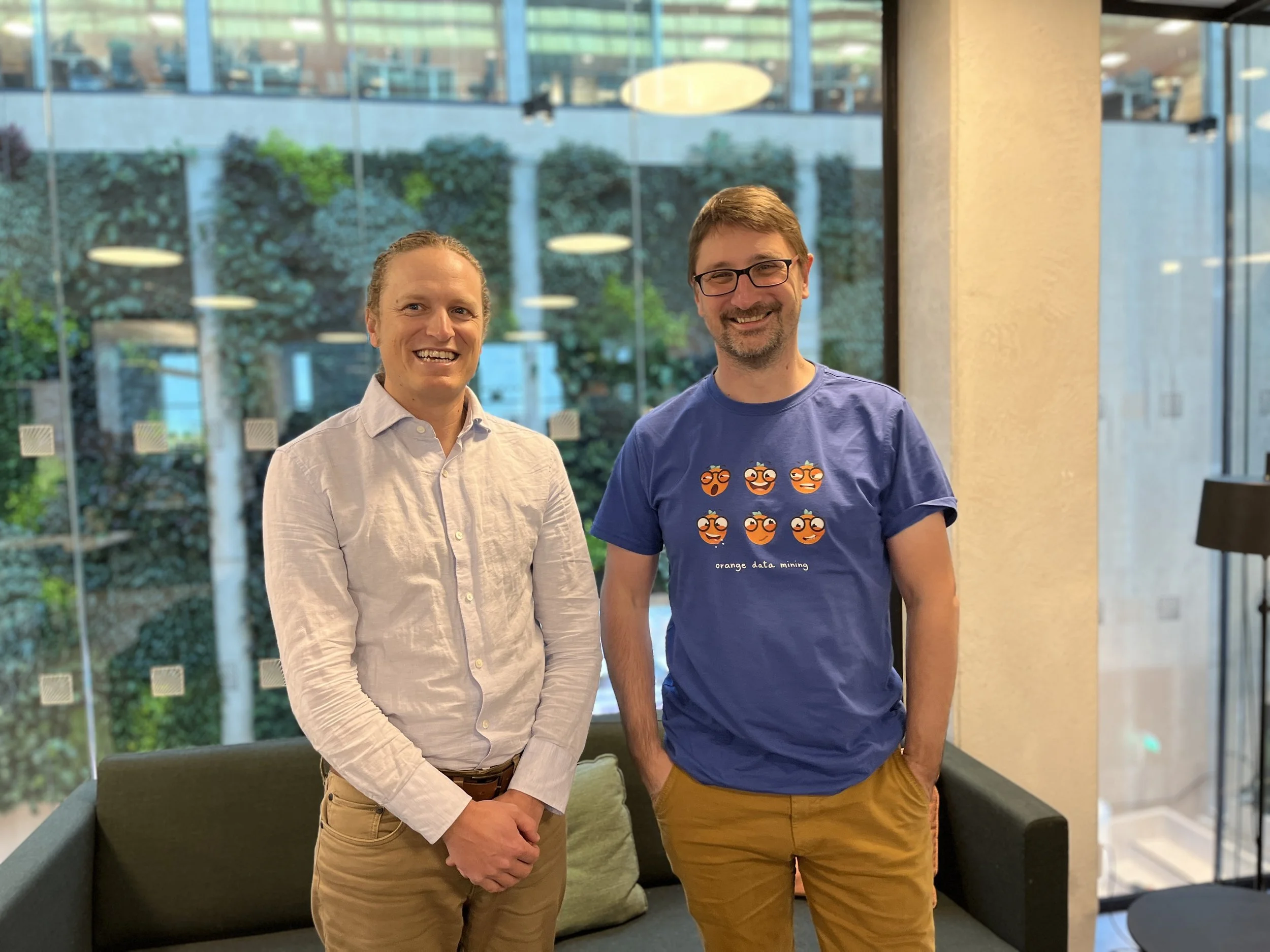
Stuart Read and Ferenc Borondics are two of the creators of Quasar. They work at the Canadian Light Source in Canada and the SOLEIL synchrotron facility in France respectively.
– After an experiment ends at the synchrotron, and users want to analyse their data, they often run into problems. Specialized software can be expensive, difficult to use or even incompatible with personal computers, says Ferenc Borondics.
– Our motivation was to create a free, open-source tool that is user friendly, and this approachability would not just help the users, but also the people working at facilities, since they can teach this tool to the users and support a better understanding of their research, says Stuart Read.
It was important for Ferenc, Stuart and the rest of the team behind Quasar to create a software that would not require skills in programming – but still enable users to build very complex workflows, displaying data across length and time scales. Since it is possible to combine datasets and fine tune the data analysis to create the visualisation you need, the software tool has become very popular.
Quasar aims to build a community of users across the world
Ferenc and Stuart are part of a larger group that develops and promotes the project around the world. The aim is to build a community of users with skills to analyse their spectroscopy and microscopy data. Through the project, they have learnt a lot about how to make machine learning methods intuitive, as well as how one balances the need for general tools with the needs for specific functionality.
– Our goal with Quasar is that users develop an understanding of their whole system; not just solving a very specific technical problem. That is why we have put a lot of work into making a tool that will be suitable to solve general questions, but can also support specific needs, says Ferenc Borondics.
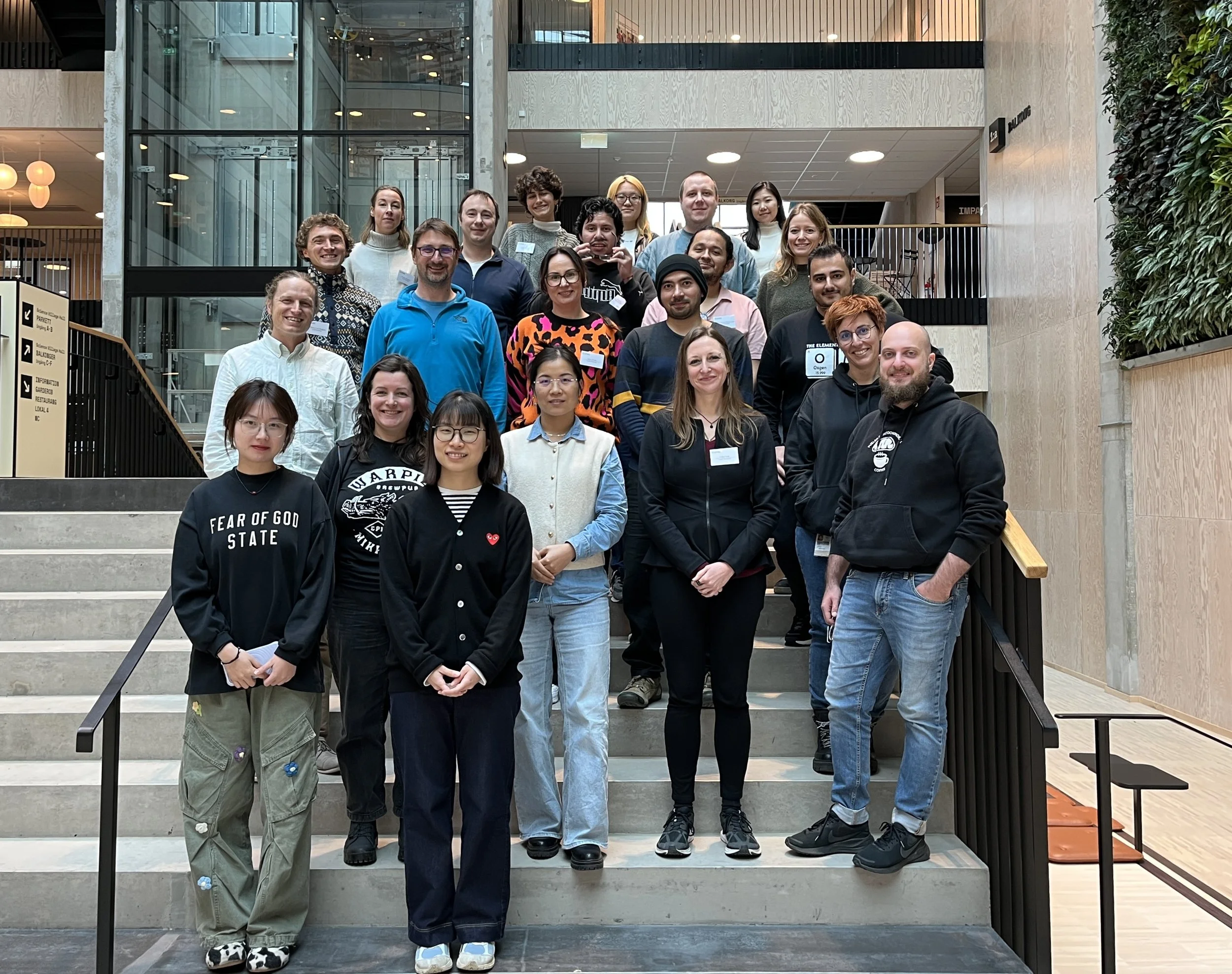
Participants at the Quasar workshop pictured in The Loop building in November.
– Another important aspect is feedback; we are in constant dialogue with our users to improve the software, adds Stuart Reads.
Ferenc and Stuart were impressed with the researchers attending the LINXS workshop; of which the majority came from the environmental sciences.
– It is always great to see how fast people pick up the ideas on the ways data processing happens in Quasar. While it is a steep learning curve, we usually see a large jump in people’s understanding and ability to use the tools by day two or three of a workshop, says Stuart Read.
How do they see the future, as the trend is that synchrotron experiments generate more and more data? Will Quasar be able to handle increasingly large and complex data sets?

Dr. Calley Eads is a research engineer at the Biology Department at Lund University.
– We have almost reached the capacity for what people can store on their own computers. Everything is pointing toward high performing data analysis, and our tool, as others too, needs to adapt to it, says Ferenc Borondics.
Already more and more facilities provide online storage space with virtual access to computing services. Quasar might offer such services too, still building on the Orange framework, which is currently being developed along these principles.
– It is an exciting time to be working in this field, especially with machine learning opening up new ways to process large data sets, says Stuart Read.
Dr. Calley Eads, research engineer, was one of the organisers of the workshop, together with researcher Dr. Milda Pucetaite. They both work at the Biology Department at Lund University. They say that one of the reasons they invited the Quasar project is that people need help to fully utilise the tools.

Milda Pucetaite initiated the workshop on Quasar. She is a researcher at the Biology Department at Lund University.
– While students and other early-career researchers would use Quasar, many have expressed that they want to learn more about advanced methods for Quasar. Being able to invite Ferenc and Stuart for targeted tutorials was fantastic in terms of building capacity and develop their skills, says Calley Eads.
– I think the beauty of Quasar lies in, among other things, the ability to analyse different types of spectroscopy and microscopy data: from X-rays to infrared. This is particularly relevant in environmental science, where the use of combinations of different analytical tools is particularly important for comprehensive understanding of complex sample systems, and that was reflected in the workshop attendance, says Milda Pucetaite.
Read about the Environment and Climate Theme
Read about the Advanced Imaging and Data Analysis Theme
About Quasar
Quasar is an open-source project, a collection of data analysis toolboxes extending the Orange suite. It aims to empower researchers from a variety of fields to gain better insight to their data through interactive data visualization, powerful machine learning methods and combining different datasets in easy to understand visual workflows.
It intends to add file readers, processing tools, and visualizations for multiple measurement techniques. This will allow the discovery of new scientific insights through multimodal data analysis.