
Workshop on X-ray computed tomography brought experts and early career researchers together
X-ray computed tomography enables 3D imaging of materials and structures over a wide range of scales, from nanometre to centimetre. With a new 3D imaging beamline on the way at MAX IV (TomoWISE), representing a huge advance in the imaging capabilities in terms of sample sizes, spatial resolutions and acquisition speeds, building a community of users that can share knowledge and experience is important.
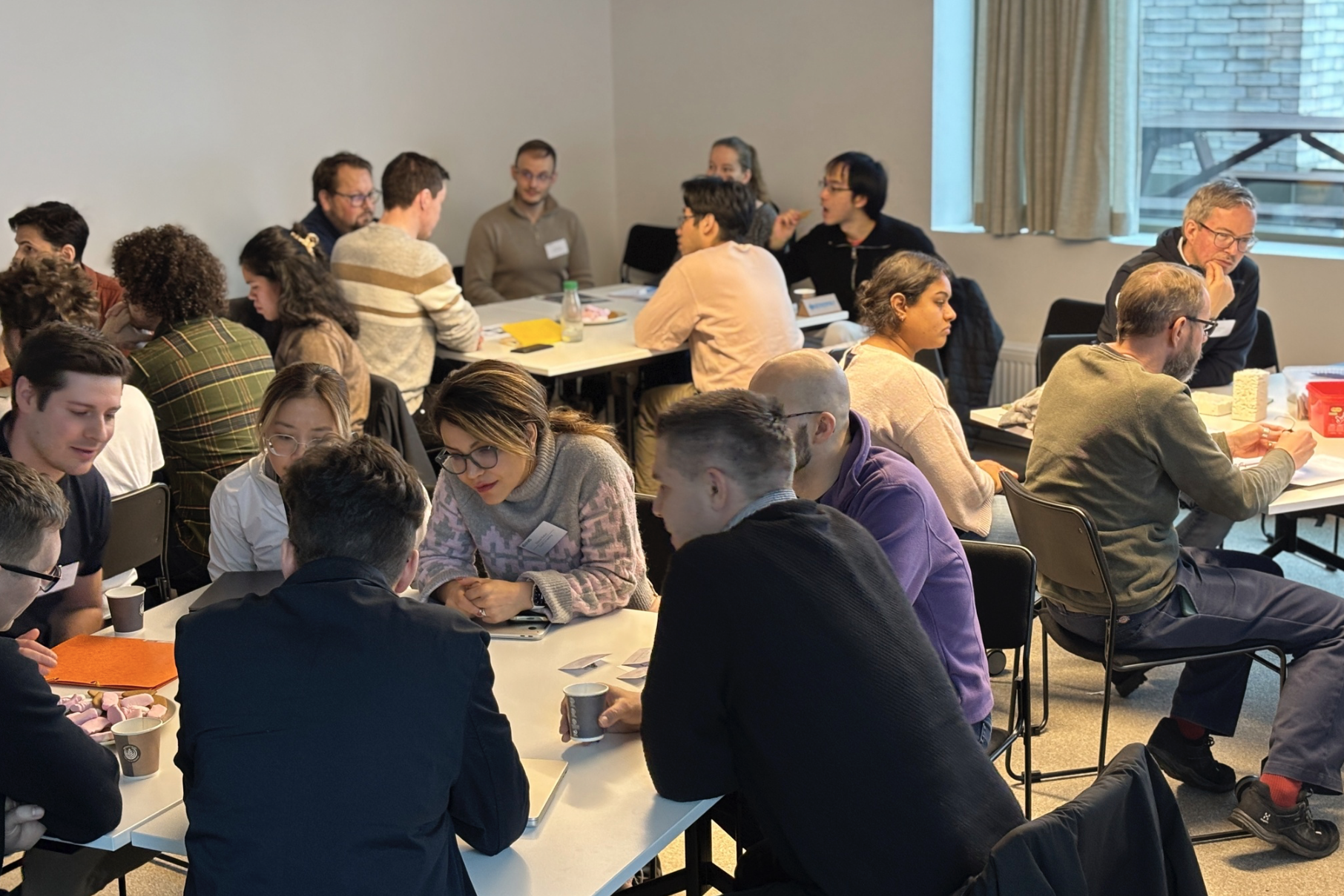
The workshop at LINXS in December elicited lively discussions and interaction between early career researchers and the experts in attendance.
“With new capabilities, the complexity also increases, all the way from experimental design to data analysis. It has become more difficult for new users to thoroughly understand the challenges involved in the process,” says Endri Lacaj, postdoctoral researcher at the Division of Solid Mechanics at Lund University.
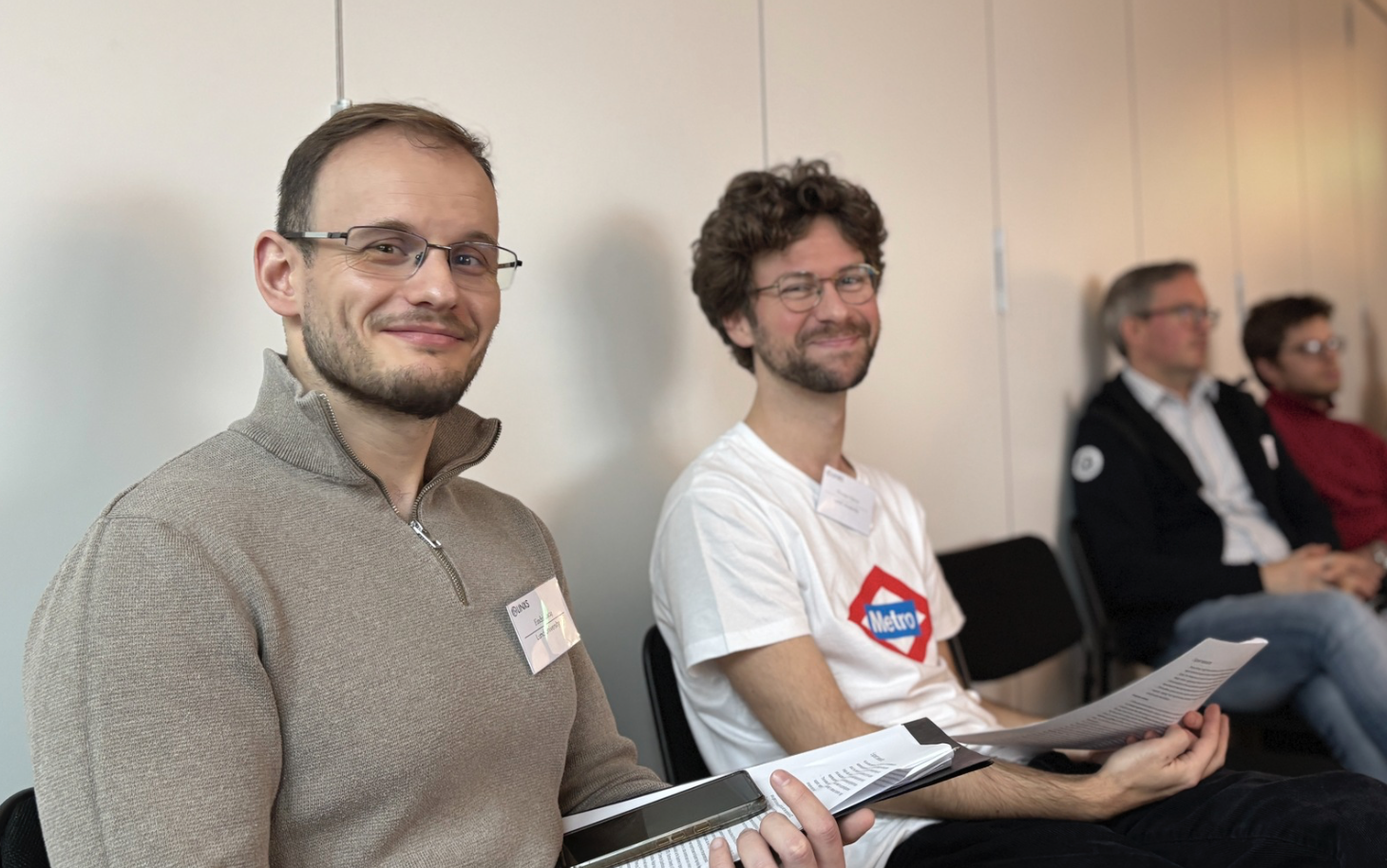
Endri Lacaj and Florian Schott organised the workshop to help researchers understand how they can use XCT and how their research can benefit from the technique.
Endri Lacaj and Florian Schott, fellow postdoctoral researcher from the Division of Solid Mechanics at Lund University, recently organised an introductory workshop on X-ray computed tomography, XCT, for early career researchers. In attendance were PhD students, postdoctoral researchers and master students, plus industry researchers – with research interests ranging from structural characterisation of materials, from gels to wood, to in-situ conditioning of samples.
“Despite the variety of different applications that benefit from XCT, some of the main difficulties remain similar among all disciplines and we can, therefore, all learn from one another,“ says Endri Lacaj.
“This was also our main motivation for the general workshop on tomography; with a goal to help young and future scientists understand the capabilities of the technique and how their research could benefit best from it,” says Florian Schott.
They invited tomography experts and experienced users to the workshop who provided useful info and feedback related to X-ray physics and applications, experimental planning and volumetric image analysis.
Important to discuss what techniques are feasible for different sample materials
One of the experts was Stephen Hall, professor at the Division of Solid Mechanics at Lund University. He has more than 20 years’ experience of different 3D-imaging techniques. He says that it is good to meet with the researchers early in their research process to be able to discuss what techniques are feasible for their ideas and sample materials.
“XCT has a lot of potential, but it can be a challenge to understand how to optimise the sample, the experiment, the imaging and the analysis in combination to retrieve the right information, e.g., how wood swells in water or the arrangement of small-scale structures in seashells. As an example, often the envisaged samples are too large to be able to get the high resolution they are after to solve their research question.”

Stephen Hall has more than 20 years’ experience of different 3D-imaging techniques. He says that it is good to meet with the researchers early in their research process to be able to discuss what techniques are feasible for their ideas and sample materials.
“If that is the case, we can discuss other ways they might be able to see the features or processes they want to identify”.
Discussing ideas and together teasing out how to solve them is the best way to learn, he emphasises. Creating places where experts and researchers can meet means that many initial hurdles and challenges can be overcome.
Stephen Hall notes how many of the participants were eager to learn more about how to use XCT to image in 4D, to understand how things change over time, for example different chemical processes, or how strain and stress can affect materials.
“This is really exciting as by running experiments in-situ at an imaging beamline we can retrieve data not just for material structures, but how these structures change in time as we apply for example mechanical load or treat them with water.”
“With the new beamline at MAX IV, we will be able to further develop XCT for in-situ imaging with less restrictions on, for example, sample size whilst still achieving the desired spatial and temporal resolutions.”
Inspiring to talk to researchers from different places
Malin Pålsson was one of the master students who attended the workshop. She works on foraminifera, microorganisms that live on the sea floor. She attended the workshop to learn more about how to use XCT to study the structure of foraminifera shells. Depending on salinity, sea temperature and nutrient availability, the foraminifera build their shells differently.
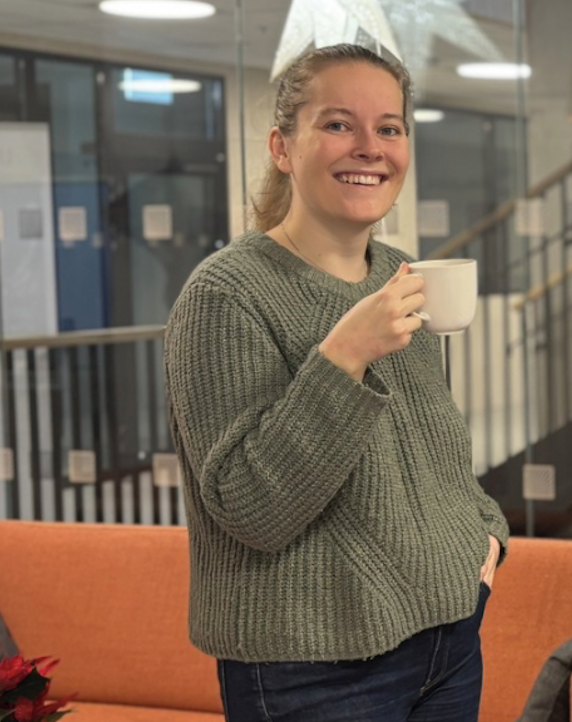
Malin Pålsson was inspired by the variety of perspectives presented at the workshop.
“Foraminifera can be used as indicators of environmental change, as their shells store important knowledge of the conditions in the sea at different times. With the help of XCT, I can build 3D models to be able to better predict and understand how the environment was at a particular time.”
She was surprised at how many researchers had travelled from elsewhere than Lund to attend.
“It was very inspiring to talk to people from other academic institutions, who have different experiences than me. I learnt a lot during the day.”
Ambition to grow the soft matter community with more targeted events
Endri Lacaj and Florian Schott are very happy with the outcomes of the workshop.
“We believe that the workshop could be fruitful to both researchers and technical specialists involved in complementary activities. While new scientists get to discuss with experts and peers, their current ideas mature, and newer ones are born,” says Endri Lacaj.
“We see that people involved in technical developments (sample environments, algorithms, etc.), can benefit through better understanding of what researchers need, the direction that XCT is heading and how their current tools could be shaped in the future.”
Their long-term goal is that the user community will expand, and that its needs will converge towards more specific topics for which dedicated workshops or hackathons, or even larger scale events can be organised.