
XAS-school prepared PhD students for independent beamtime
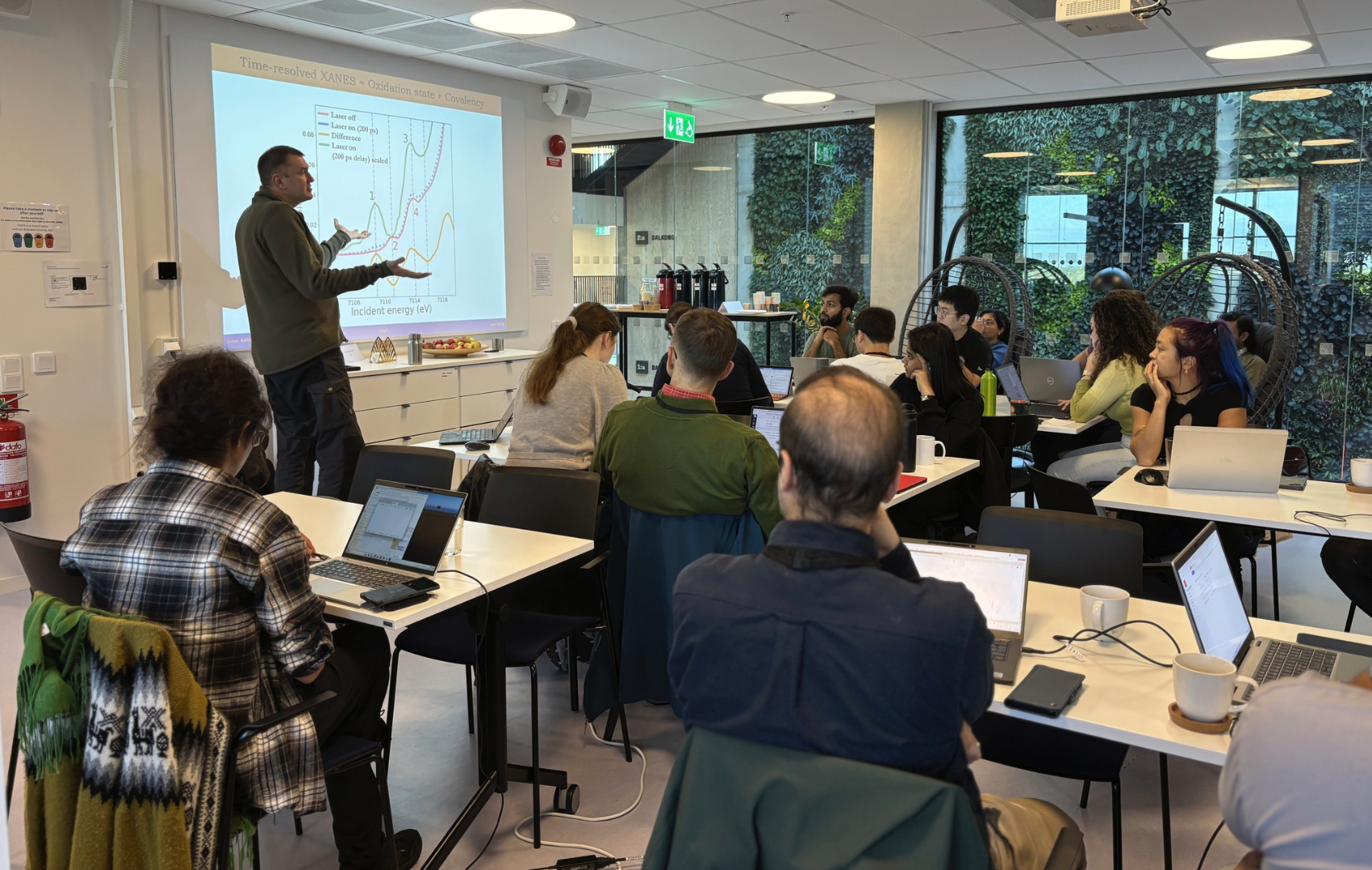
Jens Uhlig is pictured presenting at the XAS-school at LINXS. He emphasises the importance of maintaining a strong practical focus for the school. He has noticed how this forces the students to become more independent and analytical.
The X-ray absorption spectroscopy (XAS) PhD school trains new or early users to design, plan, prepare, perform and analyse an X-ray absorption spectroscopy experiment at a synchrotron beamline. The most recent school was held at LINXS in early autumn.
“With this concept, we can create independent users who can make their own beamtime afterwards. To reach this level of independence, it is important to focus on just one technique and learn it properly,” says Jens Uhlig, senior lecturer at Chemical Physics at Lund University.
XAS is used to analyze the electronic structure of atoms and molecules by measuring the energy absorption of X-rays as they interact with a sample, providing insights into its chemical composition and local bonding.
XAS school started as a motivation to support early career researchers
Jens Uhlig was motivated to design the first XAS-school eight years ago as he wanted to support early career researchers to start using large scale research facilities. Since then, he has run the school four times, and three times at LINXS. The school is divided into three parts; the first one focuses on theory; the second on designing and performing an experiment at the Balder beamline at MAX IV, and the third part on data analysis.
“To properly learn, you need to try things out for yourself, for example grind the sample, and push the buttons at the beamline. But before you can do this, you need to reflect on what you want to measure. With the XAS technique you can answer very specific things: for example, analyse the local environment and structure around specific atoms, and the oxidation state of catalytic materials,” says Jens Uhlig.
While the basic components of the course have not changed since he first ran it, he always includes a special session focusing on recent changes in the field. This time, he highlighted how one can study catalysis in real time: this supports a deeper understanding of the interplay between catalysts, reactants and conditions for example, as it can capture transient state and structural changes that are invisible in static studies.
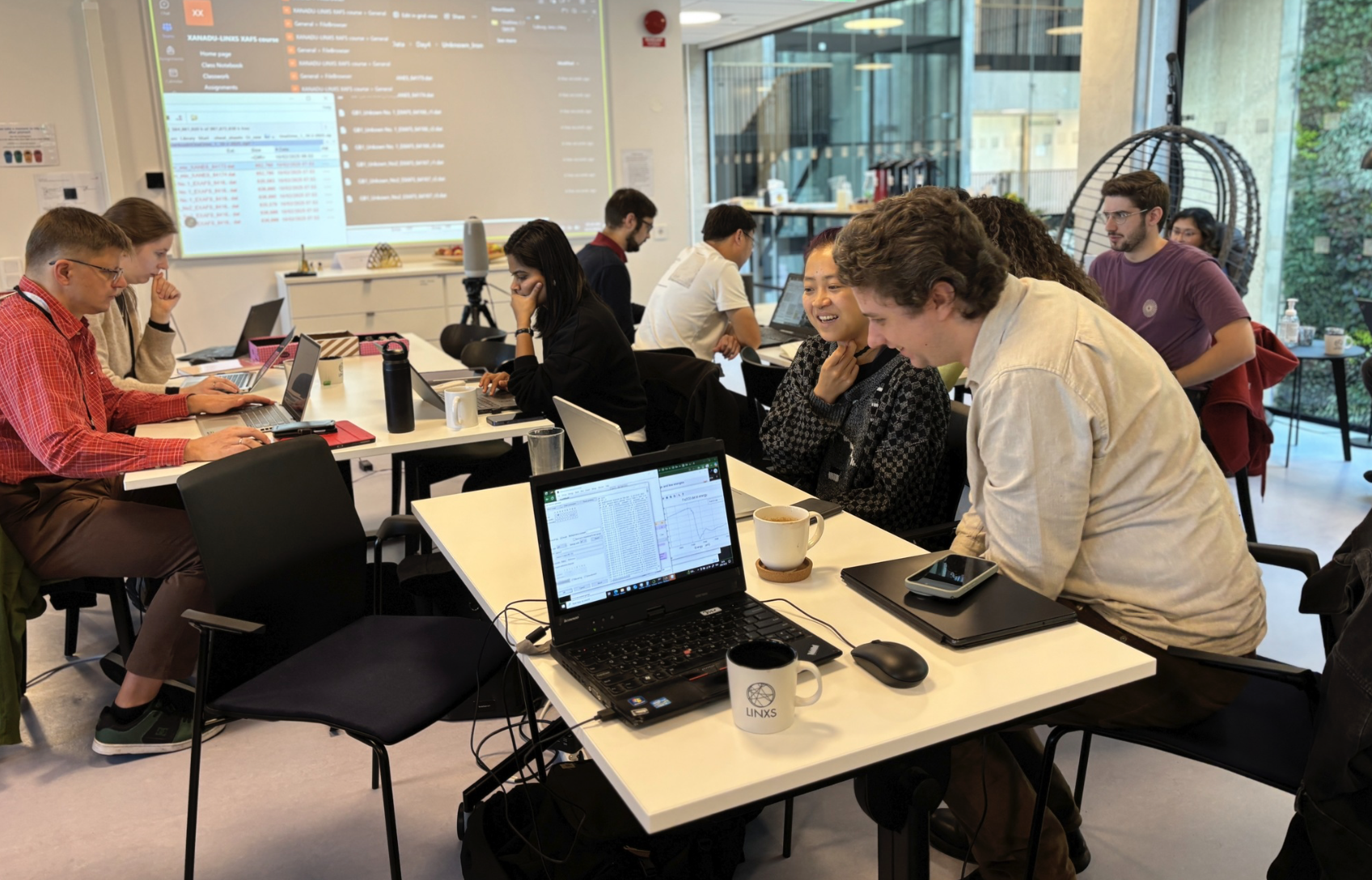
The idea is that the students should be able to create their own beamtime after the school. Jens Uhlig has seen many former students become users at facilities like MAX IV.
The importance of a practical approach cannot be underestimated
Jens Uhlig emphasises the importance of maintaining a strong practical focus for the school. He has noticed how this forces the students to become more independent and analytical. He is proud that many of his former students are now independent users at MAX IV. He further highlights the need to teach data analysis, not just in his course, but in general to increase the scientific output from facilities such as MAX IV.
“We want to teach the students what is good data. How can they extract the data they need, and how can they present their results? This is by no means easy,” says Jens Uhlig.
Connected to the larger issue of data analysis are also discussions of the limitations of data and of experiments. This is a component he has added to the course.
“As these students are starting out in their career, I want to support them to also talk about uncertainties: what are the limits of their approach? If more people do this, we can create an open discussion, which can open a whole field for further learning.”
Right science for large-scale facilities
These types of discussions are also important for ensuring that the right science is performed at large-scale research facilities. In the case of XAS, this can for example mean experiments which aim to increase knowledge on situ charging or discharging of batteries to increase their effectiveness, the molecular structures of catalytic materials, and why and how catalyst poisoning occurs, whereby a catalyst’s active sites become deactivated by impurities that stops their ability to promote chemical reactions.
“By discussing ways to use XAS for different experiments, we can not only support the creation of more users but also increase knowledge of what type of experiments should be done at MAX IV, and what experiments are better suited for other lab environments.”
He has already made plans for the next XAS-school, which will probably run in late 2026/early 2027.
About the XAS-school
The focus of the XAS-school is on XAS experiments, where the students learn EXAFS analysis of molecular and solid samples, XANES analysis of molecular, solid and nano particulate samples, and linear combination analysis in XANES/EXAFS of diverse mixed samples and crystalline materials.
The school also gives a short general introduction to specify which other techniques are available. This enables the students to formulate questions that can be can be answered with XAS but also to choose alternative techniques for the questions that can be better answered with other techniques.
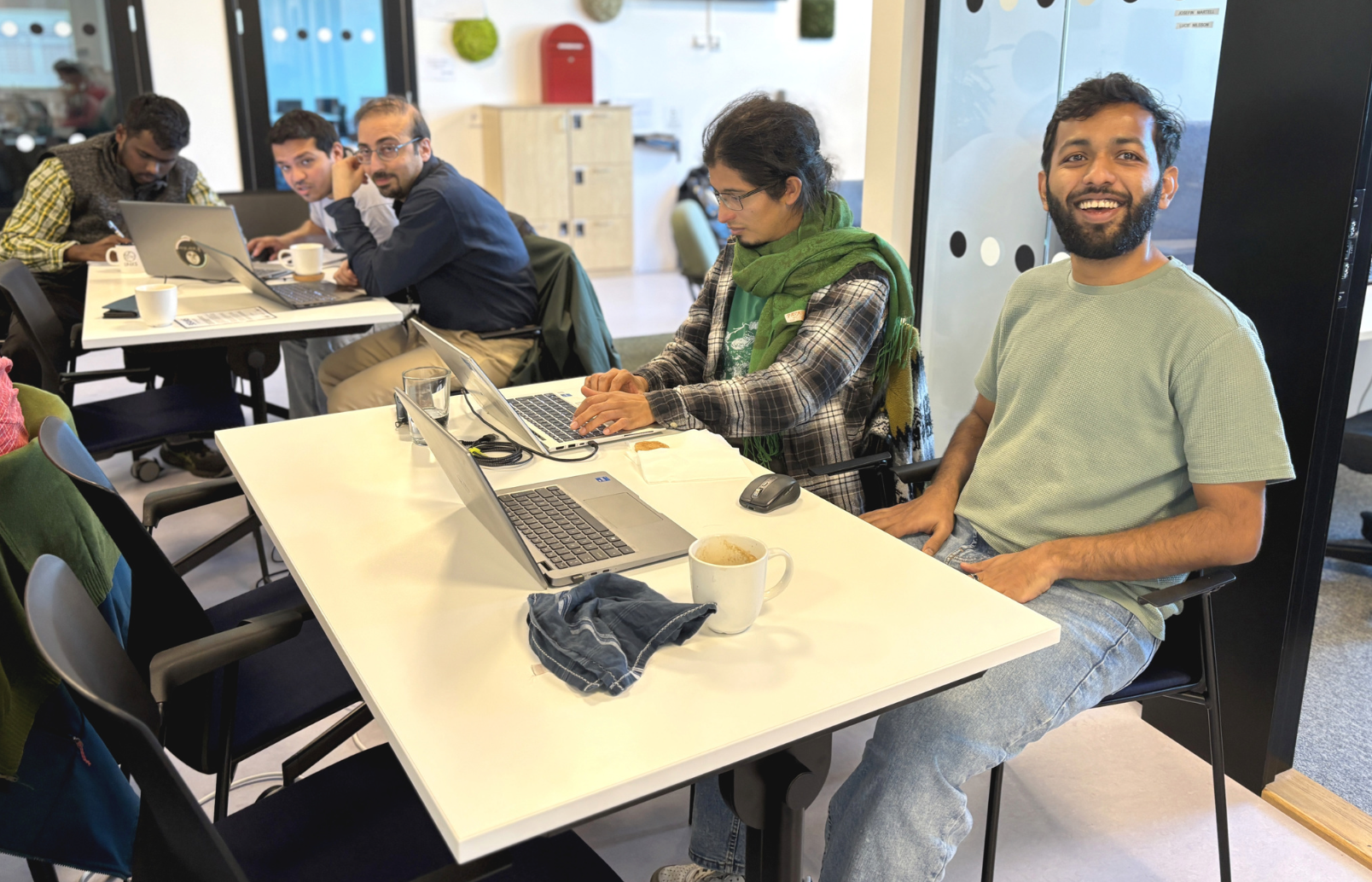
With the school, Jens Uhlig wants to initiate discussions on what science should be performed at MAX IV. He also encourage students to share uncertainties and discuss the limits of different approaches. This can open for collective learning within the whole field.