Antibodies in Solution: a LINXS - NIST Webinar Series
Read More
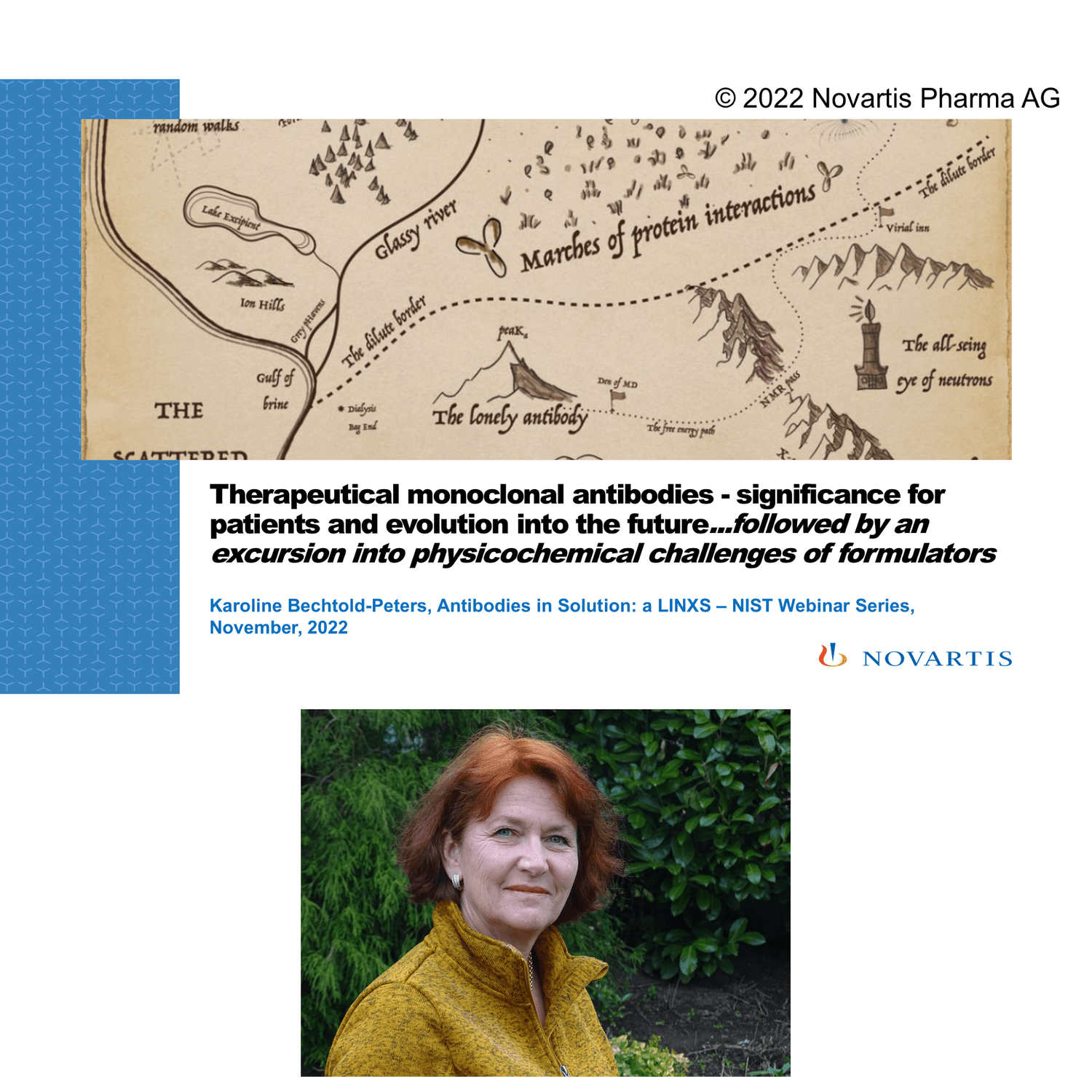
Antibodies in Solution: a LINXS - NIST Webinar Series
Read MoreCoWork webinar series
Read MoreCoWork webinar series
Read MoreCoWork webinar series
Read MoreCoWork webinar series
Read MoreCoWork webinar series
Read MoreCoWork Series
Read MoreAntibodies in Solution: a LINXS - NIST Webinar Series
Read MoreAntibodies in Solution: a LINXS - NIST Webinar Series
Read MoreAntibodies in Solution: a LINXS - NIST Webinar Series
Read MoreAntibodies in Solution: a LINXS - NIST Webinar Series
Read MoreChallenges in upscaling x-ray nanoimaging and using modern automatic differentiation (AD) methods to design gradient-based inversion procedures that do not require explicit calculations of complex closed-form gradient expressions.
Read MoreIdentifying chiral nanoparticles with abnormally tuned morphology in three dimensions is essential for optical, catalytic, and biological applications. Exploiting the merits of Bragg coherent X-ray diffraction imaging and new methodology for identifying the 3D information of chiral gold…
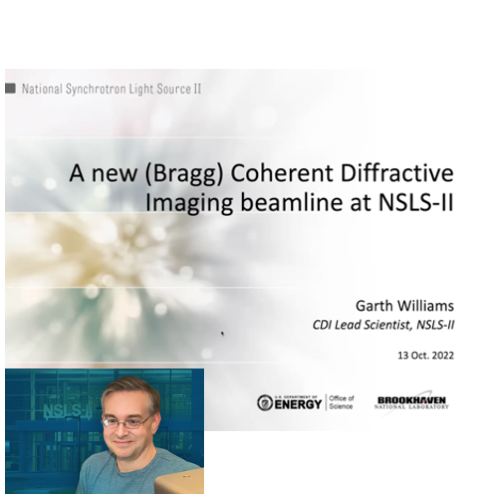
Read MoreRecent development in Bragg ptychography. Introducing Diamond Light Source I13-1 beamline and some recent work on the comparison between Bragg CDI and Bragg ptychography on nanocrystals.
Read MoreElectron microscopes use electrons with wavelengths of a few picometers, and are potentially capable of imaging individual atoms in solids at a resolution ultimately set by the intrinsic size of an atom. With recent advances in detector technology and reconstruction algorithms, the resolution of…
Read MoreMany current forthcoming applications of magnetic materials involve heterostructures or alloys containing magnetic and non-magnetic elements. X-ray Resonant (Coherent) Scattering is the technique of choice to probe such phenomena thanks to its element-selectivity and spatial sensitivity.
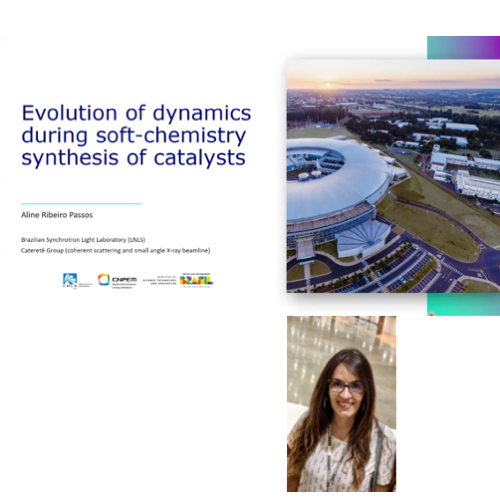
Read MoreReconstruction of small grains of colloidal & mesoscopic crystals. In-situ CXDI experiments performed in Bragg geometry for single nano-particles under catalytic reaction conditions.
Read MoreThe dream of imaging single molecules was instrumental to the construction of X-ray free-electron lasers (XFELs).
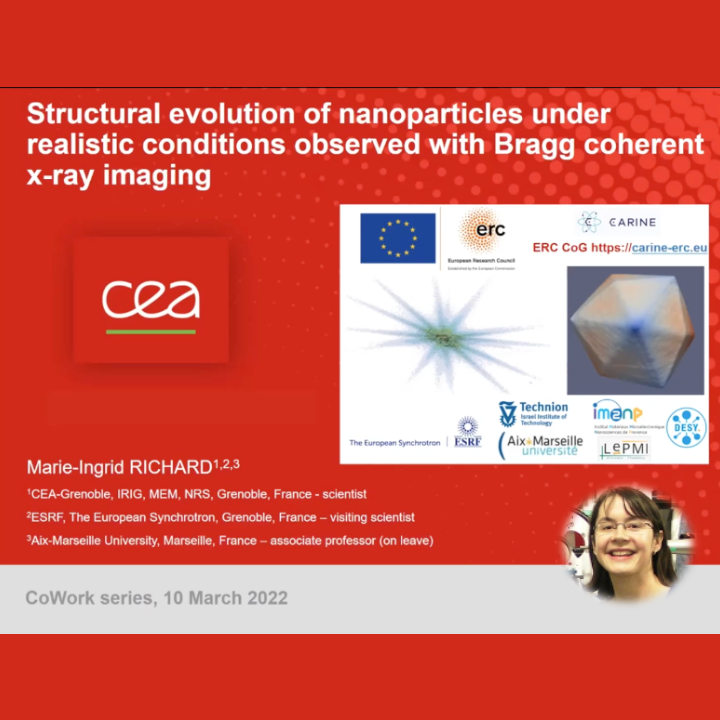
Read MoreThe advent of the world’s first coherent hard X-ray sources represents an unprecedented opportunity to conduct in situ and operando studies on the structure of nanoparticles in reactive liquid or gas environments.
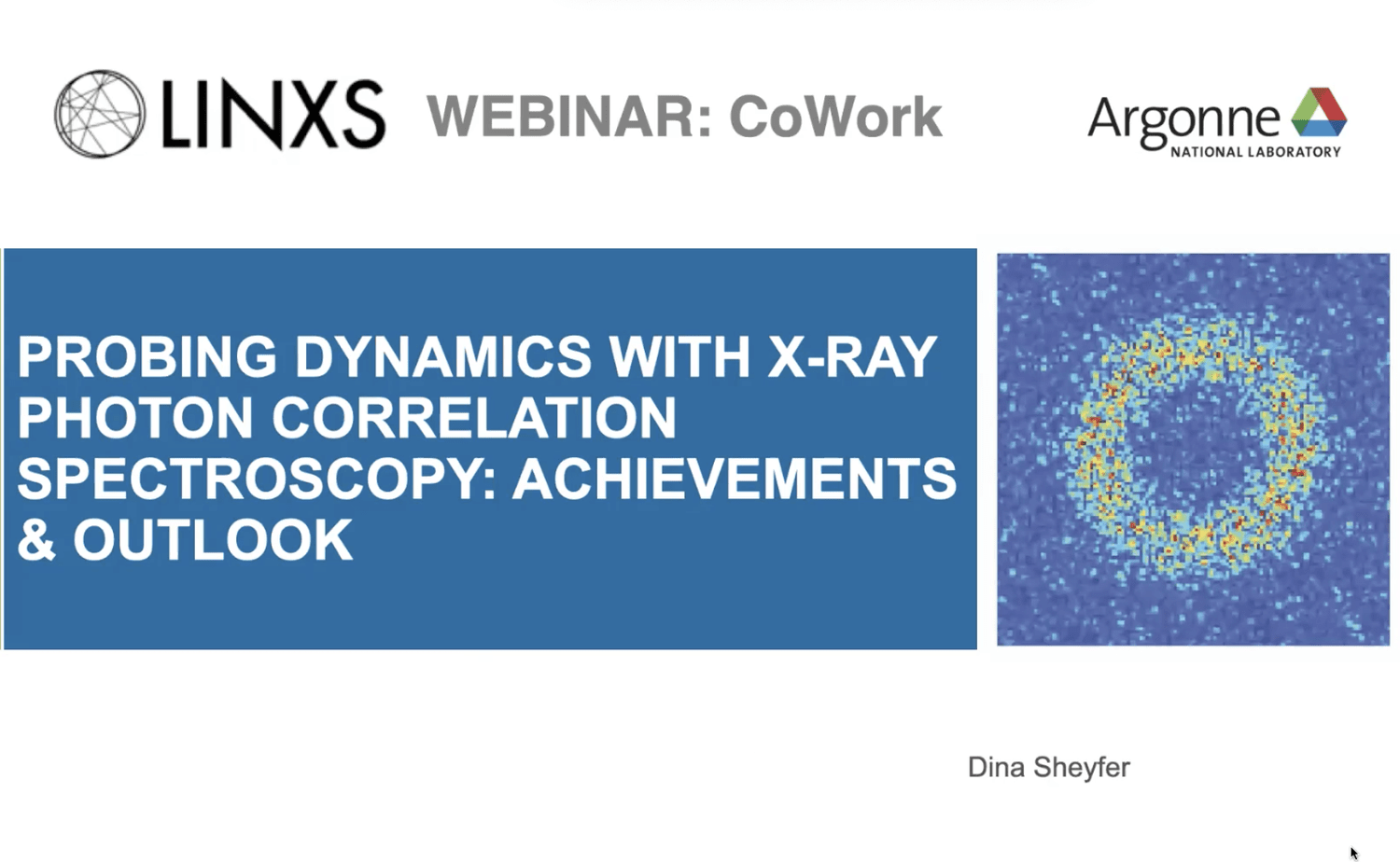
Read MoreThe presentation introduces the XPCS method and present applications in soft and crystalline condensed matter. XPCS and the new high-speed X-ray detector systems provide a golden opportunity to shed new light on a problem of both practical and fundamental importance – the dynamics of fluctuations…
Read More