
ABOUT
The Theme consolidates computational scattering tools into accessible, well-documented packages—integrated into SasView and Jupyter Notebooks—enabling users of ESS, MAX IV, other facilities, and industry to interpret scattering data from concentrated biomolecular and soft matter systems.
Small-angle X-ray and neutron scattering (SAXS/SANS) are indispensable techniques for probing structure and interactions in soft matter and biological systems. However, interpretation of scattering data from concentrated solutions remains challenging. Current analysis tools available to facility users typically assume spherically symmetric, non-interacting particles—a gross simplification that fails for most real systems of scientific and industrial interest.
We consolidate, document, and disseminate computational tools developed by consortium members, making them available through standardised interfaces and workflows familiar to the scattering community. The tools span complementary approaches: Monte Carlo simulation (Faunus, FEASST), numerical theory (classical DFT), coarse-grained models for intrinsically disordered proteins (CALVADOS), efficient scattering calculators incorporating hydration effects (grid-based and Voronoi Tessellation), and the ShapeSpyer Python framework for generating and simulating self-assembled soft matter nanostructures (micelles, vesicles, lipid assemblies).
Primary beneficiaries are academic researchers studying protein solutions and soft matter, pharmaceutical companies formulating biologics, and the broader SAS community.
HAPPENING IN THEME

CORE GROUP
Accessible Computational Scattering Tools: Core Group member, member of WG 1 – Simulation-Based Structure Factors and WG 4 – Intrinsically Disordered Proteins and Flexible Systems, LINXS Fellow
Professor of Theoretical Chemistry, Lund University, Lund, Sweden
Accessible Computational Scattering Tools: Core Group member, member of WG 1 – Simulation-Based Structure Factors and WG 3 – Hydration, Solvation, and Coarse-Grained Scattering Models, LINXS Fellow
Professor of Materials, Centre for Analysis and Synthesis (CAS), Department of Chemistry, Lund University, Lund, Sweden
Accessible Computational Scattering Tools: Core Group member, Leader of WG 4 – Intrinsically Disordered Proteins and Flexible Systems, LINXS Fellow
Assistant Professor, Department of Biomedical Science, Malmö University, Malmö, Sweden
Accessible Computational Scattering Tools: Core Group member, Leader of WG 3 – Hydration, Solvation, and Coarse-Grained Scattering Models, member of WG 4 – Intrinsically Disordered Proteins and Flexible Systems, LINXS Fellow
Research Director, Laboratoire Jean Kuntzmann, CNRS - Université Grenoble Alpes, France.
Sergei Grudinin graduated from Moscow Institute of Physics and Technology (MIPT) in 2002. He did his Master project on MD simulations of membrane proteins in Forschungzentrum Juelich, where he continued it as a PhD thesis. In 2006, after the PhD defense, he extended the activities to method development, and later moved to Inria Grenoble France in 2007 and became a permanent CNRS scientist in 2009. During the last five years, his main research interests were the development of physics-based and data-driven algorithms for structural bioinformatics. They include novel methods for protein-protein and protein-ligand docking, including those accelerated with the Fast Fourier Transform; methods to study and predict symmetrical systems; algorithms to efficiently describe molecular flexibility; methods for integrative structural biology, e.g., those related to SAXS, SANS, AFM and cryo-EM measurements; applications of convex optimization to protein structure prediction; development of deep neural networks for structural bioinformatics, including graph- and tessellation-based geometric learning approaches.
Accessible Computational Scattering Tools: Theme Leader, Leader of WG 1 – Simulation-Based Structure Factors and WG 5 – End-User Integration and Training, member of WG 3 – Hydration, Solvation, and Coarse-Grained Scattering Models, LINXS Fellow
Professor, Division of Computational Chemistry, Department of Chemistry, Lund University, Sweden.
WORKING GROUPS FOR CATS
CATS WorkING Group 1
Simulation-Based Structure Factors
Working Group 1 focuses on developing and disseminating simulation methods for computing structure factors S(q) and scattering intensities I(q) from coarse-grained and atomistic simulations of concentrated protein solutions and self-assembled soft matter systems. The group will extend the simulation tools Faunus and FEASST. It will also integrate ShapeSpyer, a Python framework for generating soft matter nanostructures such as micelles, vesicles and lipid bilayers, with the CATS scattering calculators. Results will be benchmarked against experimental SAXS/SANS data on model globular protein systems and soft matter assemblies, and Jupyter notebook tutorials will be developed for common use cases.
Accessible Computational Scattering Tools: Core Group member, member of WG 1 – Simulation-Based Structure Factors and WG 4 – Intrinsically Disordered Proteins and Flexible Systems, LINXS Fellow
Professor of Theoretical Chemistry, Lund University, Lund, Sweden
Accessible Computational Scattering Tools: Core Group member, member of WG 1 – Simulation-Based Structure Factors and WG 3 – Hydration, Solvation, and Coarse-Grained Scattering Models, LINXS Fellow
Professor of Materials, Centre for Analysis and Synthesis (CAS), Department of Chemistry, Lund University, Lund, Sweden
Accessible Computational Scattering Tools: member of WG 1 – Simulation-Based Structure Factors and WG 2 – Numerical Theory for Structure Factors, LINXS Fellow
Research Director, Institute of Complex Systems (ISC), National Research Council (CNR), Rome, Italy.
Accessible Computational Scattering Tools: Theme Leader, Leader of WG 1 – Simulation-Based Structure Factors and WG 5 – End-User Integration and Training, member of WG 3 – Hydration, Solvation, and Coarse-Grained Scattering Models, LINXS Fellow
Professor, Division of Computational Chemistry, Department of Chemistry, Lund University, Sweden.
CATS WORKING GROUP 2
Numerical Theory for Structure Factors
Working Group 2 focuses on making numerical theories accessible for fitting scattering data from interacting particles, colloid–polymer mixtures and other complex fluids. These theories are classical density functional theory (DFT) and integral equation approaches. They provide structure factors S(q) orders of magnitude faster than simulations, which complements the simulation-based methods of Working Group 1 by allowing rapid exploration of parameter space. The group will implement these numerical theories as SasView plugins, validate them against Monte Carlo simulations and experiment, and provide user guides with worked examples.

Accessible Computational Scattering Tools: Core Group member, Leader of WG 2–Numerical Theory for Structure Factors, LINXS Fellow
Professor and Head of the Division of Computational Chemistry, Lund University, Lund, Sweden
Accessible Computational Scattering Tools: member of WG 1 – Simulation-Based Structure Factors and WG 2 – Numerical Theory for Structure Factors, LINXS Fellow
Research Director, Institute of Complex Systems (ISC), National Research Council (CNR), Rome, Italy.
CATS WORKING GROUP 3
Hydration, Solvation, and Coarse-Grained Scattering Models
Working Group 3 focuses on consolidating and advancing methods for incorporating solvation contributions to SAXS/SANS signals. It also develops scattering models compatible with the coarse-grained representations used in Faunus, CALVADOS and ShapeSpyer simulations. The hydration layer around biomolecules has a different electron density than bulk water, and it contributes significantly to SAXS signals. The group will systematically compare existing solvation approaches and extend them to concentrated solutions. It will validate them against synchrotron SAXS data and neutron contrast variation experiments (ILL/ESS), and establish recommendations for when explicit solvation treatment is necessary.
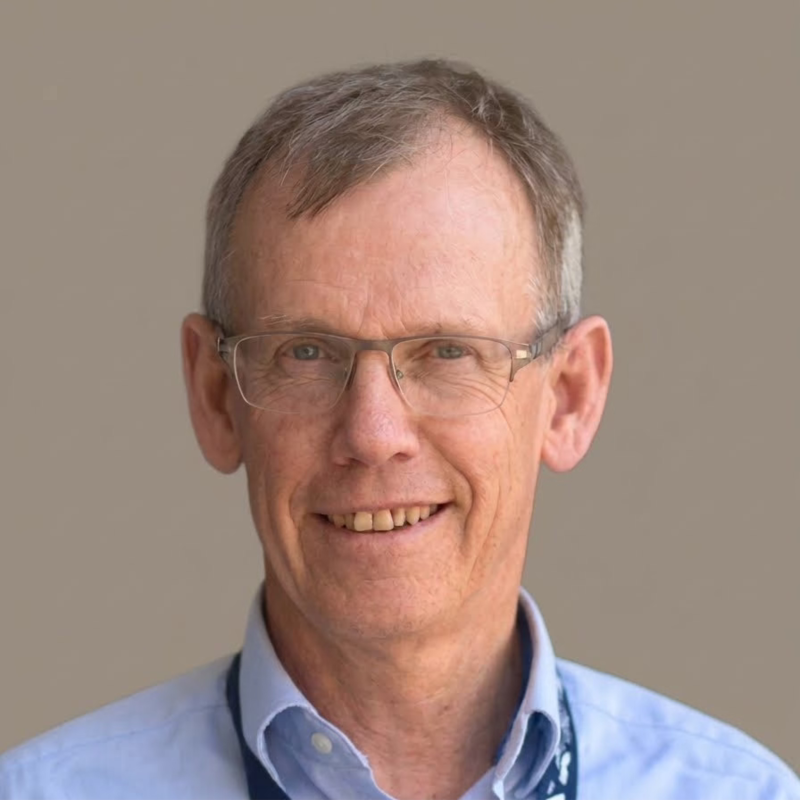
Accessible Computational Scattering Tools: Core Group member, member of WG 1 – Simulation-Based Structure Factors and WG 3 – Hydration, Solvation, and Coarse-Grained Scattering Models, LINXS Fellow
Professor of Materials, Centre for Analysis and Synthesis (CAS), Department of Chemistry, Lund University, Lund, Sweden
Accessible Computational Scattering Tools: Core Group member, Leader of WG 3 – Hydration, Solvation, and Coarse-Grained Scattering Models, member of WG 4 – Intrinsically Disordered Proteins and Flexible Systems, LINXS Fellow
Research Director, Laboratoire Jean Kuntzmann, CNRS - Université Grenoble Alpes, France.
Sergei Grudinin graduated from Moscow Institute of Physics and Technology (MIPT) in 2002. He did his Master project on MD simulations of membrane proteins in Forschungzentrum Juelich, where he continued it as a PhD thesis. In 2006, after the PhD defense, he extended the activities to method development, and later moved to Inria Grenoble France in 2007 and became a permanent CNRS scientist in 2009. During the last five years, his main research interests were the development of physics-based and data-driven algorithms for structural bioinformatics. They include novel methods for protein-protein and protein-ligand docking, including those accelerated with the Fast Fourier Transform; methods to study and predict symmetrical systems; algorithms to efficiently describe molecular flexibility; methods for integrative structural biology, e.g., those related to SAXS, SANS, AFM and cryo-EM measurements; applications of convex optimization to protein structure prediction; development of deep neural networks for structural bioinformatics, including graph- and tessellation-based geometric learning approaches.
Accessible Computational Scattering Tools: member of WG 3 – Hydration, Solvation, and Coarse-Grained Scattering Models, LINXS Fellow
Professor, Department of Chemistry, Aarhus University, Denmark.
Accessible Computational Scattering Tools: Theme Leader, Leader of WG 1 – Simulation-Based Structure Factors and WG 5 – End-User Integration and Training, member of WG 3 – Hydration, Solvation, and Coarse-Grained Scattering Models, LINXS Fellow
Professor, Division of Computational Chemistry, Department of Chemistry, Lund University, Sweden.
CATS WORKING GROUP 4
Intrinsically Disordered Proteins and Flexible Systems
Working Group 4 focuses on providing validated coarse-grained models and scattering predictions for intrinsically disordered proteins (IDPs) and flexible biomolecules. IDPs lack stable tertiary structure and exist as conformational ensembles, which presents unique challenges for scattering analysis. The group will integrate the CALVADOS3 coarse-grained models with the scattering calculators from Working Group 3 and benchmark them against experimental SAXS data on model IDPs. It will also develop protocols for handling conformational ensembles in scattering analysis.
Accessible Computational Scattering Tools: Core Group member, member of WG 1 – Simulation-Based Structure Factors and WG 4 – Intrinsically Disordered Proteins and Flexible Systems, LINXS Fellow
Professor of Theoretical Chemistry, Lund University, Lund, Sweden
Accessible Computational Scattering Tools: Core Group member, Leader of WG 4 – Intrinsically Disordered Proteins and Flexible Systems, LINXS Fellow
Assistant Professor, Department of Biomedical Science, Malmö University, Malmö, Sweden
Accessible Computational Scattering Tools: Core Group member, Leader of WG 3 – Hydration, Solvation, and Coarse-Grained Scattering Models, member of WG 4 – Intrinsically Disordered Proteins and Flexible Systems, LINXS Fellow
Research Director, Laboratoire Jean Kuntzmann, CNRS - Université Grenoble Alpes, France.
Sergei Grudinin graduated from Moscow Institute of Physics and Technology (MIPT) in 2002. He did his Master project on MD simulations of membrane proteins in Forschungzentrum Juelich, where he continued it as a PhD thesis. In 2006, after the PhD defense, he extended the activities to method development, and later moved to Inria Grenoble France in 2007 and became a permanent CNRS scientist in 2009. During the last five years, his main research interests were the development of physics-based and data-driven algorithms for structural bioinformatics. They include novel methods for protein-protein and protein-ligand docking, including those accelerated with the Fast Fourier Transform; methods to study and predict symmetrical systems; algorithms to efficiently describe molecular flexibility; methods for integrative structural biology, e.g., those related to SAXS, SANS, AFM and cryo-EM measurements; applications of convex optimization to protein structure prediction; development of deep neural networks for structural bioinformatics, including graph- and tessellation-based geometric learning approaches.
heritage working group 5
End-User Integration and Training
Working Group 5 focuses on ensuring that the developed tools reach end users through established platforms and comprehensive training. The group will coordinate SasView plugin and Jupyter development across the working groups and organise hackathons. It will also develop a webinar series that is recorded and made publicly available through LINXS. By consulting with ESS, ILL and Xenocs, the group links the Theme to large-scale facility users and to the broad global base of laboratory SAXS/WAXS users. Coordination with the SMILES Theme, including joint training events, is also handled through this group.

Accessible Computational Scattering Tools: member of WG 5 – End-User Integration and Training, LINXS Fellow
Scientific Software Developer, European Spallation Source (ESS).
Accessible Computational Scattering Tools: Theme Leader, Leader of WG 1 – Simulation-Based Structure Factors and WG 5 – End-User Integration and Training, member of WG 3 – Hydration, Solvation, and Coarse-Grained Scattering Models, LINXS Fellow
Professor, Division of Computational Chemistry, Department of Chemistry, Lund University, Sweden.
Accessible Computational Scattering Tools: member of WG 5 – End-User Integration and Training, LINXS Fellow
Computational Instrument Scientist, Data Management and Scientific Computing centre, European Spallation Source (ESS).
Accessible Computational Scattering Tools: member of WG 5 – End-User Integration and Training, LINXS Fellow
Instrument Scientist, Institut Laue-Langevin (ILL), Grenoble, France.
Accessible Computational Scattering Tools: member of WG 5 – End-User Integration and Training, LINXS Fellow
Scientist, Xenocs, Copenhagen, Denmark.
Accessible Computational Scattering Tools: Core Group member, Leader of WG 2–Numerical Theory for Structure Factors, LINXS Fellow
Professor and Head of the Division of Computational Chemistry, Lund University, Lund, Sweden