
SMILE kick-off: setting the course ahead to create more knowledge on self-assembly
LINXS’ SMILE theme aims to promote the use of neutron and X-ray scattering to understand self-assembly in soft biological and bio-inspired systems. This knowledge can explain functions in living cells and tissues and help develop new applications in food science, pharmaceuticals and biobased materials.
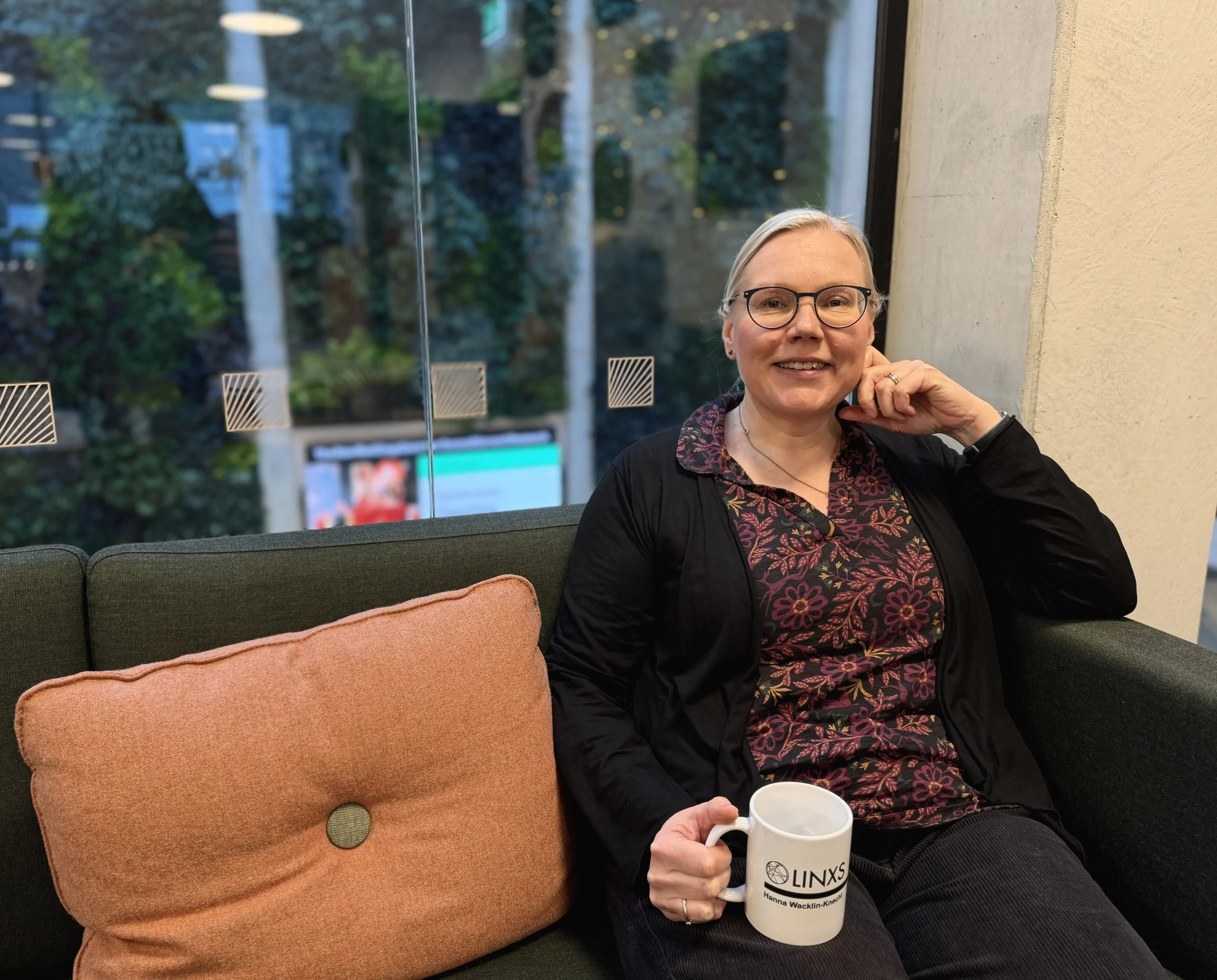
Hanna Wacklin-Knecht pictured at LINXS.
In January, the core group got together to plan the work and activities ahead.
“Since the approach is to unite around the phenomenon of self-assembly across many different systems, we spoke about the need to be proactive in enabling discussion between researchers who come from a variety of backgrounds and have different perspectives,” says theme leader Hanna Wacklin-Knecht, Head of Scientific Support at ESS, and Expert in the Physical Chemistry Division at Lund University.
One way to stimulate discussion and network building is through concrete activities. In March, an ice-breaker meeting within WG1: Higher complexity in lipid self-assembly was organised, and another meeting for WG2: Pathways of multi-scale structure formation in macromolecular systems will take place during spring. To these meetings, principal investigators and their students are invited to present their current research, interests and lab facilities. They serve as catalysts for identifying shared research questions to drive forward the work of the theme.
“The idea is to get people to think outside of their own research and identify opportunities for new collaborations,” says Hanna Wacklin-Knecht.
During the kick-off, they also identified other strategic activities for the theme, including organisation of satellite events at the upcoming ESS/ILL joint user meeting, taking place 18 – 20 November in Lund. During this meeting, the core group aims to organise satellite sessions around two key goals for the theme: to further develop analytical models for small angle neutron scattering (SANS) data, and to promote the use of time-resolved quasi-elastic neutron scattering (TR-QENS) to study biological self-assembly.
“To understand self-assembly in complex biological systems, composed of a large number of different constituents that organise themselves at multiple length scales, we need to develop more than analysis software. It requires new conceptual approaches for probing real biological systems, both theoretically and experimentally”, says Hanna Wacklin-Knecht.
A key part of this aim is to develop experimental and data-analysis methodologies for performing new and more complex time-resolved studies; to enable more advanced analyses of how functional biomolecular self-assemblies evolve as the function of time.
“During the months ahead, we will develop activities to support the realisation of these different goals, and the ice-breaker meetings will help steer the next steps for the theme.”
Make LINXS a home for early-career researchers
Another ambition is to actively engage early-career researchers in their theme. Many of the new postdocs employed in the EU-funded postdoc programme AMBER (Advanced Multiscale Biological imaging using European Research infrastructures) focus on research closely related to self-assembly. At ESS, where Hanna Wacklin-Knecht also works, several new postdocs will be starting to develop early science experiments at the facility.
“We would like to make LINXS a connection point and a forum for early career researchers whose work is related to SMILE and more broadly life-science. Especially for the postdocs based at facilities like ESS, since they do not have access to the full academic environment of a university.”
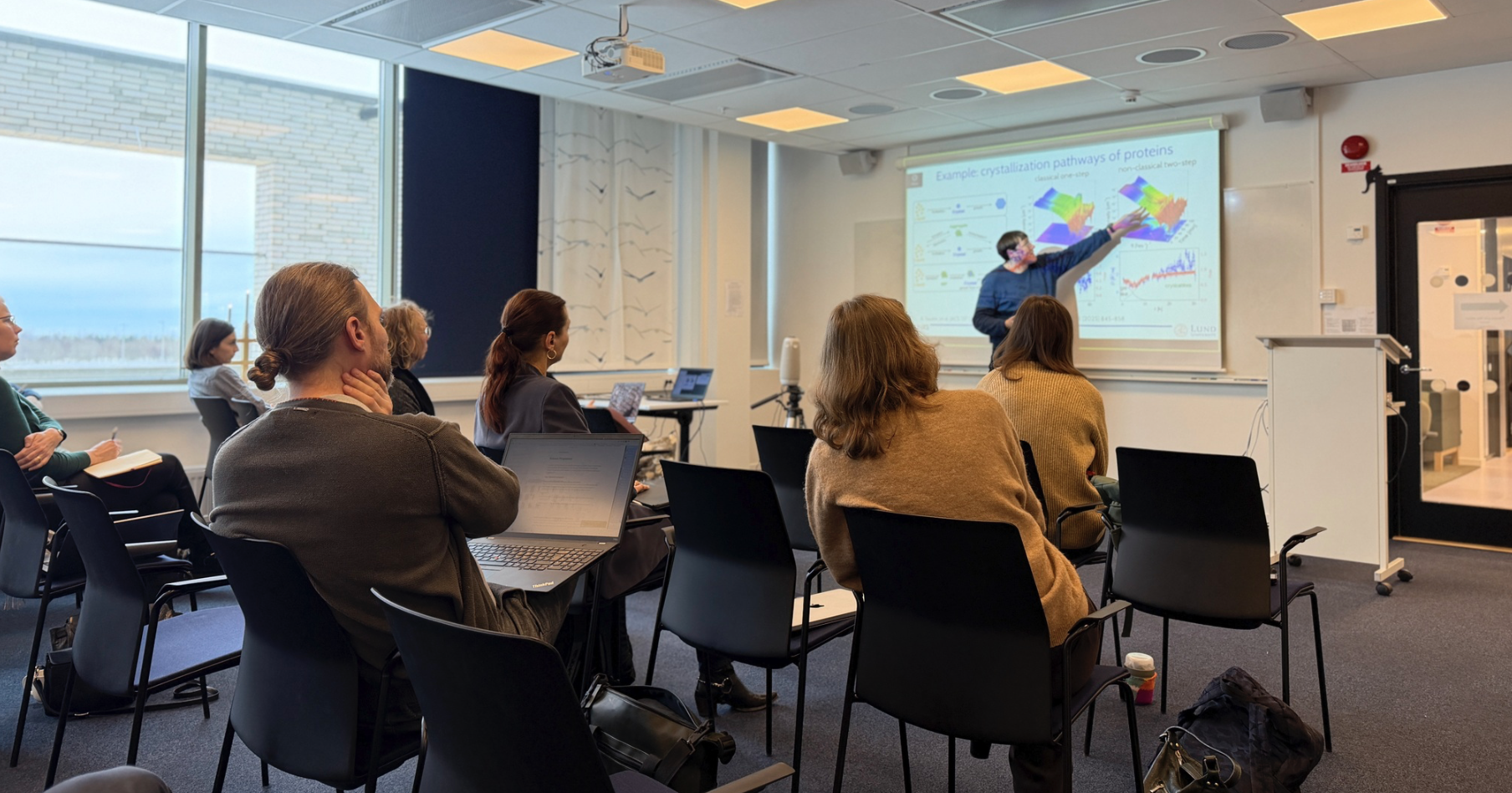
Felix Roosen-Runge, Soft Matter in Life deputy Core Group leader and co-leader of WG2 Pathways of multi-scale structure formation in macromolecular systems, presenting at the SMILE kick-off.