
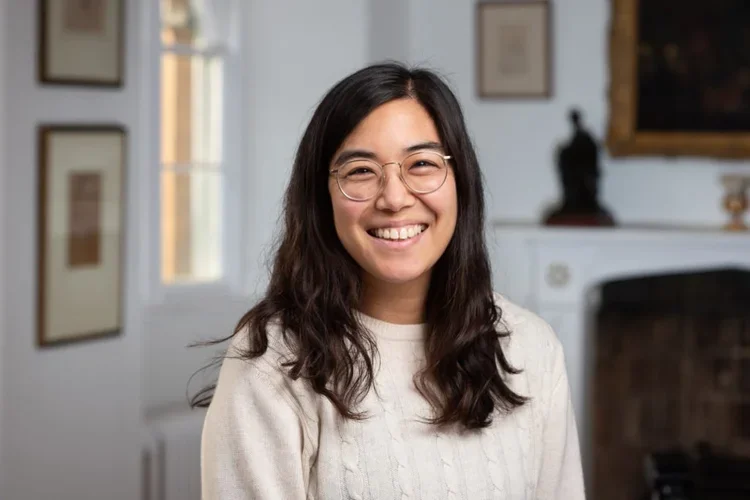
LINXS portrait: Courtney Nimura, Curator at the Asmolean Museum in Oxford
Dr Courtney Nimura is the Curator for Later European Prehistory at the Ashmolean Museum of Art and Archaeology in Oxford, in the UK. She is also a member of the core group for the Heritage Science theme.
What are you currently working on in your role as Curator?
One of the aspects of my job that I appreciate is the diversity of the work. In the Heberden Coin Room, where I am responsible for the Iron Age (pre-Roman) coins from Britain and Gaul, I am currently cataloging new acquisitions, writing a book proposal, and researching some historic loans. In the Antiquities department, where I curate the later Bronze Age and pre-Roman Iron Age collection from Europe, I am curating a special display that will open in July 2026, re-developing a case in one of the permanent galleries, and preparing for a big Festival of Archaeology day in July. As a curator in a university-based museum, a big part of my job is also conducting research and writing academic papers, and then communicating this research to the public through general lectures and outreach events.
What first sparked your interest in your field of work?
I completed my undergraduate and first Masters degrees in the USA, where I studied fine art and art history. I was lucky to be a volunteer at the Museum of Fine Arts in Boston, where I ended up working for a few years in Collections Management. I worked with a Curator there who taught me more about archaeology and got me really excited about going back to university to pursue this different career path. Now, I specialise in researching prehistoric art, so I've managed to combine all of my degrees and interests.
What challenge/societal problem are you trying to solve/work with as a Curator, and why is it important?
Our heritage is constantly at risk, and it is vital to understanding our shared humanity, so my first concern is preserving and celebrating this resource. I also think all of us working in the heritage sector strive to show how relevant the study of the past is to the present day. Archaeologists are always exploring difficult questions and have the benefit of studying the answers over thousands of years: how did humans respond to climate change in the past? What lessons can we learn from studying resilient landscapes? Archaeology has a lot to contribute to big social challenges.
What has been the most exciting or rewarding part of your work/career so far?
I love teaching and sharing my enthusiasm for archaeology. Whether with undergraduate students, interested members of the public, or curious toddlers, it is incredibly rewarding to engage with people about my discipline. I am also a passionate researcher. I don't think I will ever stop having questions that need answering.
Why did you become involved in a LINXS theme?
I am huge fan of collaborating and working with colleagues from other disciplines. I'll work with anyone who is doing interesting things, from particle accelerator physicists to engineers to artists, because I learn a lot from them in the process. Our Heritage Science theme is a great example. I've been so lucky to work with this group – some of us are already working on spin-off projects and will continue to collaborate in the future.
What advice would you give to anyone eager to get into curating/museum work?
Volunteer! I started as a volunteer in a museum and was really lucky to be able to see many different parts of the work that went on inside. I think exposure is key, and you'll learn most by doing.