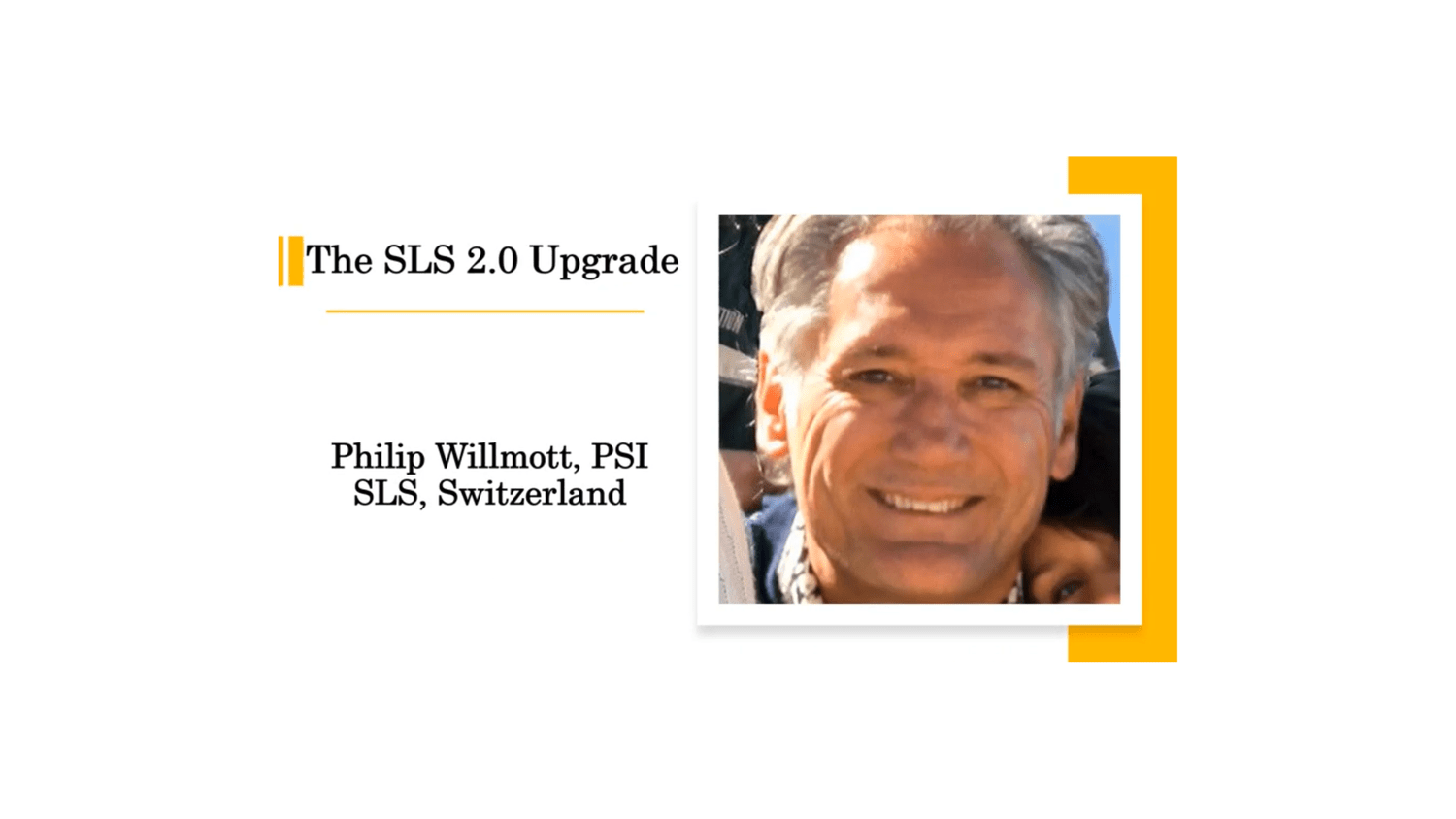
Speaker: Philip Willmott, PSI SLS, Switzerland Abstract: The SLS was for over a decade the benchmark synchrotron facility regarding its performance relative to the theoretical optimal value, given the machine parameters. However, with the advent of a new-generation of storage rings, dubbed…
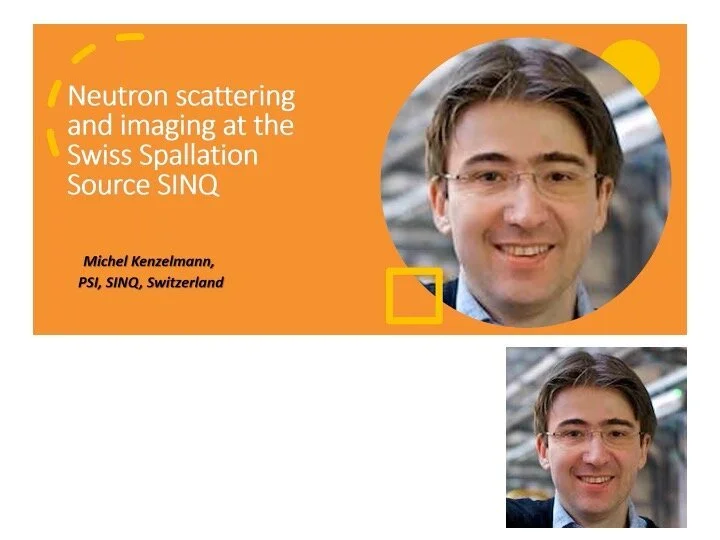
Read MoreAn introduction to the Swiss Spallation Source SINQ, its neutron scattering and imaging instrumentation, and the SINQ science programme. Speaker: Michel Kenzelmann, PSI SINQ, Switzerland. This webinar is part of LINXS webinar series: Science at Large Scale Research Facilities, introducing the…
Read MoreIn the past decade we have seen very important developments in the field of accelerator based X-ray user facilities, with the advent of 4th generation synchrotron sources and MHz rate free electron lasers. The first hard X-ray free-electron laser, LCLS (US) became operational in 2009 and over the…
Read MoreThis talk presents some key concepts of FEL operation, and highlights from the first years of FEL science: mostly in the field of condensed matter physics, but with a broad overview of other research fields as well. The goal is to give simple guidelines that will hopefully help to broaden the…
Read MoreNeutrons are powerful probes for the study of biological samples as they are very sensitive to hydrogen(H)-rich materials and can discriminate between isotopes of the same element. Due to this property of neutrons, they can be used to observe hydrogen and it’s isotope, deuterium in materials. To…
Read MoreMOOC on the Coursera platform (click here) This course takes you on a journey through the technologies used in particle accelerators: The microwave system which produce the electromagnetic waves that accelerate particles; The magnet technology for the magnets that guide and focus the beam of…
Read MoreMOOC on the Coursera platform (click here) Did you know that in the year 2000 there were more than 15 000 particle accelerators in the world? Today there are 30 000 of them! A third of the particle accelerators are dedicated to medical applications, such as radiotherapy, and about half are used for…
Read MoreMOOC on the Coursera platform (click here) The NPAP coourse “Medical Applications of Accelerators” is one out of three courses in the Nordic Particle Accelerator Program (NPAP). Here you will be taken on a tour focusing on the medical applications of particle accelerators. You will see that there…
Read More