
Exploring the science of liquid-liquid phase separation
Understanding why liquid-liquid phase separation occurs in cellular systems can help researchers exploit or avoid it to cure disease, develop advanced materials, and shed new light on fundamental biology. A workshop and PhD school at LINXS in August explored this complex process from multiple perspectives.
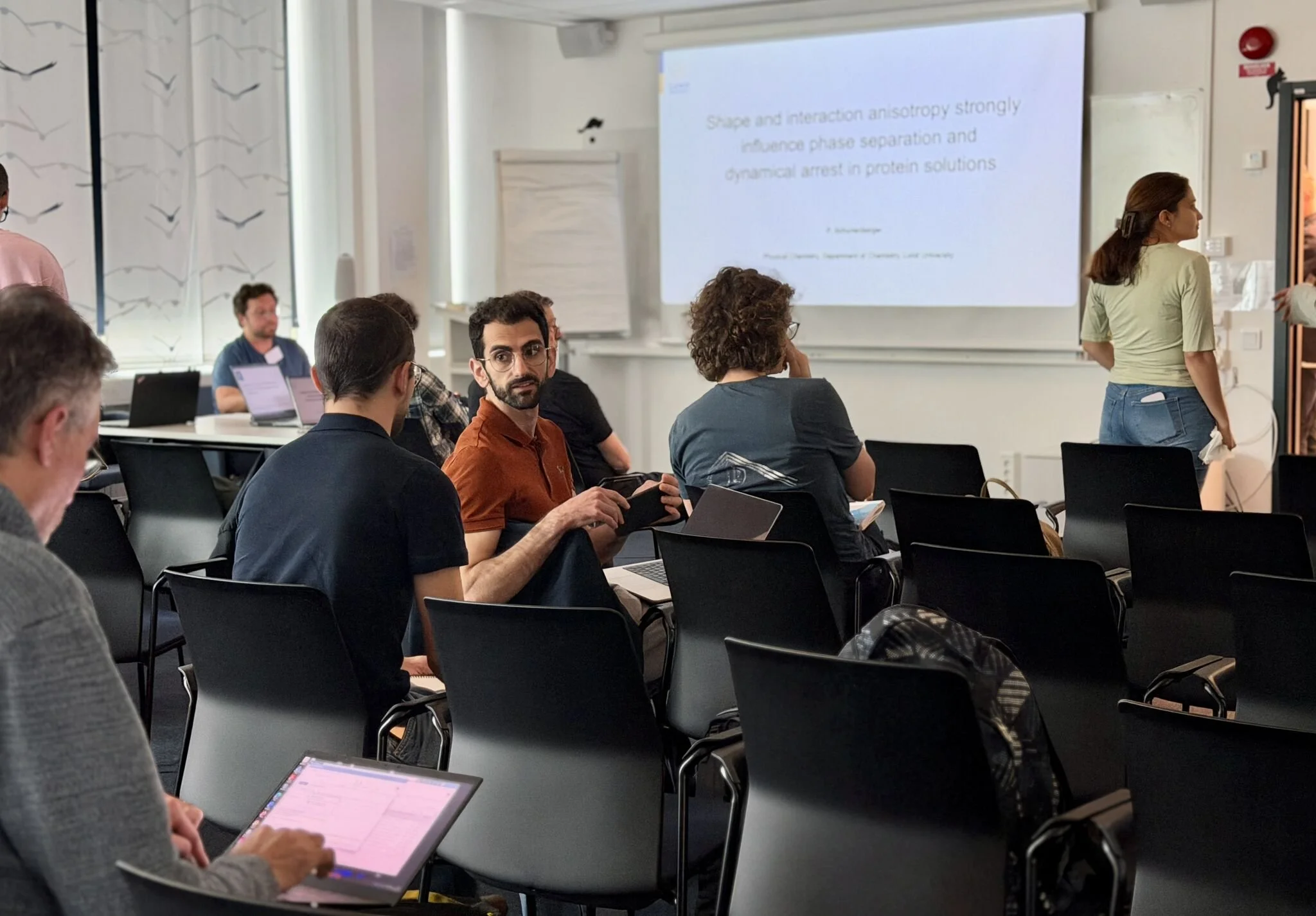
The workshop and PhD school held at LINXS have already generated positive impact. Different groups of researchers are making plans for a follow-up event and are also discussing meeting to apply for collaborative grants.
Liquid-liquid phase separation is a universal physicochemical phenomenon through which homogeneous mixtures separate into coexisting liquid phases, giving rise to complex structures across diverse natural and engineered systems. Membraneless organelles constitute one of the most fascinating and complex examples of such phase-separated states.
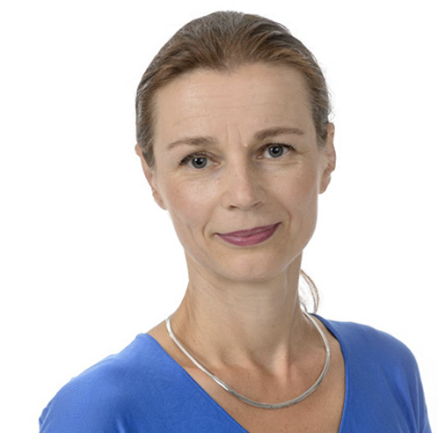
The event strived to cover many perspectives on liquid-liquid phase separation explains Anna Stradner.
Professor Anna Stradner organised the LLPS2026 PhD school and workshop in collaboration with the SMILE theme, COMMONS and SoftComp. Having spent many years investigating liquid-liquid phase separation in concentrated eye lens protein solutions to gain insights into cataract formation, she now focuses on the behaviour of antibodies in solution. Together with her collaborators, she studies how phase separation affects concentrated antibody formulations and how it can be avoided, since it may create significant challenges for intravenous drug administration.
“Our approach from the beginning was to look at this process from multiple perspectives, ranging from fundamental physics and chemistry to biology and biomedicine, while covering fundamental principles, experimental, computational and theoretical approaches, and applications in life and materials sciences,” says Anna Stradner, LINXS Vice-Director and Professor of Physical Chemistry at Lund University.
“When you deal with liquid-liquid phase separation in complex systems, whether they are biological systems, soft materials, or food systems, it becomes extremely important to understand the underlying principles, so that you can either prevent it or tailor and benefit from it.”
Bringing scientists from different disciplines together around a shared topic is important for learning from each other, engaging in discussions that would not typically happen within a single discipline, and creating a common understanding that benefits different types of science, she notes. It has not been uncommon that liquid-liquid phase separation has been approached differently within different disciplines, something that can be confusing for students.
“Through this event we have started to speak the same language and get inspiration from each other. It is very clear that there are many ways to work with liquid-liquid phase separation that can support new knowledge and approaches.”
Hanna Wacklin-Knecht, leader of the SMILE theme and associate professor in Physical Chemistry at Lund University and Head of Scientific Support at ESS, agrees:
“It was great to hear researchers talk about scientific problems that I can relate to even though they come from completely different backgrounds and work on different systems. It has given me a fresh view on self-assembly in soft biological and bio-inspired systems, which is often caused by liquid-liquid phase separation.”
Clifford Brangwynne, Princeton University: “Through studying liquid-liquid phase separation, we get a new lens through which we can understand disease processes”
The opening keynote lecture was delivered by Clifford Brangwynne, Professor of Chemical and Biological Engineering at Princeton University, and one of the world's leading pioneers in the field of biomolecular condensates. His groundbreaking research has revealed how liquid-liquid phase separation can drive the formation of membraneless organelles, reshaping our understanding of cellular organisation.
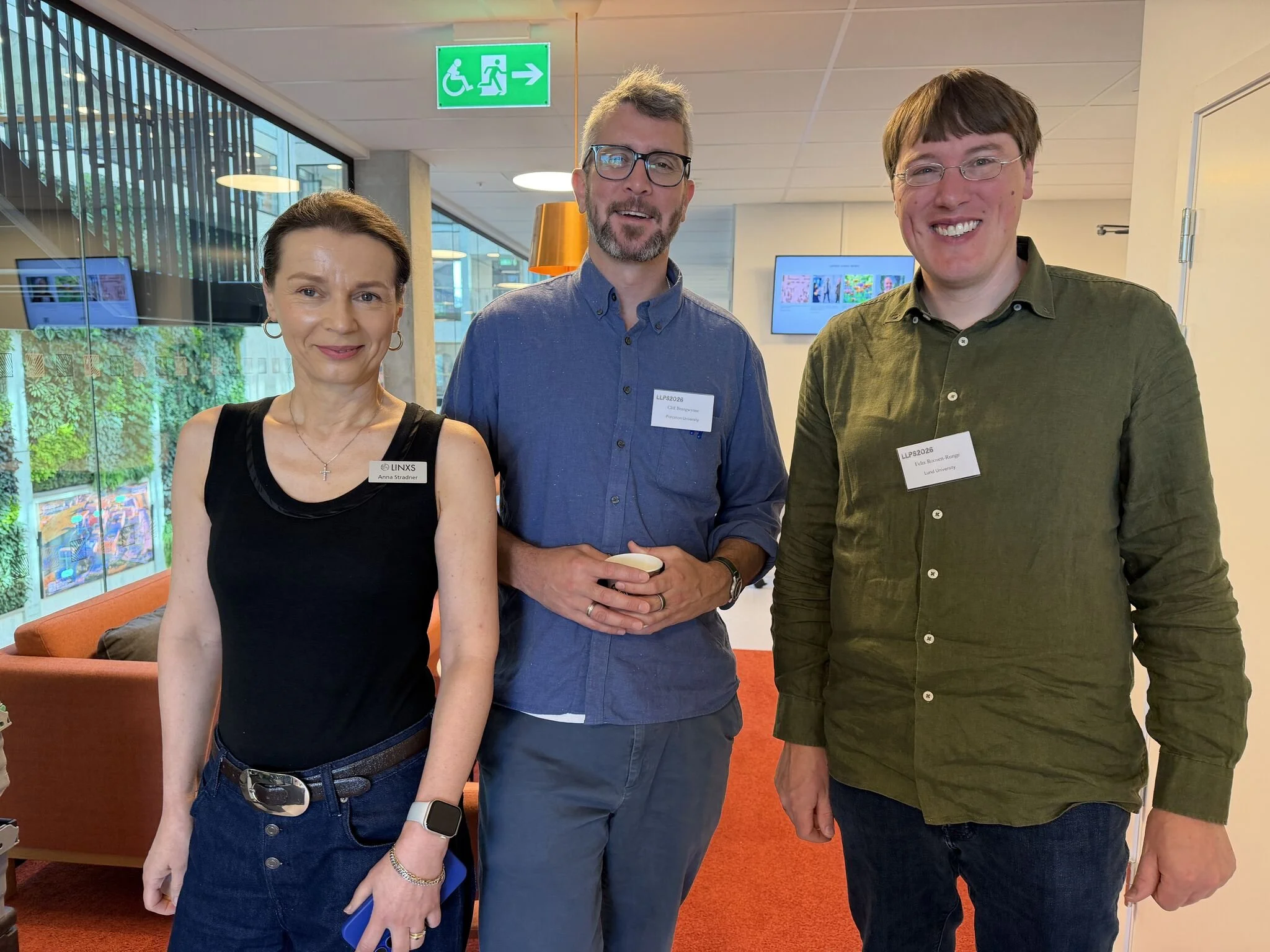
Anna Stradner, Clifford Brangwynne and Felix-Roosen Runge, coordinator of COMMONS, pictured at LINXS.
“We still do not understand how cells are organised. They are incredibly complex, to the point of almost being magic. Each cell contains many thousands of molecules, and they rotate around a million times a second, interacting with hundreds of thousands of binding partners. In this chaotic sea of molecules, structure emerges, but how and why?”
The formation of membraneless organelles (biomolecular condensates) occurs because of liquid-liquid phase separation. Defects in this phase separation are linked to many diseases for which there are no cures, such as Alzheimer's disease, ALS, and dementia. They also play a part in cancer.
“Through studying liquid-liquid phase separation, we get a new lens through which we can understand disease processes. Our goal is to find out how and why defects in phase separation happen and use these findings to develop new therapeutics for our major diseases."
Coming to LINXS and Lund to meet other researchers was a valuable experience, he says:
“I was not aware of all the research that goes on here. It was interesting to learn more about how other people work with this extremely interesting and important process.”
Impact beyond the event
Anna Stradner notes how the workshop and PhD school have already generated positive impact. Different groups of researchers are making plans for a follow-up event and are also discussing meeting to apply for collaborative grants.
“LINXS allows for these types of events that support interaction well beyond these two activities. A lively discussion ensued on how we can pick this up in the future, and this is already being acted upon! LINXS was not simply a supporter of the LLPS2026 events. It was an enabler.”
“The events reflect the very philosophy of LINXS: bringing together people with different backgrounds to address complex scientific questions and create new scientific networks and momentum that extend far beyond the week itself."
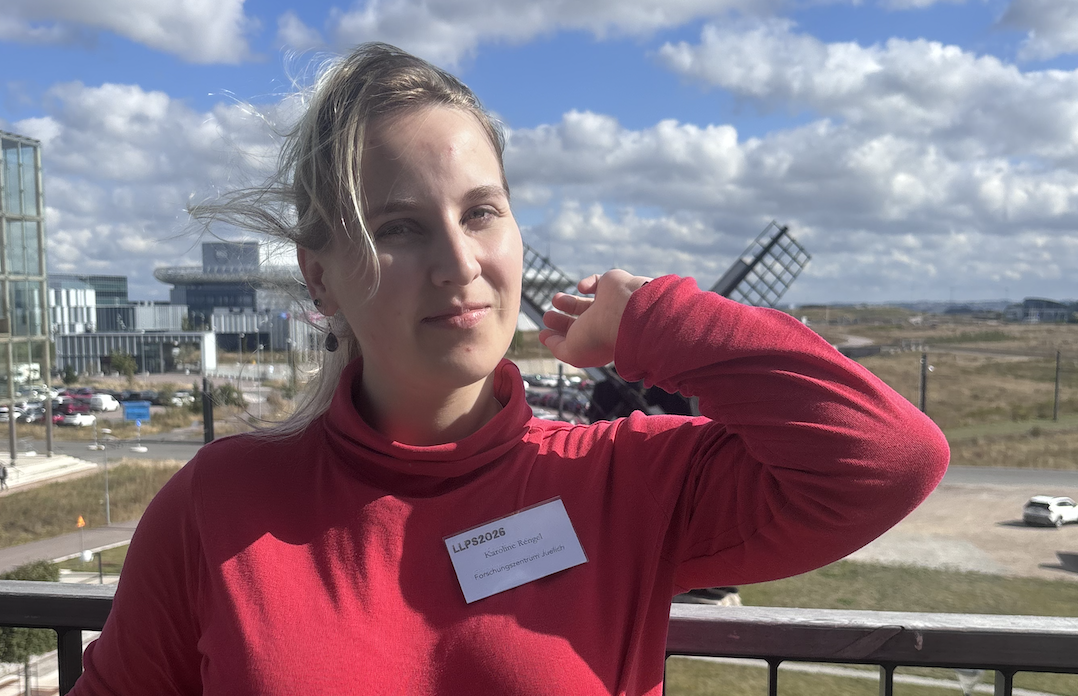
Karoline Rengel during the PhD course at LINXS.
PhD school was “very useful”
Karoline Rengel was one of the PhD students who attended the school on liquid-liquid phase separation, which received a very high number of applicants. She is at the end of her first year of PhD studies at the Forschungszentrum Jülich in Germany. Her research is focused both on the internal dynamics of liquid-liquid phase separation and on understanding liquid-solid phase separation, with an aim to use this knowledge to develop new types of biomaterials.
“I see a lot of what LINXS does and I have got very favourable reviews of your activities. I was interested to see what I could learn!”
She found the PhD school very useful.
“There were many interesting and useful lectures, and the networking has been great. Meeting other students at events like this makes it easier to strike up conversations.”