
LINXS celebrates women in the soft matter scattering community
In September, the LINXS Early-Career Researcher Network in Soft Matter hosted an event for female scientists. Organised by postdoctoral researcher Anna Stephens, it aimed to present new research, build community and connect women from different backgrounds.
“I wanted to highlight the good work that women across my network are doing and create an event celebrating female scientists,” says Anna Stephens, postdoctoral researcher in physical chemistry at Lund University.
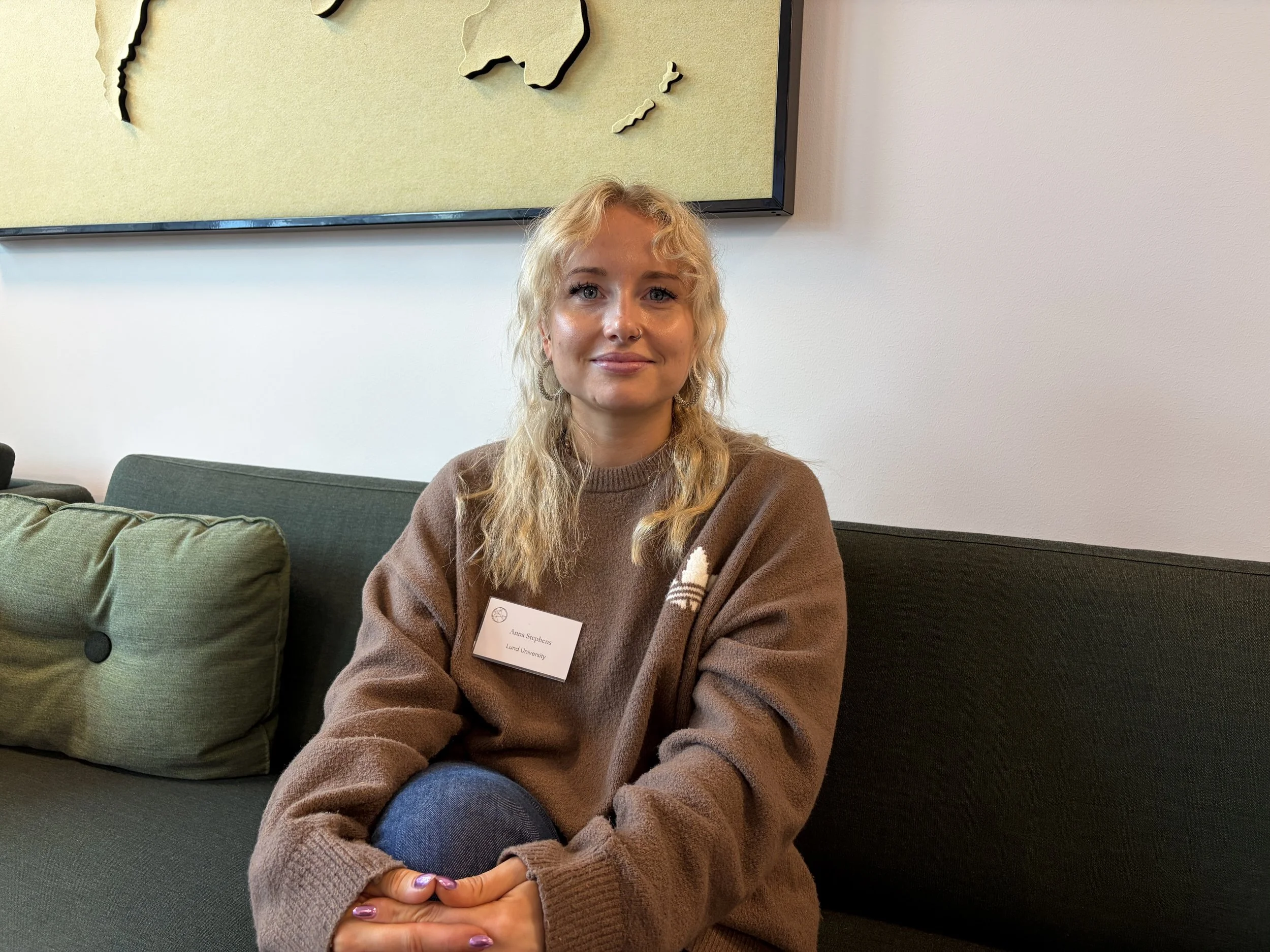
Anna Stephens was the main organiser of the YRI Soft Matter event celebrating women in science.
She highlights how many female researchers experience differential treatment because of their gender. This includes not being paid the same as their male counterparts, being overlooked or sidelined in recruitment processes, and having to prove the legitimacy of their research to male colleagues.
“Often people are not even conscious of the fact that they treat women differently. But the subtle differences are felt too, and it has a big impact on your confidence,” says Anna Stephens.
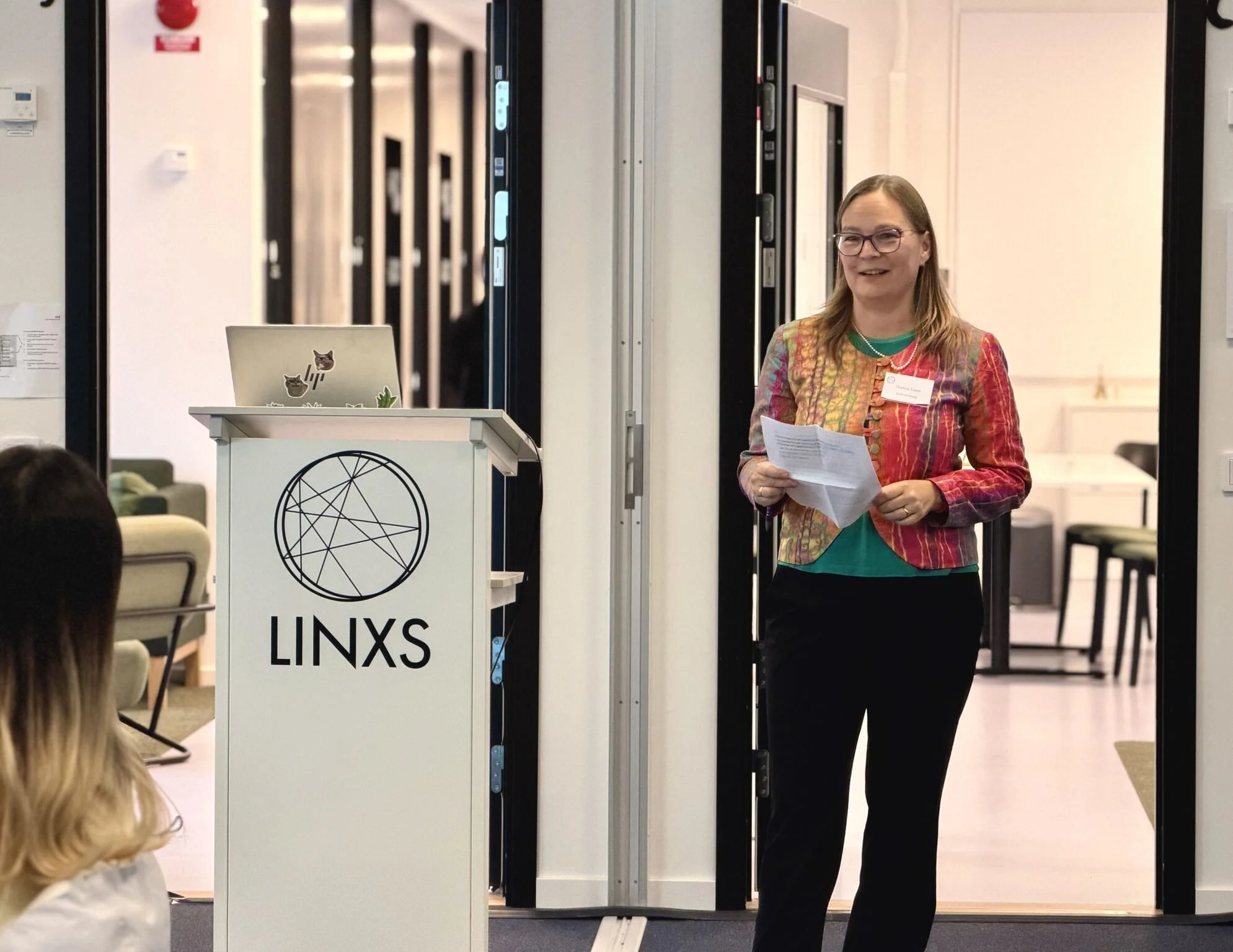
Charlotta Turner gave the keynote address.
Charlotta Turner, the incoming Dean to the Faculty of Science at Lund University, opened the event. She agrees with Anna Stephens that women often run into an invisible barrier, a barrier that can stop women from progressing in science, especially further into their career, at the lecturer and professor level.
“All women know what I am talking about. To change this, we need to support women all the way, from the early-career stages to the professor level,” says Charlotta Turner, professor in analytical chemistry at Lund University.
In her talk, she shared some important advice with the females and males in the audience:
“Get to know yourself and be proud of what you find! To have fun at work is also a superpower!
"Report when you see unfair treatment or harassing behaviour! Let your male colleagues know that it is them in particular that should behave as role models and support female scientists. Do not accept that scientific boards, conferences, meetings and decision-making often appear to be exclusively for men!"
"Personally, I boycott all conferences with only male plenary speakers!"
She ended by focusing on the importance of science, and of independent voices - that can defend the right to ask difficult questions, challenge assumptions, test ideas and follow the evidence wherever it leads.
"You are all important! Not just because you are women, but because science matters! The creation of knowledge matters! We are all part of the Science family: women, men and non-binary.”
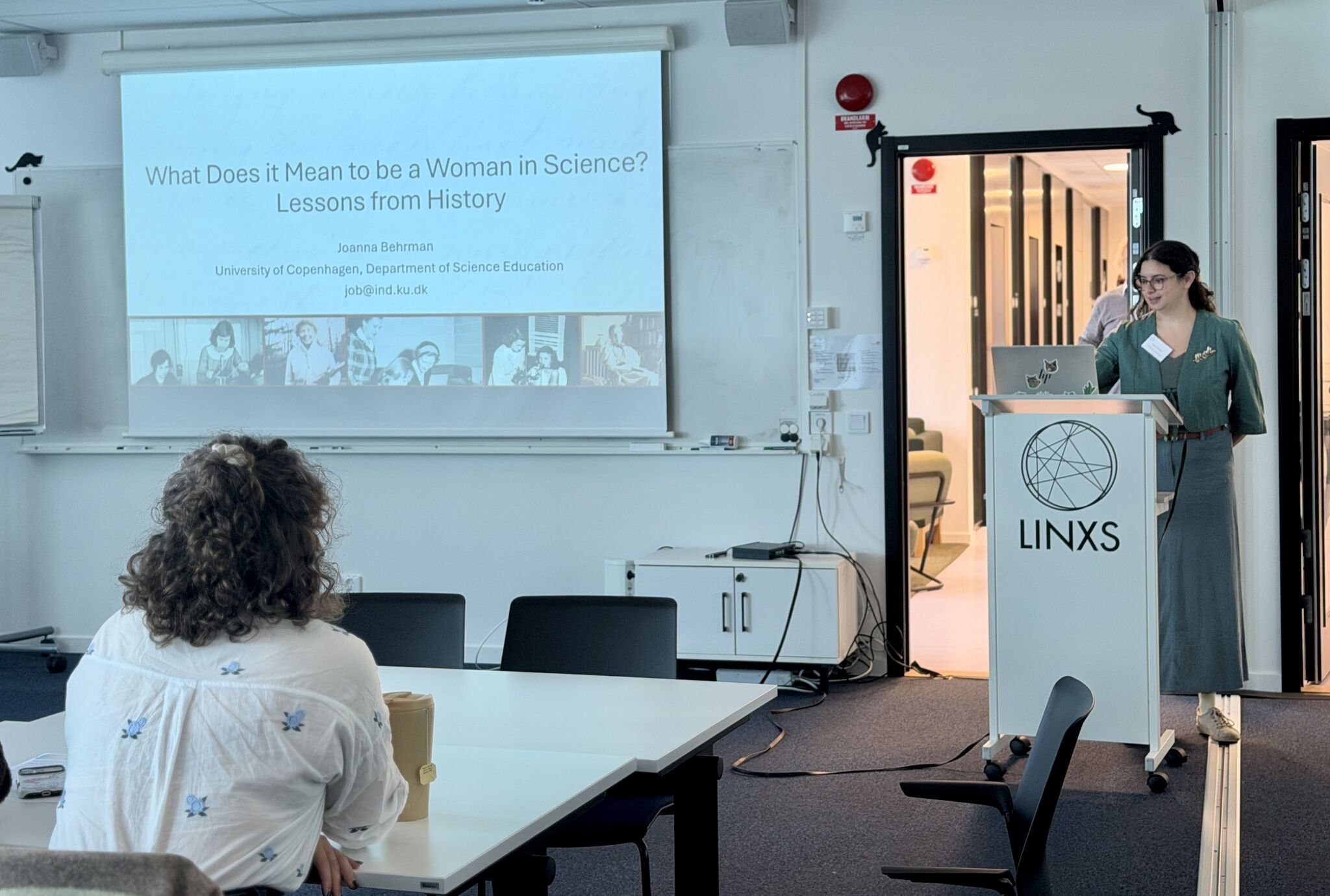
Joanna Behrman presented her work on women in science throughout history.
At the event, cultural historian Joanna Behrman, from the University of Copenhagen, gave a talk on the topic: “What does it mean to be a woman in science? Lessons from history”.
She began her career in science as a physicist. But during her studies, she realised that she was more interested in history and in the life stories of women physicists, than in the actual science. At the same time, she also started noticing the unequal treatment many women faced. She herself was paid less than her male counterparts for laboratory work and berated for asking questions that her fellow male students thought were stupid.
“I started to collect stories about how women got into science and that led me to start looking at the history of women in science in the USA, focusing on the period from the late 19th century to the mid-20th century,” says Joanna Behrman, postdoctoral researcher at the University of Copenhagen.
Now she has collected data on hundreds of women that were active as scientists. Having a large data set is important, she says, since this can reveal information about what shaped women’s access to education during this period, the challenges they faced, and what opportunities they had.
“I firmly believe that education holds the answer to why someone becomes a scientist, to who they become as a scientist. My aim is to identify patterns among the stories that I collect.”
How does she reflect on her results so far?
“What makes me most excited is how many women I found! Because often you get the impression that there are not that many, only your Lise Meitners or Marie Curies. But this is actually wrong.”
She was glad to attend the early-career researcher event at LINXS.
“These types of events did not exist back in the day. Gathering and sharing experiences have been historically important to support female scientists so it is wonderful to see how we are taking lessons from the past and learning from that.”
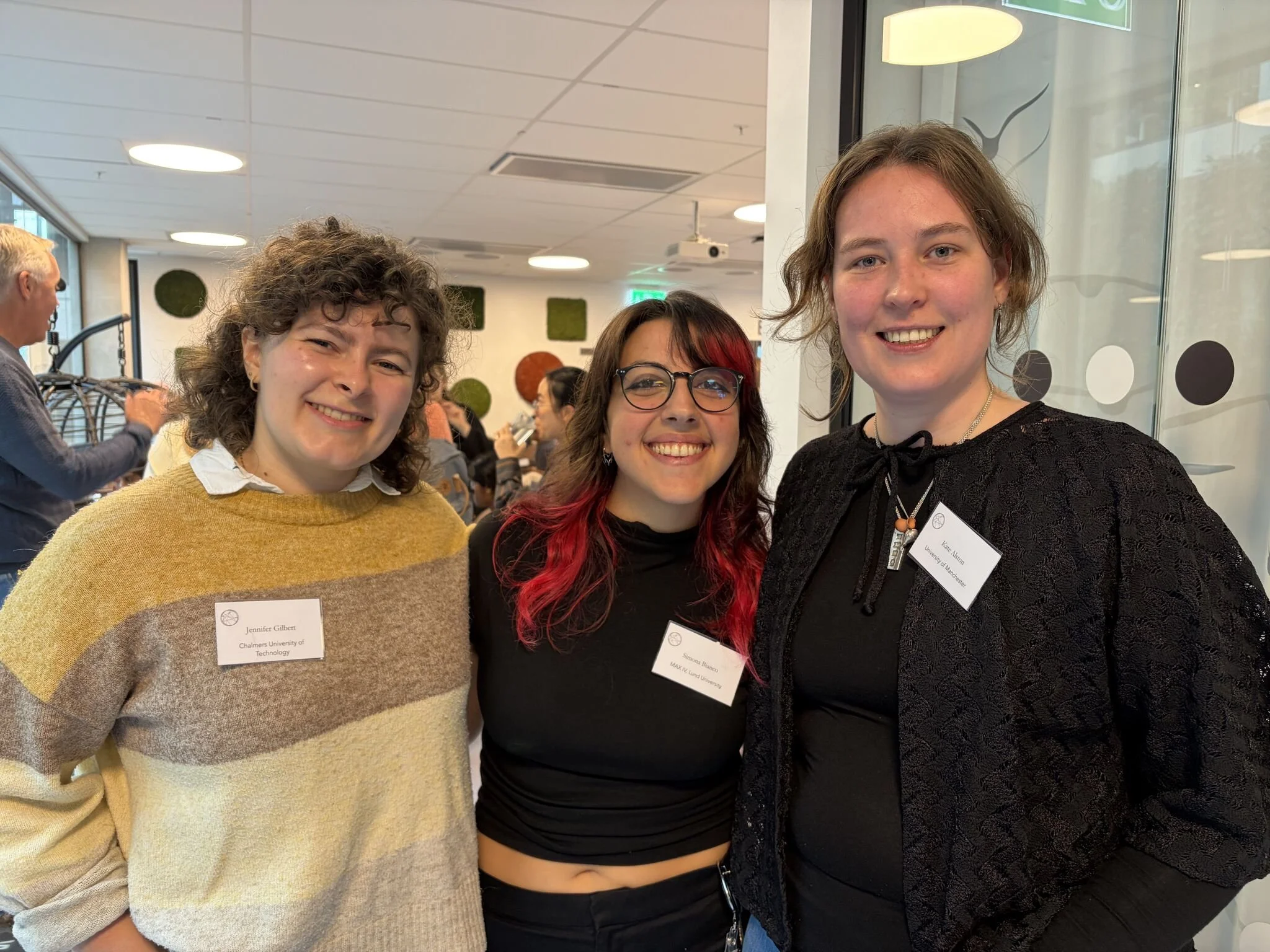
Jennifer Gilbert, Simona Bianco and Kate Alston emphasise the importance of organising events where women can present science and share experiences.
Early-career researchers Simona Bianco, Jennifer Gilbert and Kate Alston all attended the event. They agree that it is important to create spaces where women can meet to discuss both science and how to navigate an often male-centred environment.
“There are actually a lot of us out there, doing soft matter science, so it is great to bring us all together,” says Simona Bianco, postdoctoral researcher at MAX IV.
“Certain things women understand better, like being a bit nervous about leaving a beamtime at 3am on your own. Having support from other women means a lot in those situations,” says Jennifer Gilbert, postdoctoral researcher in molecular bioscience at Chalmers University of Technology.
Kate Alston, a PhD student in physics, from the University of Manchester, has always been surrounded by male researchers. She would like to work with more female professors, although her colleagues have always been supportive.
“It has been nice to present my research and network with other women who are here. It is a way to start creating a support network. It can be challenging to go to conferences and other events if you don’t know anyone and there is a majority of male scientists there.”
The event ended with a career panel with Giovanna Fragneto, Science Director at ESS, Karen Edler, professor in materials at Lund University, Judith Houston, instrument scientist at the ESS, and Simona Bianco, postdoctoral researcher at MAX IV.
“The aim with the career panel was to create a space for the audience to ask questions in an informal setting and encourage interaction between women at different stages of their career,” says Anna Stephens.
“Today, there are many women in the scattering community! Bringing them together sends an important message, and I wanted the event to inspire all the amazing female scientists out there.”