
Meet AMBER postdoc Mina Hajizadeh
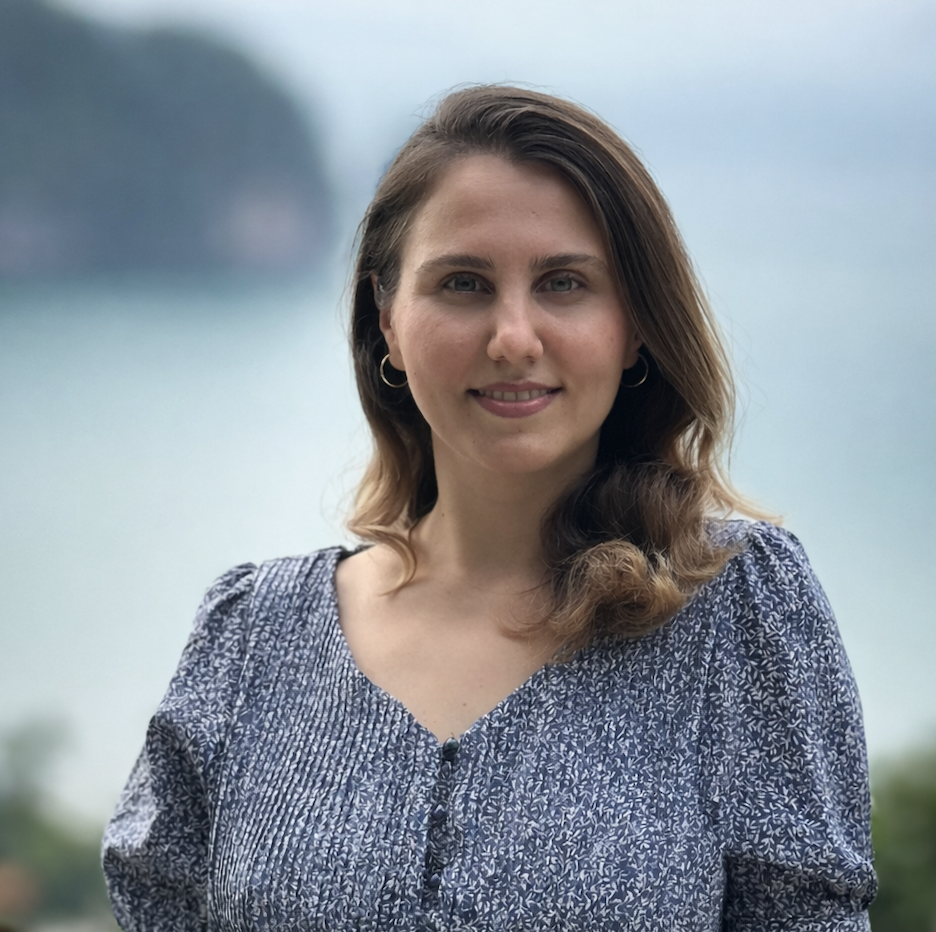
Mina Hajizadeh is developing a joint SAXS/SANS contrast-variation strategy to better resolve the internal organisation of complex biomolecular assemblies in solution.
Mina Hajizadeh works as an AMBER postdoc in the Biology, Deuteration, Chemistry, and Soft Matter group at the Institut Laue-Langevin (ILL) in France.
What attracted you to the AMBER position?
What really drew me to the AMBER postdoctoral position was the feeling that it is a place where different disciplines meet and interact. I am motivated by impactful scientific questions, and the AMBER project asks many of these questions in my field of research. I was excited by the opportunity to work with advanced experimental techniques like Small-Angle Scattering, MRI and NMR, while collaborating with researchers from different backgrounds and perspectives expanding from clinical work to modeling and simulation. At the same time, I appreciated the program’s support for independence, it felt like a place where I could develop my own ideas, stay curious, and grow confidently as an early-career scientist.
What is your background?
I have a multidisciplinary background in cellular and molecular biology, biophysics, and physics, with a strong focus on understanding the structure and dynamics of biomolecules in solution.
After studying cellular and molecular biology at the Bachelor’s level, I pursued a Master’s in Biophysics, where I investigated intrinsically disordered proteins using various biophysical techniques. This experience sparked my interest in how structural flexibility shapes biological function and how advanced techniques at large-scale neutron and X-ray facilities allow us to probe these systems in solution.
I then moved to Europe for a PhD in Physics, focusing on photoactive proteins and complex biomolecular systems. Using Small-Angle Neutron Scattering (SANS) alongside complementary neutron and X-ray techniques, I explored how conformational changes in solution connect to biological activity. My work combines experimental design, advanced data analysis, and modeling to better understand biomolecules in native-like environments, where structure, dynamics, and flexibility together determine function.
What will you research in your postdoc project?
In my postdoc within AMBER, I am developing a joint SAXS/SANS contrast-variation strategy to better resolve the internal organisation of complex biomolecular assemblies in solution. Many biologically important systems (particularly membrane proteins) are composed of multiple components such as proteins, lipids, and nanodiscs. This complexity makes their structural characterization particularly challenging.
My project combines the complementary strengths of small-angle X-ray scattering (SAXS) and SANS. SAXS provides high-throughput structural information based on electron density, while SANS allows powerful contrast variation through H₂O/D₂O exchange and selective deuteration. By carefully designing coordinated contrast conditions across both techniques, we aim to selectively highlight or mask specific components within multicomponent assemblies.
What is your motivation and drive in your personal and private life?
At a personal level, I am motivated by curiosity and the satisfaction of solving complex problems step by step. I enjoy learning new things, whether in science or outside of it, and I value persistence and long-term growth over quick results. Outside the lab, I like activities that help me disconnect and recharge, such as reading, music, sports, and spending time outdoors. Maintaining this balance helps me stay motivated, focused, and creative in my research.
About AMBER
The EU-funded research project AMBER, Advanced Multiscale Biological imaging using European Research infrastructures, addresses scientific and sectoral gaps in biological imaging ranging from molecular, through cellular, to tissue, organ and organism levels of organisation.
AMBER’s partner organisations are: Lund University/MAX IV, Sweden, the European Spallation Source (ESS), Sweden, the European Molecular Biology Laboratory (EMBL), Institut Laue-Langevin (ILL), France, the International Institute of Molecular Mechanisms and Machines, (IMOL), Poland, and the Leicester Institute of Structural and Chemical Biology, United Kingdom.
AMBER is coordinated by LINXS Institute of advanced Neutron and X-ray Science.
Read more about AMBER on: