
Outreach to the virology community a first-year priority for LINXS’ PandA theme
LINXS’ PandA theme aims to create a network of virologists, researchers, and beamline scientists with ability to leverage X-ray and neutron techniques to prepare for - and combat - major virus outbreaks and pandemics. At its kick-off in March, the theme members met to discuss the work ahead.
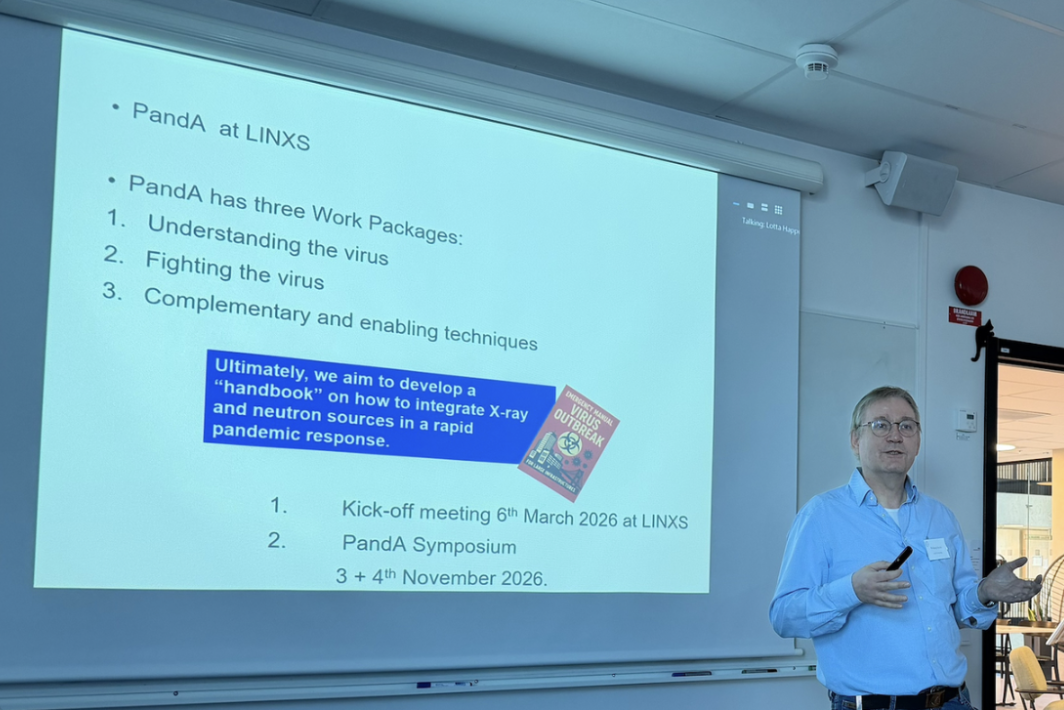
Wolfgang Knecht is presenting the new PandA theme during its kick-off at LINXS.
“This year, we will focus on outreach to the virology community,” says theme leader Wolfgang Knecht, who is also a senior lecturer at Lund University, SciLife group leader, and Director of the Lund Node of Protein Production Sweden.
Knowledge of large-scale infrastructures such as MAX IV and ESS is still limited within the virology community, explains Wolfgang Knecht. Bridging this gap will therefore be an important focus for the theme, he emphasises.
“Closer relationships between virologists, instrument scientists and other researchers can help accelerate the development of preparedness for pandemics,” says Wolfgang Knecht. “Through collaboration, virologists can start to identify what X-ray and neutron experiments should be performed early in a pandemic, for example.”
Getting to know each other within the theme
During the kick-off, the Institute of Virology at the Philipps University of Marburg in Germany, the Lund University Virus Centre (LUVC), and the Swedish Society for Virology presented their work and focus areas. The Marburg Institute, for example, is a world-leading research institution on the Bunya, Filo- and Arenaviridae viruses.
The aim with the presentations was to increase knowledge about the different organisations involved in the theme, and to kickstart discussions on how to disseminate information about the theme and the capabilities at MAX IV and ESS.
As part of a pre-kickoff, the core group members from Marburg and the LUVC participated in a guided tour of MAX IV and ESS.
“They were completely amazed! It is hard to imagine the scale of the facilities and their instruments from only pictures or drawings,” says Wolfgang Knecht.
Symposium: Knowing and Fighting the virus, 3-4 November at LINXS
These types of physical visits play an important part in creating links between virologists and the infrastructures according to Wolfgang Knecht. Longer and more active visits to MAX IV and ESS will therefore be a prioritised agenda point at the symposium the theme is organising on 3-4 November at LINXS, on the theme of knowing and fighting the virus.
“We have to present what we have here in Lund to get people excited,” says Wolfgang Knecht. “Establishing new relationships and work practices take time. A good start is to create opportunities for virologists to learn more about the facilities first-hand and see them with their own eyes.”
During the symposium, each of the three working groups: WG1: Understanding the virus; WG2: Fighting the virus; and WG3: Complementary and enabling techniques, will organise specific sessions.
After the symposium, the theme will organise further activities. They include inviting large-scale facilities to present what is feasible in terms of setting up experiments and sample environments for viruses at different levels of biosafety.
“Once we have increased awareness of what is currently possible, we can start thinking of what we need to develop to get these types of experiments going!”
Welcoming new members!
Wolfgang Knecht emphasises that the theme is open for anyone, from anywhere in the world, with an interest in virus research and pandemic preparedness and how to incorporate the use of synchrotrons or neutron sources.
“This active matchmaking is rather new, and we are eager to create a lively network! For that, we welcome interested researchers who are willing to invest time in this endeavour,” says Wolfgang Knecht.
Read more about the PandA theme
Read more about the PandA Symposium – Knowing and Fighting the Virus, 3-4 November
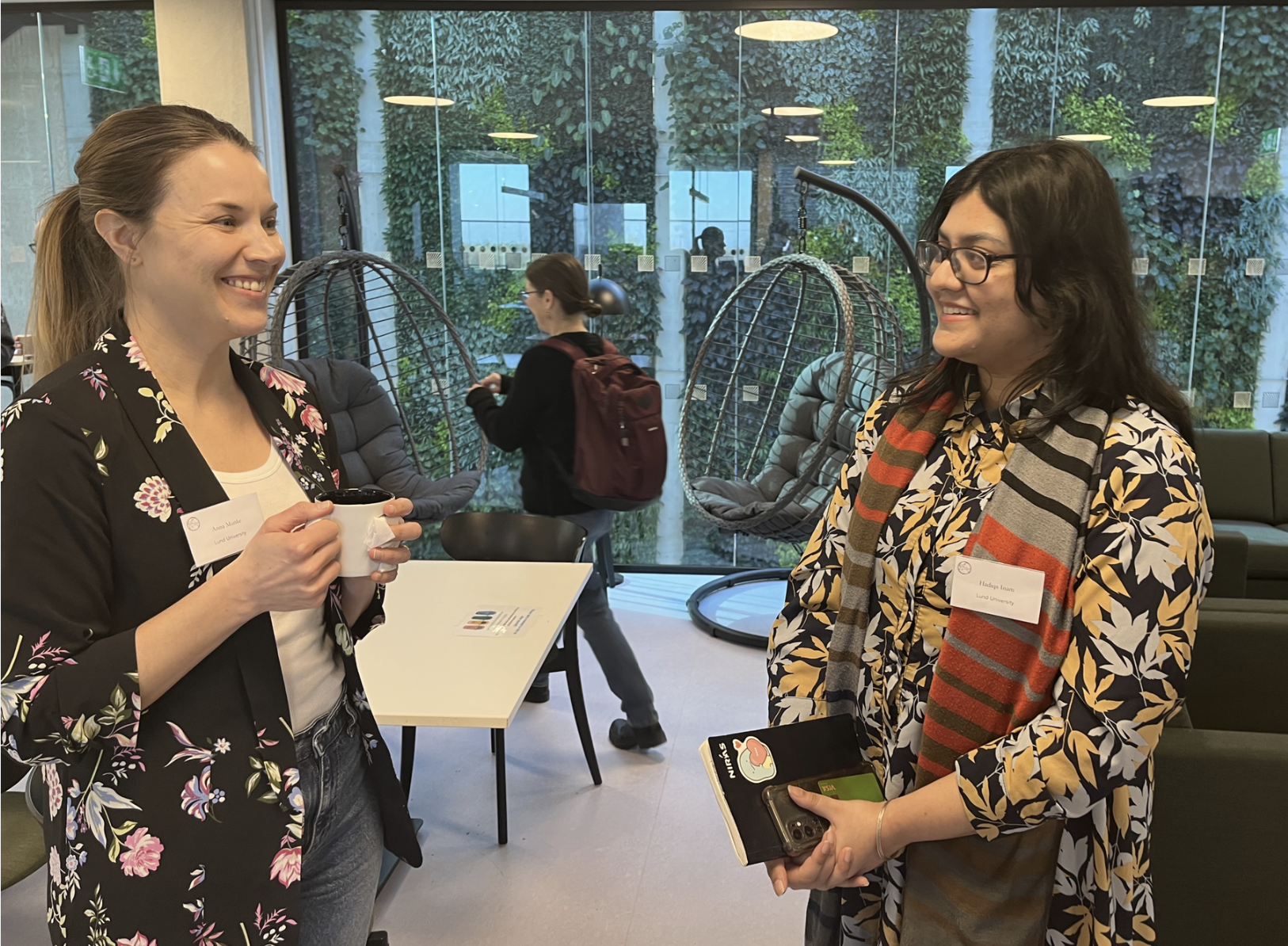
Two of the participants attending the PandA kick-off pictured during a coffee break in LINXS lounge.