
New computer workstations at LINXS to support data analysis and processing
LINXS has installed four new workstations for analysing neutron and X-ray experimental data. They are preloaded with analysis software for imaging, scattering, diffraction and microscopy experiments, and are freely available to researchers working with data from large-scale research facilities.
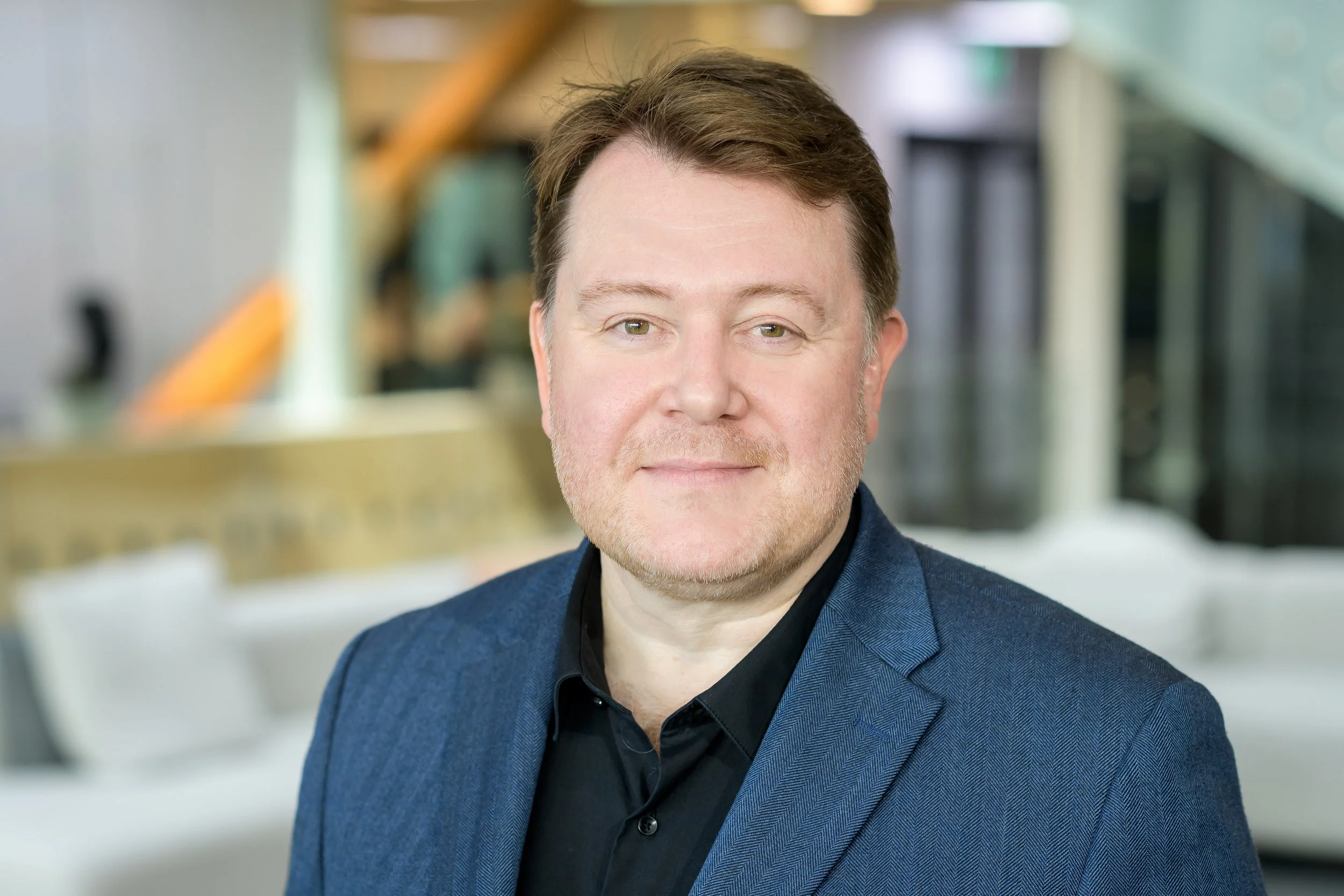
Martin Stankovski Clark, senior strategist at LINXS, has set up the new workstations. He is excited about supporting researchers to make the most of their experimental data.
The workstations will also be used for targeted Data Clinics, where invited experts can provide support for specific techniques and methods, or give advice on how to prepare or further analyse different research data.
“The idea is that these workstations will provide a ready set-up environment where people can come in, load up their data, and start looking at it with the same tools that they would have used at the beamline,” says Martin Stankovski Clark, senior strategist at LINXS.
Supporting data analysis
The initiative is an effort by LINXS to increase the support for data analysis, and to shorten the time it takes from experiment to publication, and from publication to societal impact.
“Data processing and preparation take a huge amount of time and effort,” says Martin Stankovski Clark. “It is also an aspect that can fall at the edge of the remit of the large-scale research infrastructures, since their main focus is on the actual experiments.”
“Our hope is that this facility will help users analyse their data faster and more efficiently, to ultimately increase their scientific output. Another ambition is to contribute to building analytical competence and skills within different research communities.”
LINXS workstations are preloaded with software for analysing data from imaging, scattering, diffraction and microscopy experiments. Between data clinics, they are available to be used by visitors on a first come, first served basis.
“The computers take advantage of the high-speed university network for data transfer, and can perform many of the most common computations and analyses that you would typically do at a workstation. This includes heavy tasks such as tomographic analysis and 3D rendering. However, they are not meant for very heavy computations or analysis that would require you to use a computational cluster,” says Martin Stankovski Clark.
Data Clinics on different techniques and topics
LINXS is now planning for a number of different Data Clinics. The workstations allow for about ten to twenty people at each Data Clinic.
“We can host up to one clinic a week. We welcome suggestions and ideas for whom to invite,” says Martin Stankovski.
Two Data Clinics have already been organised, one by the AIDA theme in collaboration with QIM - The Center for Quantification of Imaging Data from MAX IV. They used Insegt3D, a software that they have developed themselves, to analyse tomographic data from imaging experiments with different biological samples.
The second clinic, on tomographic and scattering data analysis, was part of a Treesearch organised course in April which included both scanning with tomography and scattering at the ForMAX beamline at MAX IV, followed by data analysis at LINXS. Emanuel Larsson (who is also LINXS Co-Director) and Jonas Ahlstedt from CIPA and InfraVis supported the participating students to analyse their data from cellulose-based samples (including wood, paper and carton).
To book the workstations, or find out more, please contact Josefin Martell, LINXS Science Activities Manager.
LINXS workstations are funded by the Crafoord Foundation through a grant which LINXS kindly received in 2025.
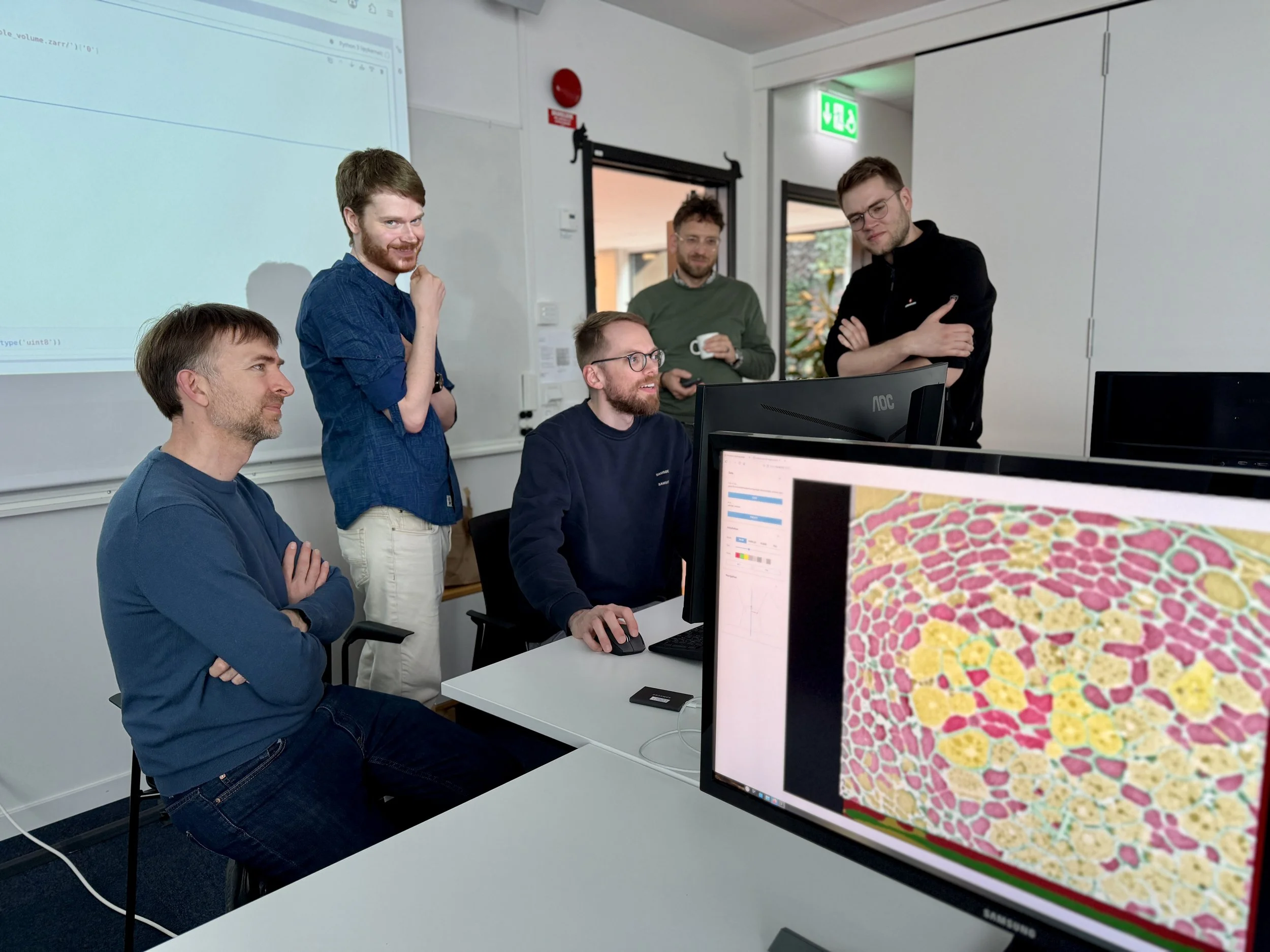
AIDA theme leader Martin Bech (to the front left) pictured during the very first Data Clinic at LINXS in April. It was organised by the AIDA theme in collaboration with QIM - The Center for Quantification of Imaging Data from MAX IV. They used Insegt3D, a software that they have developed themselves, to analyse tomographic data from imaging experiments with different biological samples.
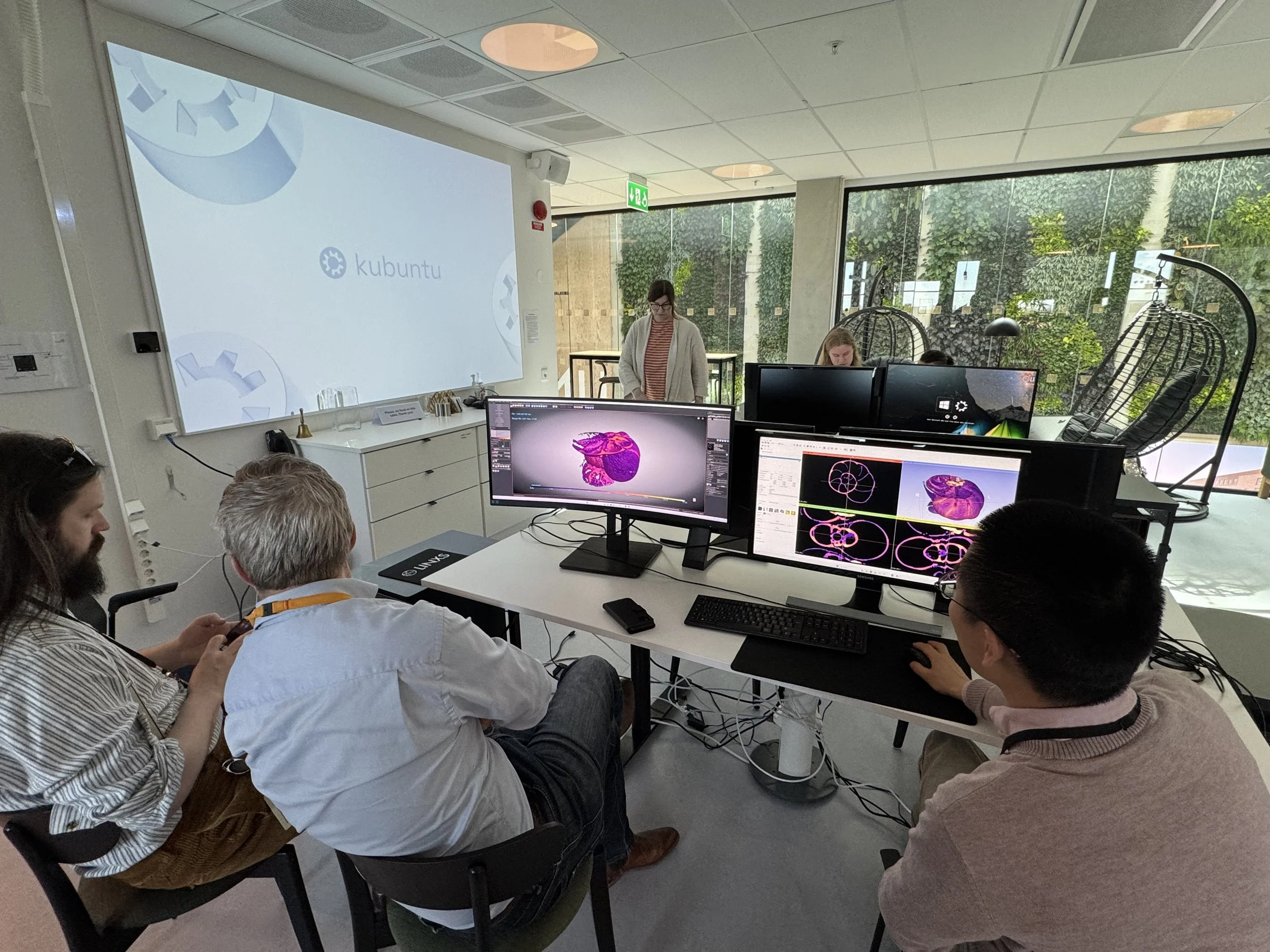
Participants pictured at the Treesearch organised course which included both scanning with tomography and scattering at the ForMAX beamline at MAX IV, followed by data analysis at LINXS.