
The third FASEM school trains early-career researchers in neutron and photon science
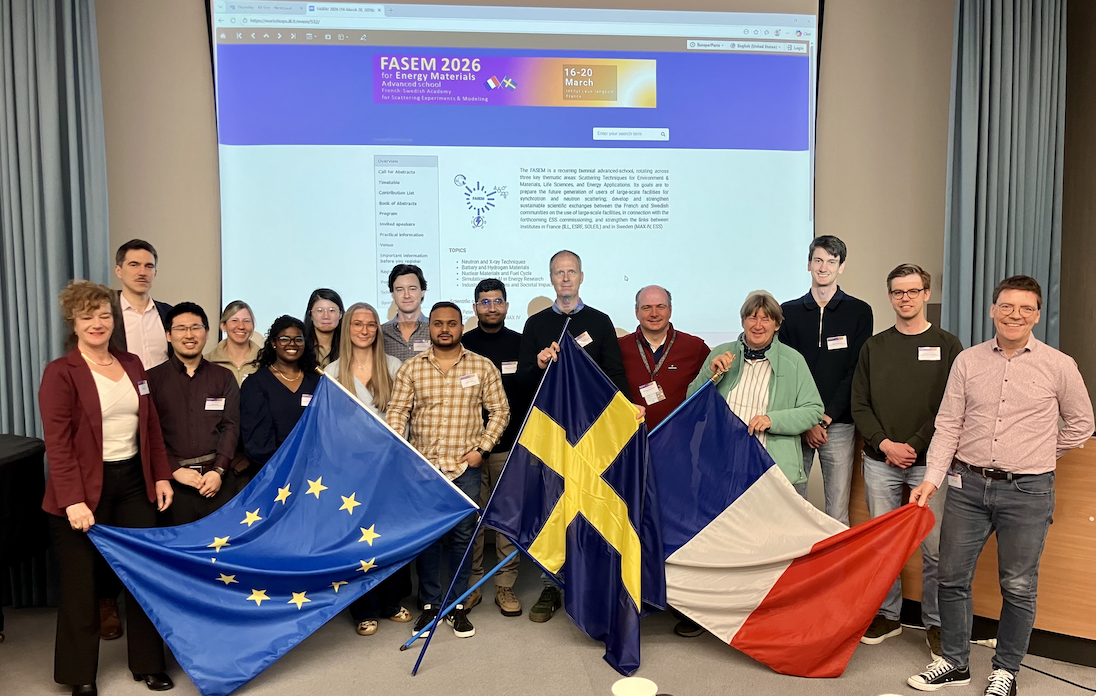
Swedish students at FASEM2026, supported by the European Nuclear Education Network (ENEN), the Ambassade de France, and the Institut français.
The biennial school FASEM, the French Swedish Academy for Scattering Experiments and Modeling, aims to train early-career researchers in neutron and photon techniques, combining experimental approaches with modelling. This year, it was hosted by the Institut Laue-Langevin (ILL) in Grenoble for the first time.
At the ILL, Peter Fouquet, instrument scientist and Head of the ILL Graduate School, acted as the main organiser of the event. The FASEM school itself is coordinated and co-organised by Christine Darve, senior scientist at the European Spallation Source (ESS).
One of the goals with FASEM is to develop and strengthen sustainable scientific exchanges between the French and Swedish communities on the use of large-scale facilities like ESS/MAXIV and ILL/ESRF/SOLEIL, with the support of the Ambassade de France and Institut français.
More than 150 applications
The 2026 school attracted strong international interest: more than 150 students applied for the one-week programme. Of these, 30 were selected for on-site participation and a further 50 attended online. The number of applications, including many from developing regions, highlights the growing global reach of the programme, emphasise Christine Darve and Peter Fouquet.
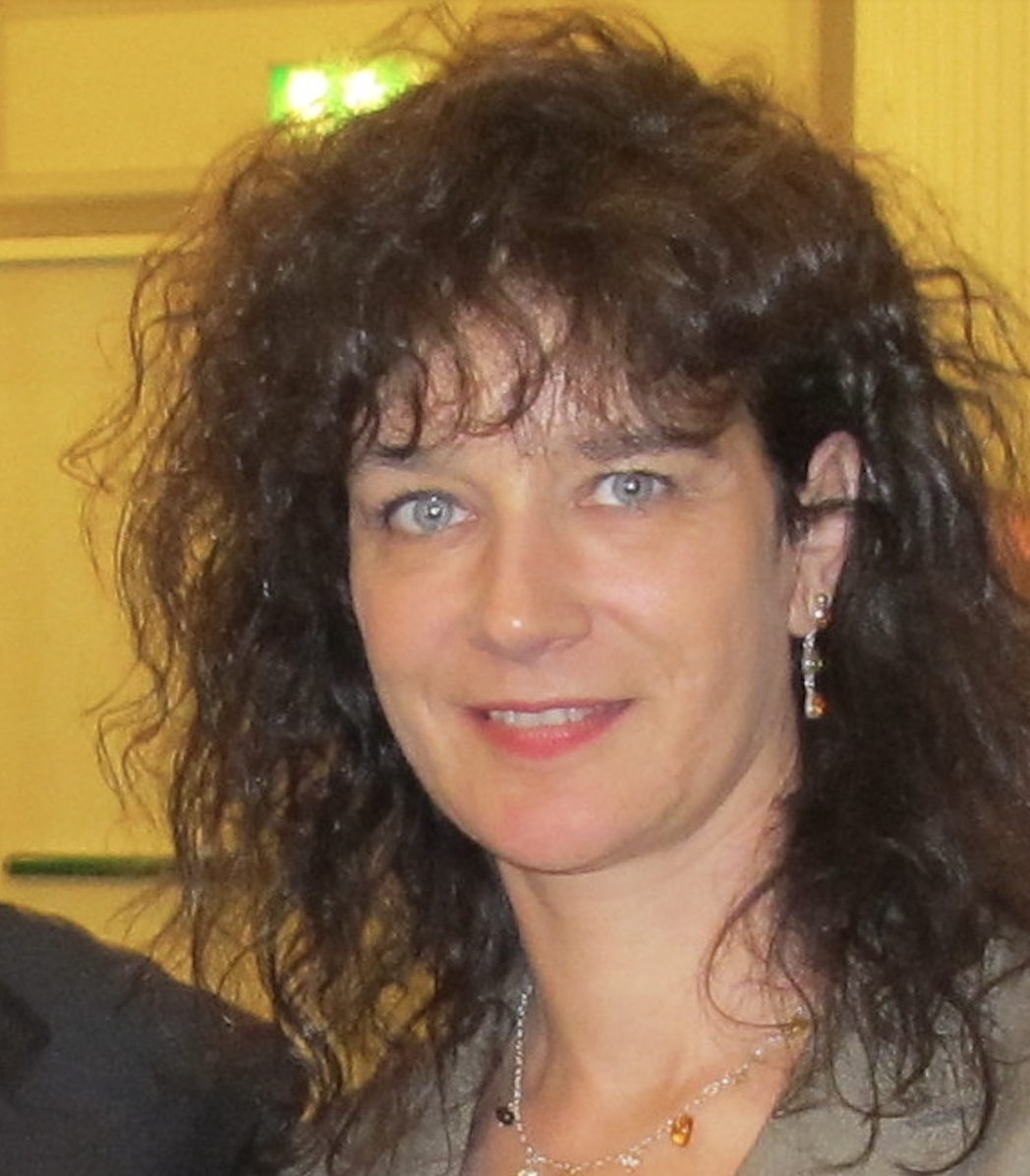
Christine Darve is a senior scientist at ESS.
“Since the first edition, we have added several components, like modelling, and industry engagement, as well as online capacity to reach out to developing communities. Through FASEM, we can support knowledge transfer, build networks, and ensure continuity for future users of neutron and photon sources, complementing the well-established HERCULES school,” says Christine Darve.
“Our collaboration has proven very successful in attracting participants not just from Sweden and France, but from many other countries. This is particularly valuable, as we aim to bring together a diverse group of students with different perspectives and backgrounds, while helping them develop the skills needed to prepare strong and competitive grant applications. Personally, it is also an opportunity to meet, and to mentor younger researchers, which I greatly enjoy,” says Peter Fouquet.
Materials for Energy Applications
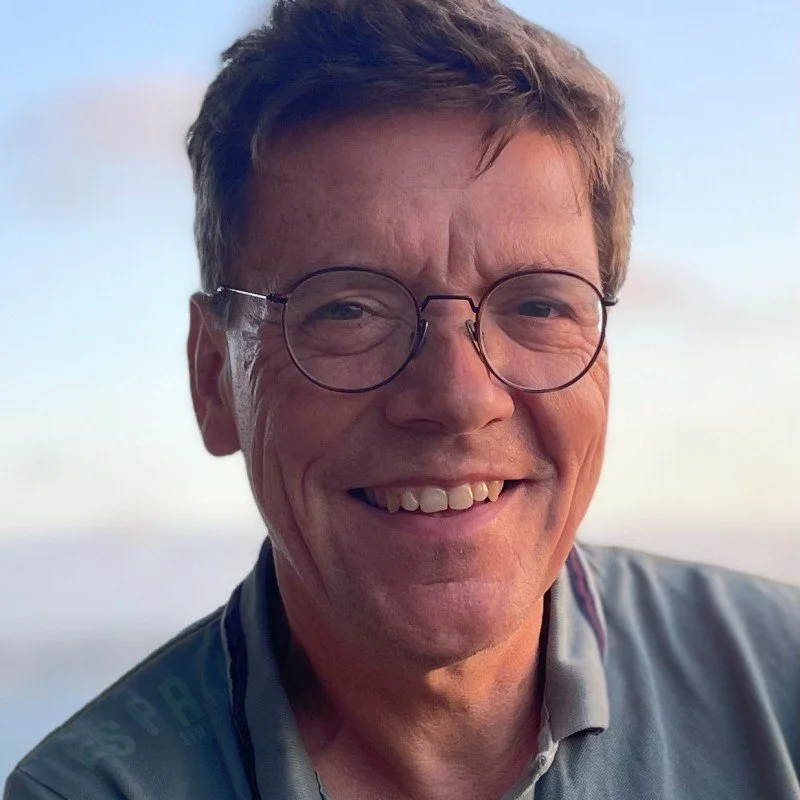
Peter Fouquet is an instrument scientist and Head of the ILL Graduate School.
This school rotates across three key thematic areas: Scattering Techniques for Environment & Materials, Life Sciences, and Energy Applications. This time, the focus was on materials for energy applications. The programme covered a wide range of neutron and photon techniques (imaging, diffractometry, spectroscopy, small-angle scattering) along with their applications, data processing, and AI-enhanced analysis. Sessions also addressed industry engagement, career opportunities and socio-economic impact of neutron and photon research.
Participants visited both the Institut Laue-Langevin (ILL) and the European Synchrotron Radiation Facility (ESRF), taking part in guided tours of the facilities and exchanges with local scientists.
FASEM also featured prizes for best research poster and best research presentation (clips) funded by LightSources.org, while the European Nuclear Education Network (ENEN) supported the attendance of 10 Swedish students.
Technical skills and collaboration for large-scale science
“We strive for students to gain a solid understanding of both the technical concepts and the collaborative skills needed for executing large-scale research projects,” says Ken Andersen, ILL General Director, and lecturer at FASEM2019.
“By training students early in their career, we also strengthen the whole neutron and photon community’s scientific and operational expertise for the future,” adds Jean Daillant, ESRF General Director and lecturer at FASEM2019.
Since the start, LINXS has been a long-standing partner to FASEM, hosting the two earlier schools, in 2019, FASEM2019, and in 2024, FASEM2024. Those schools specifically highlighted the development of ESS and the expertise of its scientific community.
Positive feedback from participating students
Alongside the scientific programme, FASEM also placed strong emphasis on interaction and community building. The feedback from participants reflects both the quality of the training and the collaborative atmosphere of the school.
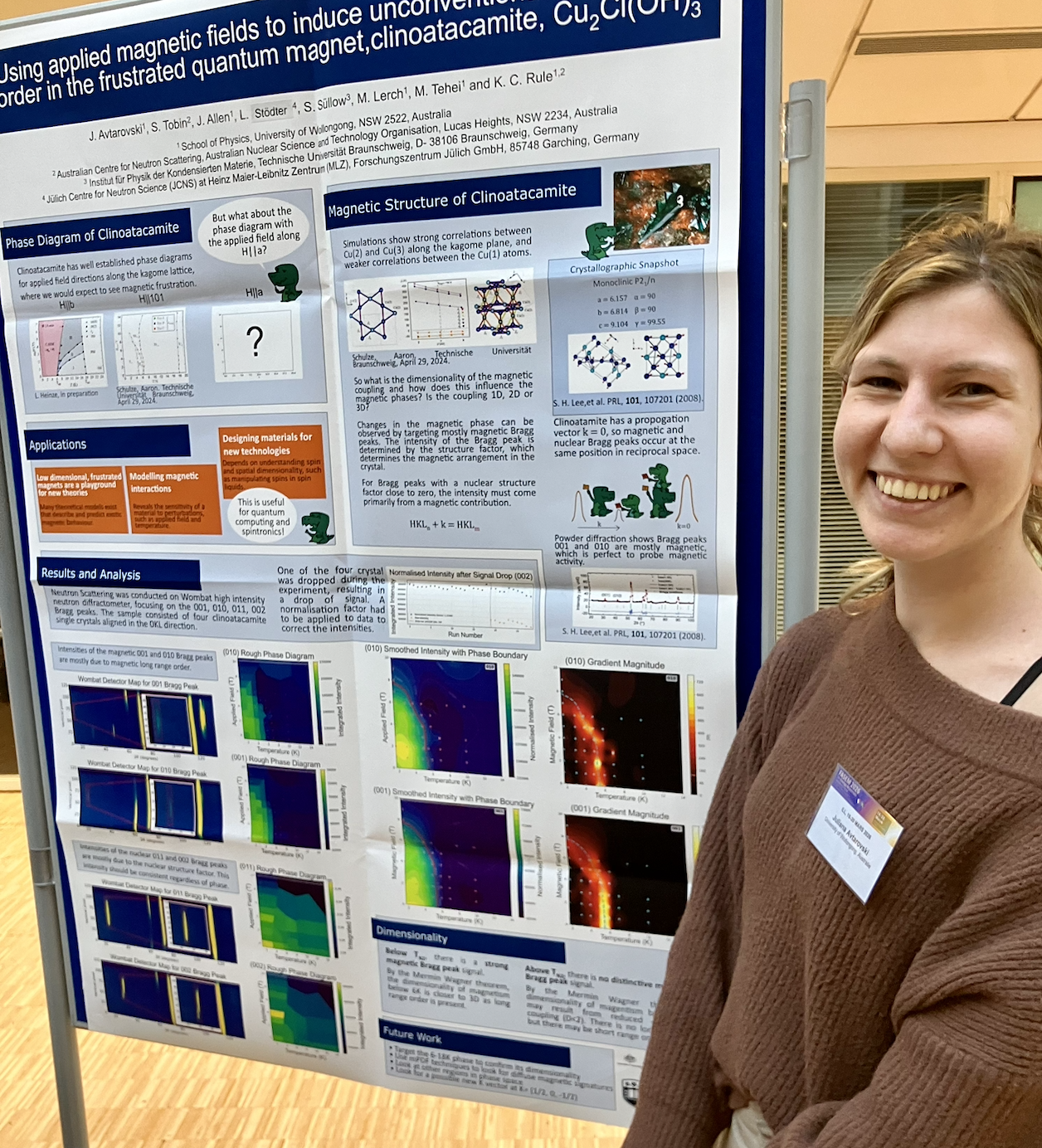
Juliana Avtarovski pictured in front of her poster.
Juliana Avtarovski is a PhD Student at the School of Physics at the University of Wollongong, Australia, currently spending time at ILL. Her research topic is in condensed matter physics, focusing on copper-based frustrated magnets, such as clinoatacamite, at ANSTO:
“It was an incredible week meeting many new peers from abroad and learning plenty.”
She can see many benefits for her continued research:
“It was great to be given an introduction to many techniques that I will be making use of in the future and also seeing them applied for different applications. The atmosphere of the event was so warm and inviting, making networking with PhD and early-career researchers in related fields fun and insightful.”
“I now have a better idea of why my research team applies certain techniques rather than others and the need to consolidate a range of techniques for reliable, meaningful results. With the lectures being accessible as recordings and PDFs, I am able to come back to these resources when I eventually implement what I have learnt at this school,” says Juliana Avtarovski.
Marcus Liljenberg is an industrial PhD student at KTH and PowerCell in Sweden. His research topic is intermediate temperature proton exchange membrane fuel cells, with special focus on optimizing the catalyst layers.
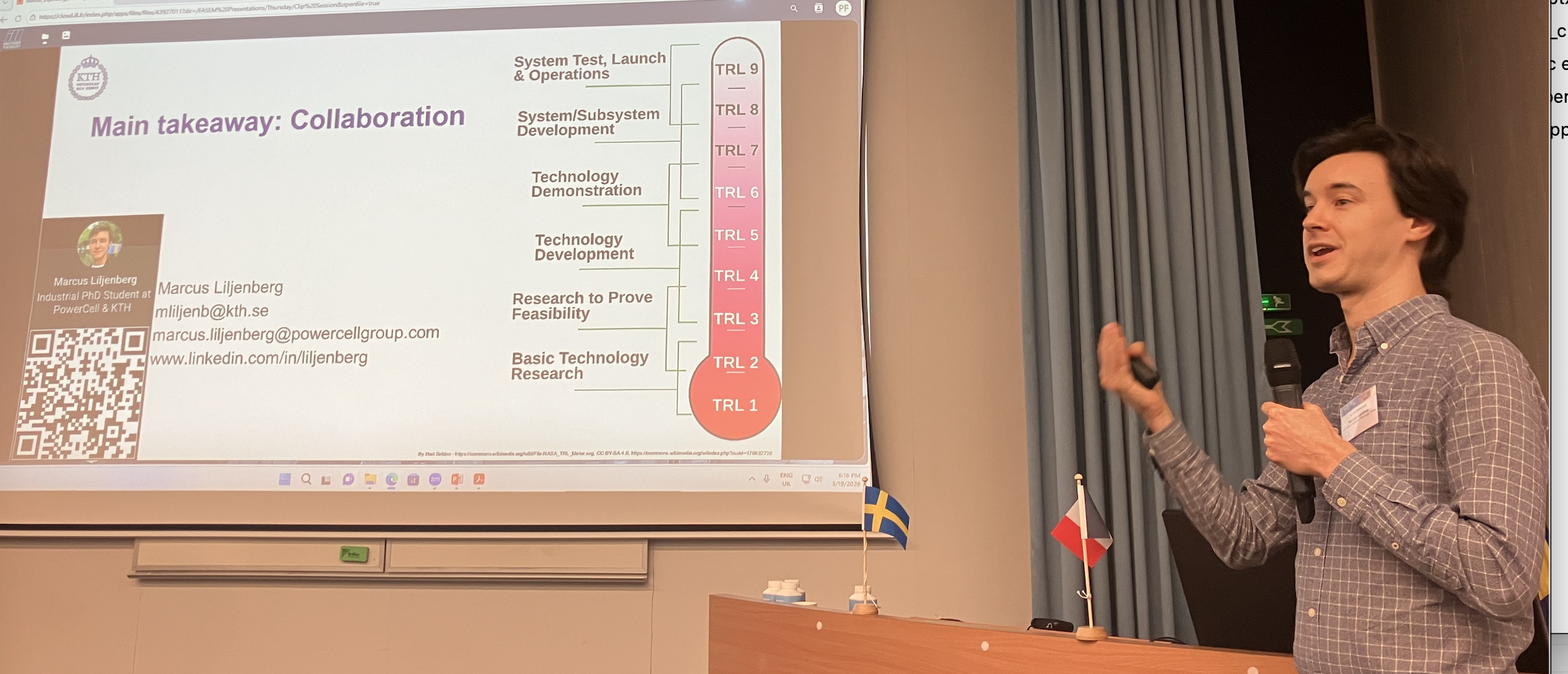
Marcus Liljenberg presenting.
He also found the contents of the school very valuable for his PhD studies. He commends the broad introduction to many techniques which he now hopes to incorporate in his own research.
“Many of the papers I've been reading include methods using Small Angle Scattering techniques. Interpreting these results is not trivial and I've been looking for some course to study these methods. I was lucky to find FASEM, and that the focus this year was on energy materials is a happy coincidence!”
Going forward, he says he will have a better understanding of interpreting research based on these techniques.
“I'm also hoping to design my own experiments that can complement other methods that I'm currently using. I'll try to keep in contact with others that attended, perhaps we can continue with collaborations.”
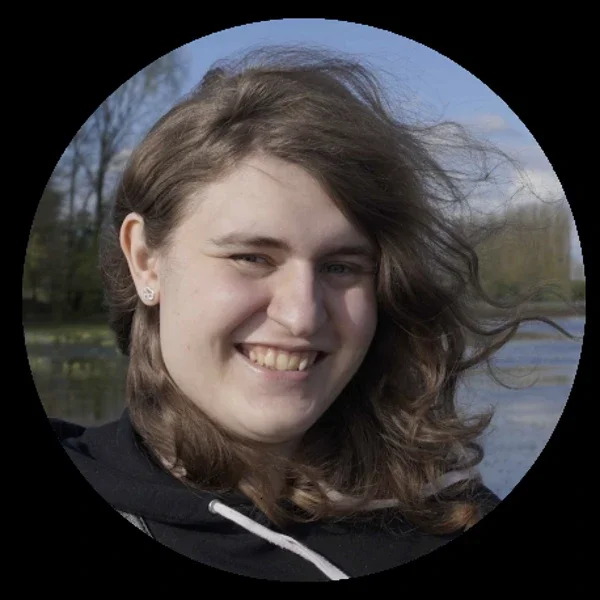
Erika Magnusson.
Erika Magnusson is a PhD student at the Department of Chemistry and Chemical Engineering at Chalmers University of Technology in Sweden. She researches structure-dynamics relationships in various ion-conducting solids. Her previous background is in nanomaterials, where she has mainly worked with lab-scale X-rays and electron characterization techniques. She is now in the process of translating this knowledge into using neutron-based methods at large-scale facilities.
She also highlights how FASEM was a great introduction to neutrons and photons.
“Attending FASEM was a truly inspiring experience, the possibilities with neutrons and X-rays feel endless!”
“At this early stage of my PhD, the broad yet technical lectures and discussions not only prepared me for my first experiments but expanded my perspective on how to approach situations where I need to rethink my strategy and consider other experimental methods. I am also deeply grateful for the engagement from all the participants, which made this experience truly unforgettable.”
She is now looking forward to attempting her own first experiments.
“Thanks to FASEM, I now feel well equipped to approach my own first neutron experiments, from writing the initial proposal to conducting experiments and analysing the data. I am now excited to put everything I have learnt into action in my own research!”
Further reading about FASEM2026
All the material from FASEM: FASEM2026 Indico
“Early career scientists celebrate their success in Lightsources.org sponsored awards", April 2026
“FASEM school at ILL: training on neutron and photon science for energy materials”, May 5th, 2026
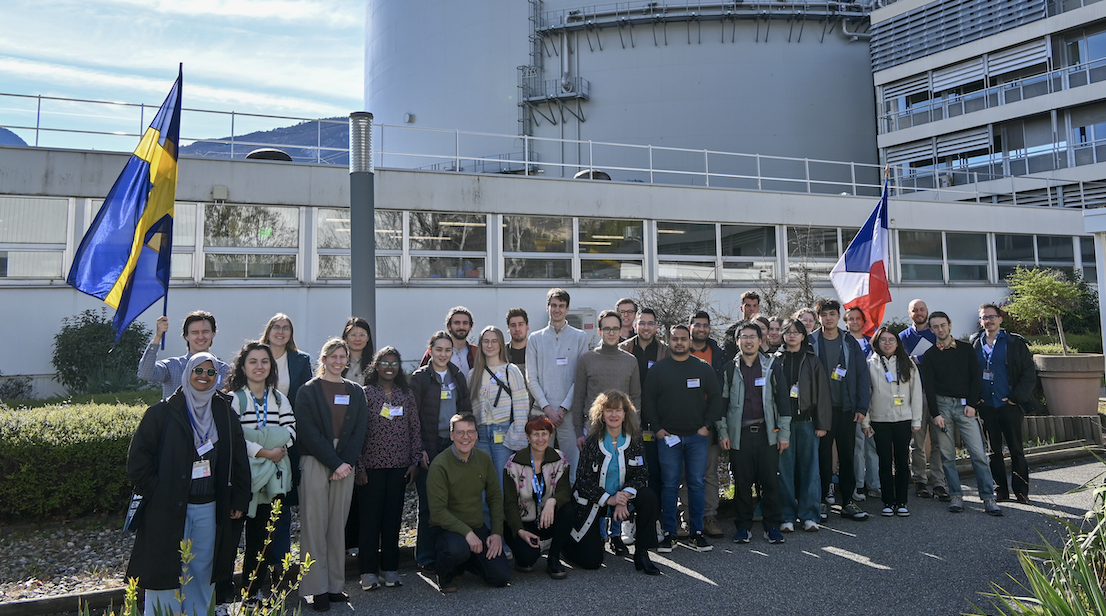
Participants at the FASEM2026 school.