
How the study of methane-eating bacteria can support capacity-building in electron microscopy methods
Vasili Hauryliuk, Professor at the Medical Faculty, Lund, and a core member of the SHINE theme, studies a methane-eating bacteria commonly found in permafrost. It is hard to imagine how this could be relevant for modern medicine – but, surprisingly, some of the methods he will use to learn more about the bacteria can help develop techniques that other SHINE members would like to adapt to study clinical samples.
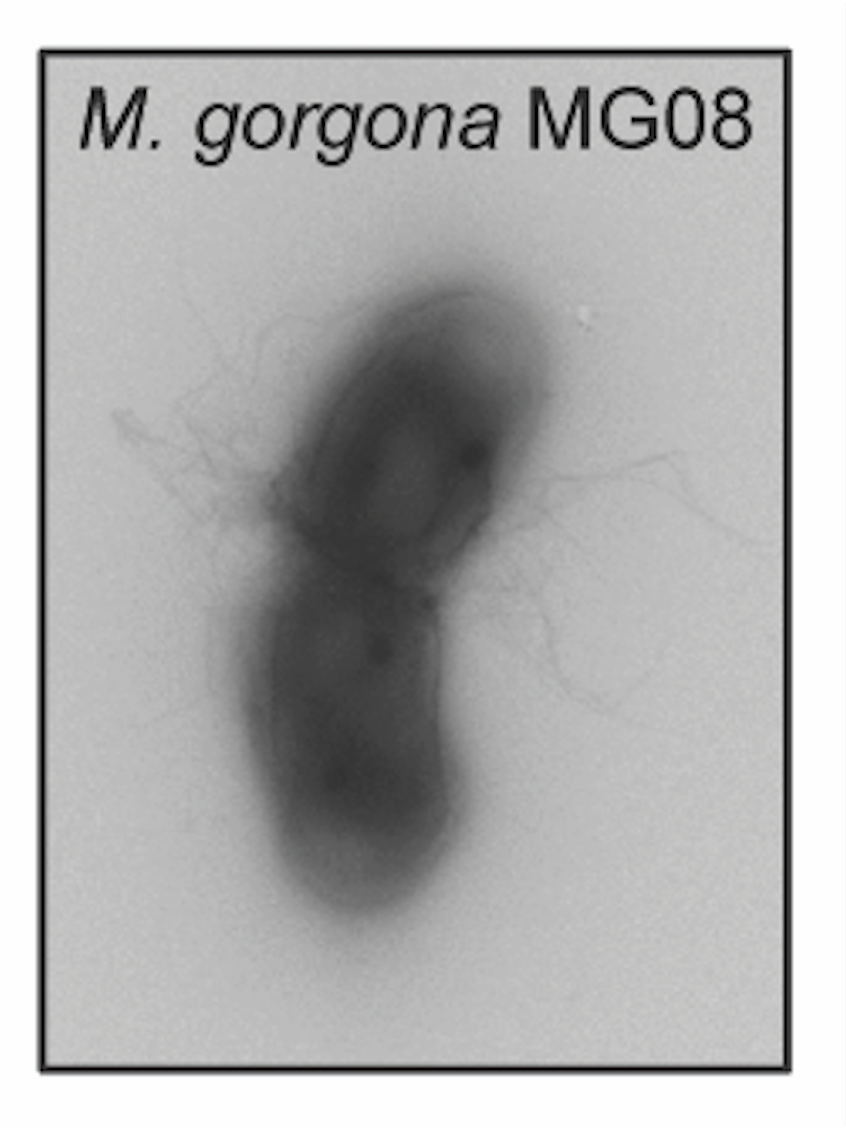
The methane-eating bacteria. Photographed by Alexander Tosdal Tveit at The Arctic University of Norway.
“These bacteria are ideal candidates for capacity building in the electron microscopy methods we aim to advance in the SHINE theme – specifically Cryo-ET, Cryogenic Electron Tomography,” says Vasili Hauryliuk, Professor in Molecular Enzymology at the Medical Faculty at Lund University. “They are small, and full of molecular machines that can be efficiently detected by Cryo-ET: ribosomes that are responsible for building proteins, and clusters of enzymes that capture the methane.”
Aim to advance the analyses of clinical samples
An overarching aim of the SHINE theme is to advance the analyses of clinical samples using high-resolution imaging techniques such as Cryo-ET. They make it possible to study proteins within cells, or even in tissue, and can reveal new information about protein behaviour and structure. A stark contrast to how proteins are commonly studied: by purifying them and analysing them in a controlled environment. In time, this knowledge can help researchers understand why diseases develop and cells malfunction.
Technique requires sample preparation
Yet a major difficulty with analysing clinical samples by Cryo-ET is that this method is unsuitable for thick samples. The technique requires a lot of sample preparation, such as slicing the clinical sample into smaller pieces first. Experiments on bacteria can help set up the technique due their small size.
Research on bacteria: a new venture
For Vasili Hauryliuk this research is exciting. Up to a few years ago he had never heard of these bacteria, let alone studied them. It all started when he read about a research group run by Alexander Tosdal Tveit at The Arctic University of Norway, who had managed to capture and farm bacteria that eat atmospheric methane. These bacteria naturally live in melting permafrost in places such as Svalbard.
Now they will collaborate in a research project that also involves Oleg Sitsel, an assistant professor at the Okinawa Institute of Science and Technology, Japan. Their end goal is to make the bacteria consume more methane. If they succeed it can have major potential to mitigate climate change: for example, by using them on cattle farms to capture some of the methane that the animals produce through digestion.
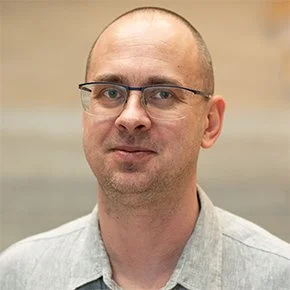
Vasili Hauryliuk is excited about combining his ongoing research on viruses with this project and the work within the SHINE theme.
First step: understanding the bacteria
Succeeding requires many steps. To begin with, they need to first understand the bacteria’s inner molecular workings: how can you genetically modify it in the future to eat larger amounts of the gas and grow faster?
“The bacteria’s DNA has already been sequenced, but we need to understand the metabolic processes at play: how do they allocate their resources when they grow fast; and how do they form ribosomes and enzyme clusters? To find this out, we will use Cryo-electron tomography (cryo-ET), combined with proteomics and microbiology,” says Vasili Hauryliuk.
Identify phages that eat the bacteria to learn from them
A long-term goal for Vasili Hauryliuk is to take the research one step further. The main focus of his lab is phages, viruses that infect and kill bacteria. He is interested in identifying phages that kill methane-eating bacteria. Phages are the most abundant biological entities on earth and play an important role in for example the carbon cycle where they kill large amounts of marine bacteria and thus recycle carbon and nutrients.
“If we can isolate the phages that kill these bacteria, we can use these for biotechnology. When phages infect bacteria, they use all kinds of ingenious tricks to take over their metabolism. They have been doing this for billions of years, and it is time we learn from them.”
Vasili Hauryliuk is excited about combining his ongoing research on viruses with this project and the work within the SHINE theme.
“For us this has been a very odd direction for our research. It is a completely different thing, but it is fun to do something outside your comfort zone! I find that these projects are the ones where you also learn the most, when you have a completely open mind!”
About the research
The research project is funded by HFSP Research Grants – a grant that supports innovative basic research into fundamental biological problems with emphasis placed on novel and interdisciplinary approaches that involve scientific exchanges across national and disciplinary boundaries. It gathers Vasili Hauryliuk and colleagues from Lund University, UiT The Arctic University of Norway (Tromsø), Harvard Medical School and the Okinawa Institute of Science and Technology in Japan.