
The RheoMAXESS theme boosts rheometry applications at MAX IV
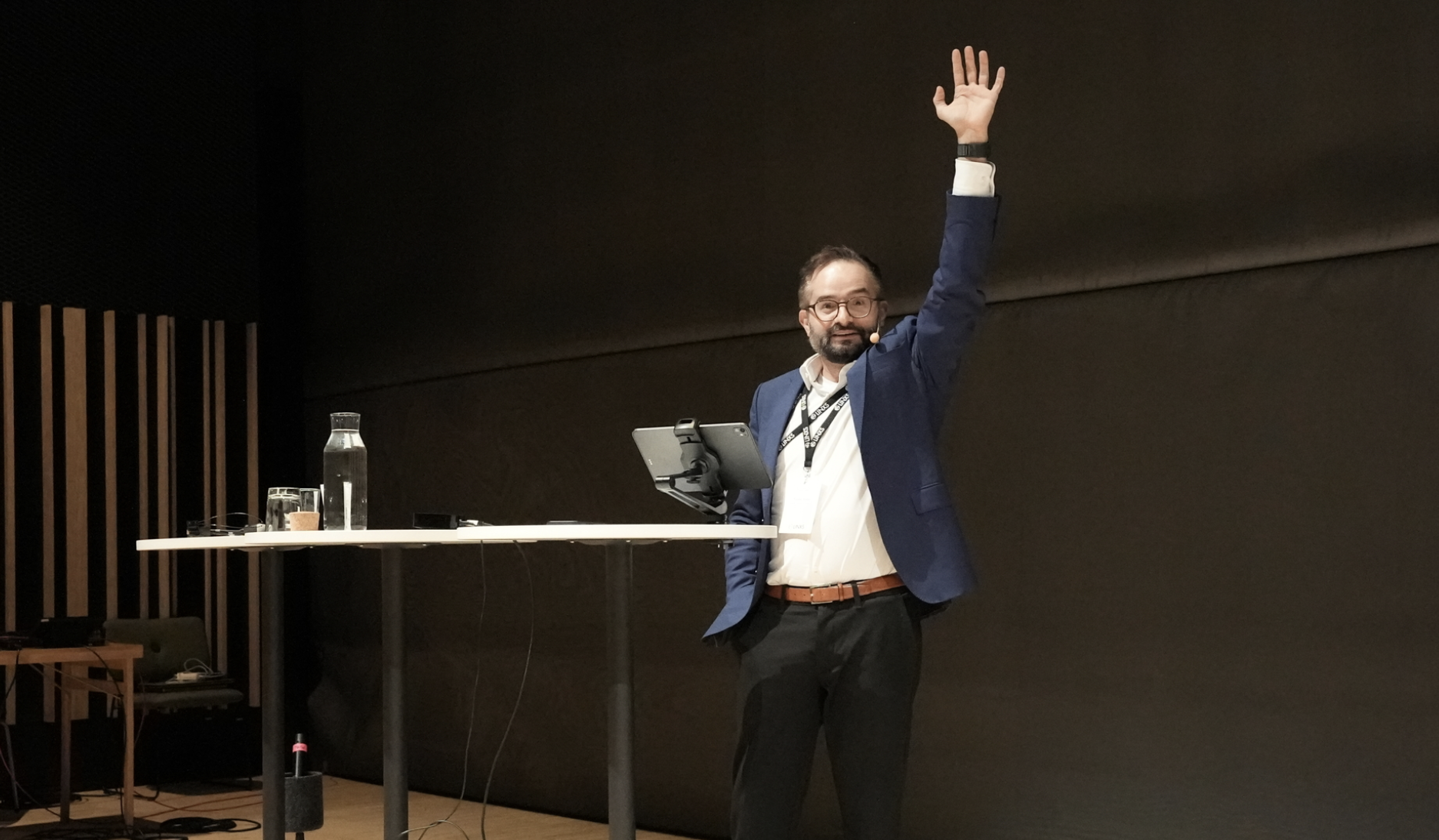
Roland Kádár says that LINXS was the platform that was needed to build new networks with a shared interest in rheology, and to build knowledge in how to use rheometry techniques.
Since the start of the RheoMAXESS theme at LINXS in early 2025, applications for advanced rheometry experiments at MAX IV have increased significantly. The targeted efforts to disseminate the techniques, explore their applications, and support users in proposal writing and data analysis have all had positive effect, says theme leader Roland Kádár.
“The theme was conceived based on the early success of new techniques developed within the Advanced Rheological Testing Science Initiative (artSI) at MAX IV. This was fuelled by the fact that rheology can impact a number of disciplines, from materials and medicine to food and sustainability. Now we are seeing proof that more researchers are eager to explore how rheology can support their research questions,” says Roland Kádár, Professor of Rheology at Chalmers University of Technology.
The RheoMAXESS theme aims to unite soft matter science and soft matter processing with the focal point of rheology – the science of flow and deformation of matter – as a uniquely positioned analytical tool that connects both worlds across disciplines.
LINXS was the platform that was needed
Identifying researchers’ needs has been key to the increase in rheometry applications at MAX IV, explains Roland Kádár. The LINXS theme has become the platform that was needed for creating new networks with a shared interest in rheology.
“It is not enough to just have a good technique if no one knows about it, you also need to have the means to reach out,” he says.
Building on previous activities to highlight the capabilities rheology offers for different disciplines, and workshops which focused on how to write beamtime applications, the latest activity in February brought together different research areas that can all benefit from rheology: materials, food and bio/med-tech. In attendance were both researchers and company representatives.
During this workshop, which was organised in collaboration with the AIDA theme at LINXS, the latest research in synchrotron and neutron rheological testing was presented, together with scientific cases from leading researchers in academia and industry.
New open-source software toolset
A new open-source software toolset that allows nearly real-time post-processing of experimental data close to publication-ready levels was also presented. It enables researchers to trouble-shoot, fine-tune and make decisions on how to continue experiments while they are ongoing at the beamline. The interface for the model is available as an open source on the coding platform GitHub and the team is working to implement this into the Data Clinics at LINXS.
“We encourage people to look beyond the technical specifications of our rheological infrastructure when they are deciding on what experiments they would like to perform. Rather, we want them to contact us with a focus on what they would like to ultimately find out. Then we try to make that possible,” says Roland Kádár.
Value of any technique comes from its application
He emphasises that the value of any new technique or software ultimately comes from how it is used, and whether it can support new scientific breakthroughs.
He continues:
“We have found that this combination of scientific method development and community reach-out proof-of-concept works! And this is an aspect that will continue to grow in importance as we have a range of very exciting new developments in the pipeline.”
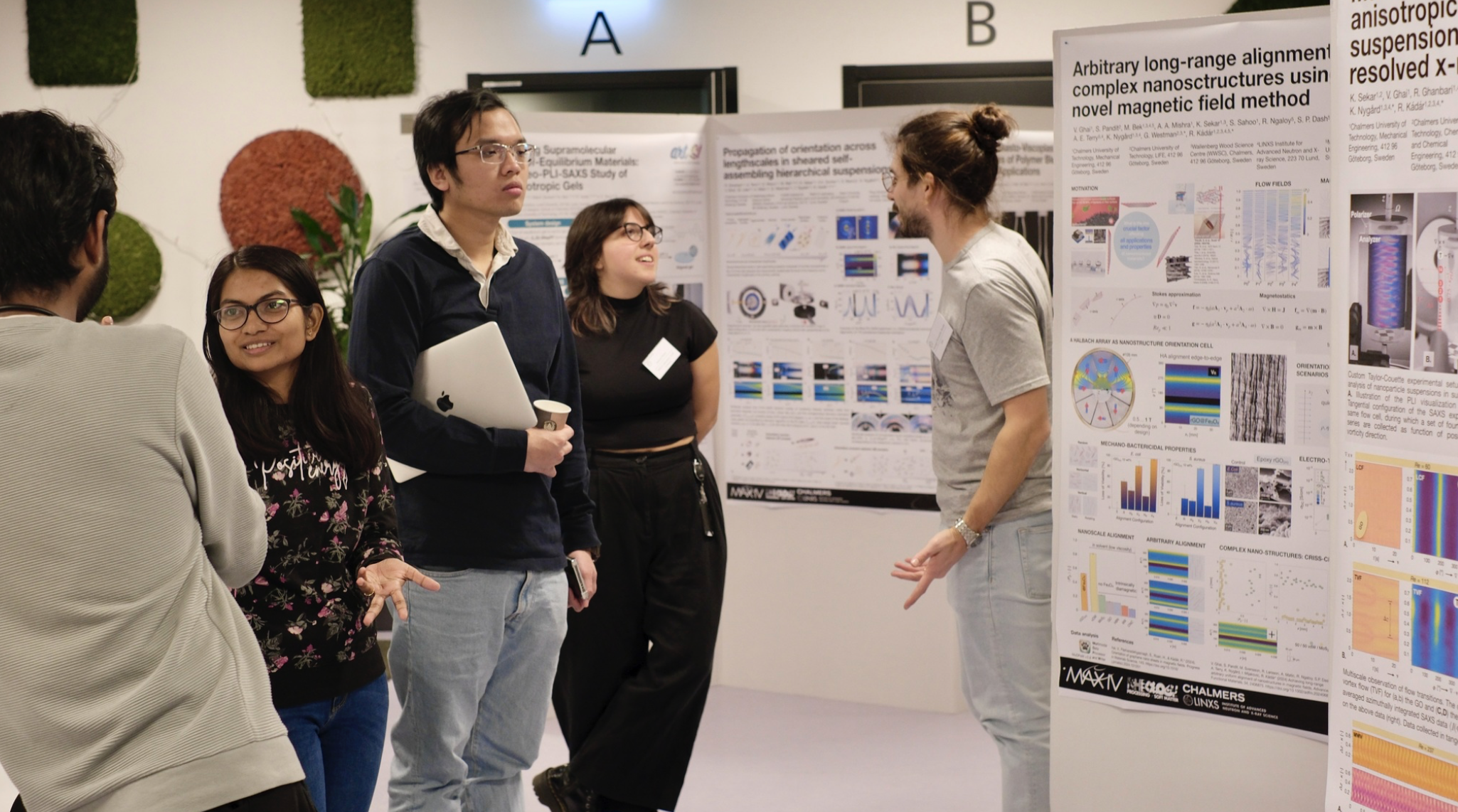
Some of the participants at the workshop in February that focused on ways to use rheometry techniques across different sectors.