
Welcome SAB Member Victoria Garcia Sakai from the ISIS Neutron and Muon Source
Victoria Garcia Sakai is a science division head at the ISIS Neutron and Muon Source in the UK, responsible for the neutron spectroscopy infrastructure. She is a new member of the LINXS Scientific Advisory Board, focusing on the area of Soft Matter.
“Ever since I first heard about the idea of LINXS, I was impressed. I remember thinking, “Bingo, that's an excellent idea.” The vision of ensuring that huge scientific investments in ESS and MAX IV translate into world-leading science and impact, by building and connecting user communities was simple yet powerful.”
Victoria Garcia Sakai is an expert in quasi-elastic neutron scattering with particularly interests in understanding the role of dynamics in the structure-dynamics-function relationships of biological macromolecules, functional polymer systems and cryopreservation mechanisms.
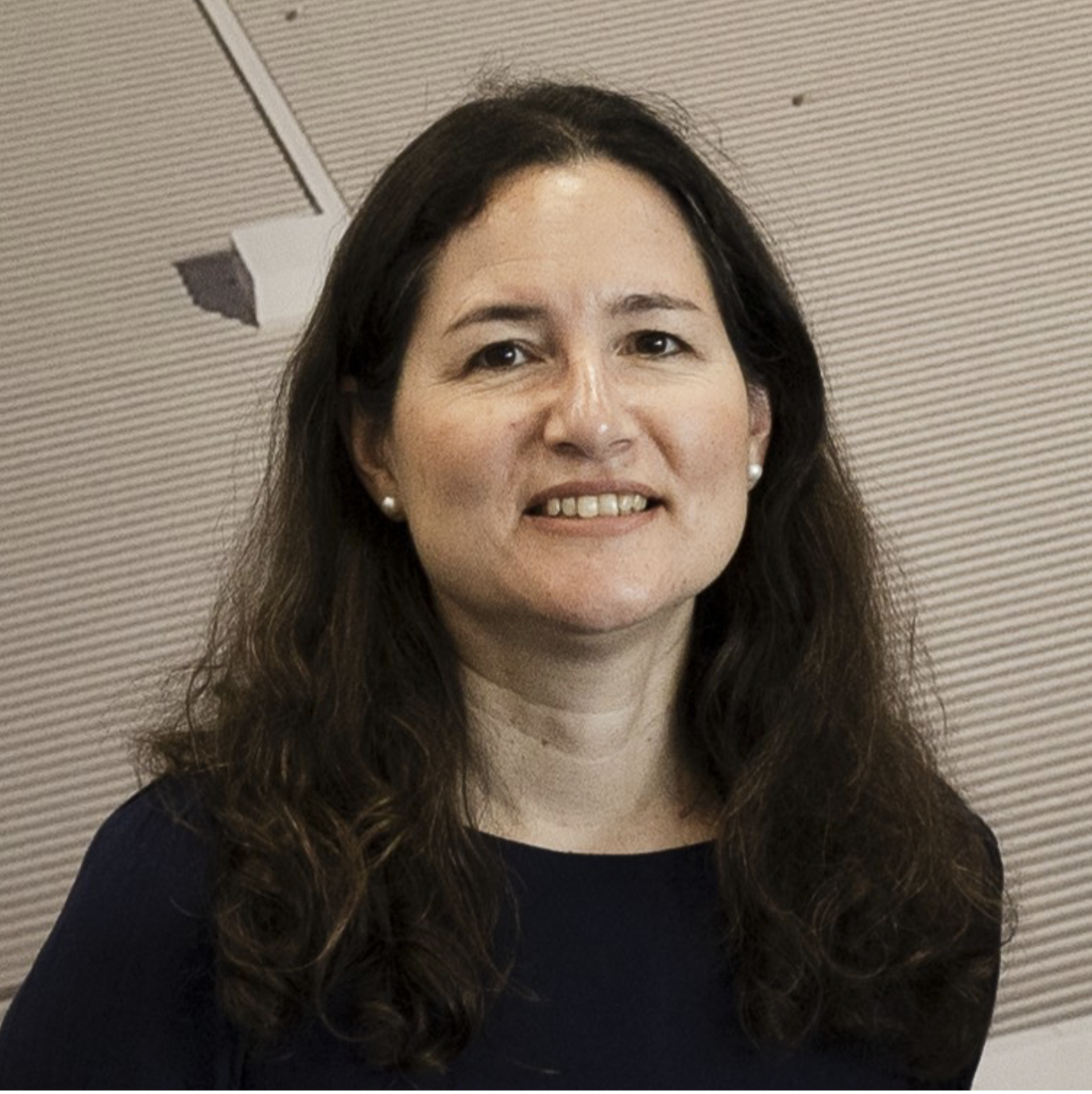
Victoria Garcia Sakai would like to see LINXS take on an even stronger role as a connector between facilities and researchers in academia and industry, across national and disciplinary boundaries. As ESS and MAXIV mature, there is an increasing opportunity for LINXS to serve as a beacon for scientific networking, education, and advocacy, she emphasises.
What is your background?
I am currently the Division Head for Neutron Spectroscopy at the ISIS Neutron and Muon Source, STFC Rutherford Appleton Laboratory, UK. A chemical engineer by training, I hold a PhD in Polymer Solution Thermodynamics from Imperial College London. I entered the world of neutron scattering during a postdoctoral appointment at The Pennsylvania State University, where I explored the synergies between quasi-elastic neutron scattering and molecular dynamics simulations in soft matter systems.
Since then, I have worked at, or been closely involved with, many of the world's major neutron research facilities. I joined ISIS in 2007 and currently hold advisory positions internationally – now Chair of the MLZ Science Advisory Board, and previously chair of the ESS Scientific Advisory Council.
I bring 25 years of experience in neutron science: as a scientist supporting research across soft matter, materials science, chemistry and the life sciences; as a leader driving the development of strategy and capabilities within the neutron community; and as an advocate committed to training the next generation of researchers and fostering strong international collaborations that enable access to, and benefit from, advanced neutron techniques.
What are your main research interests?
My research interests focus on understanding the relationship between structure, dynamics, and function in complex materials using neutron scattering techniques. A particular focus throughout my career has been the use of neutron spectroscopy, especially quasi-elastic neutron scattering, in combination with complementary approaches, to investigate dynamics systems relevant to health and life sciences, polymers and functional materials, and materials for energy and sustainability applications. I am particularly interested in understanding how molecular-level dynamics influence macroscopic properties and performance.
Furthermore, I have a strong commitment to developing new instrumentation and experimental capability that expand the scientific opportunities available to the user community.
How would you like to contribute as SAB member?
I would like to contribute both a facility perspective and a community perspective. Having spent much of my career working with neutron facilities and their user communities, I have seen first-hand how much we can learn from one another and the benefits of working more closely together. I hope to draw on those experiences to help identify opportunities where neutron and X-ray methods can have significant impact, while supporting the long-term sustainability of the communities that depend on them.
As the landscape for large-scale research infrastructures continues to evolve, maintaining expertise, attracting new users, and demonstrating the unique value of neutrons and X-rays, are challenges we all share. I would welcome the opportunity to contribute to LINXS's strategic thinking in these areas and help strengthen the connections that underpin scientific excellence.
What do you see as the value of LINXS?
Ever since I first heard about the idea of LINXS, I was impressed. I remember thinking, “Bingo, that's an excellent idea.” The vision of ensuring that huge scientific investments in ESS and MAX IV translate into world-leading science and impact, by building and connecting user communities was simple yet powerful.
LINXS provides a neutral and inclusive space that helps stimulate new ideas and collaborations, foster interdisciplinary networks, develop expertise, support education, and enable researchers from different backgrounds to work together to tackle the important scientific challenges. LINXS provides a community-driven platform enabling researchers to exploit the complementarity of these unique research infrastructures. It has clearly established itself as an internationally recognised meeting place for excellent science, and it is an honour to contribute to its continued development and success.
How would you like to see LINXS develop?
Building on its success to date, I would like to see LINXS take on an even stronger role as a connector between facilities and researchers in academia and industry, across national and disciplinary boundaries. As ESS and MAXIV mature, there is an increasing opportunity for LINXS to serve as a beacon for scientific networking, education, and advocacy.
One of the things I admire most about LINXS is its ability to foster ideas and bring people together around scientific challenges. I would like to see it continue to build on that strength, serving as an example of how research infrastructures and scientific communities can work together to achieve more than either could alone.
Read more about Victoria Garcia Sakai at the ISIS Neutron and Muon Facility website