
LINXS Science Day showcases the impact of X-ray and neutron science
The LINXS Science Day in June, attended by close to 150 people, highlighted the breadth of X-ray and neutron science currently going on at LINXS.
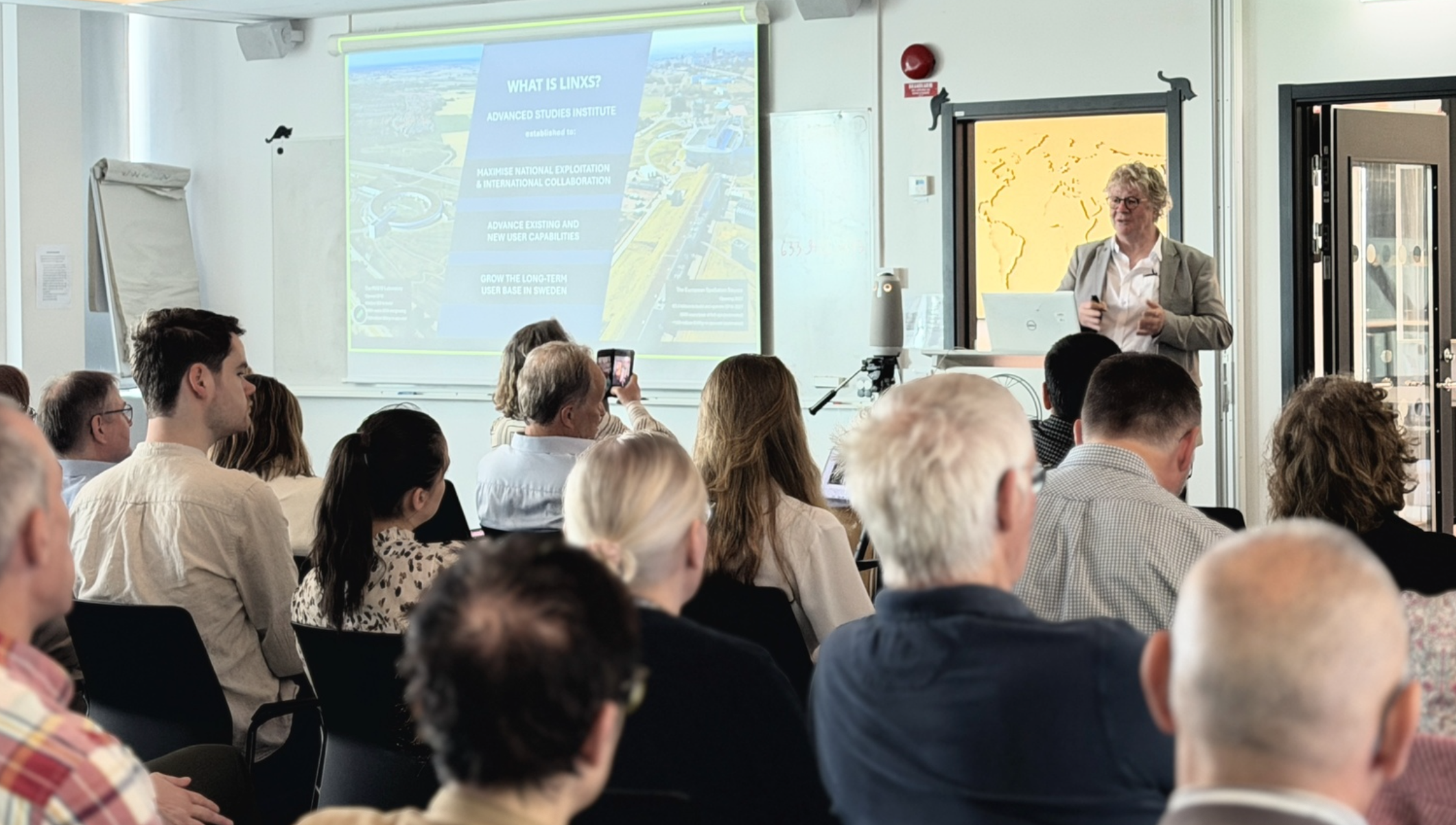
LINXS Director Trevor Forsyth opening the LINXS Science Day 2026.
“The LINXS Science Day in June was a very lively event and one of the largest Science Days ever, filling the entire premises as well as the main atrium for an extremely interesting programme of interdisciplinary science,” says LINXS Director Trevor Forsyth.
The event featured two keynote lectures: one by Ken Andersen, Director General at the Institut Laue-Langevin (ILL) in Grenoble, in France, and another by Michael Sattler, Professor at Helmholtz Zentrum Munich in Germany. LINXS’ ten scientific themes also presented their work, highlighting how X-rays and neutrons enable new discoveries and scientific breakthroughs.
“The presentations were first class and extended from quantum materials, heritage science, semiconductors, life science, chemical biology, materials processing, and soft matter, and brought out the huge impact that large-scale science infrastructures have over a range of pure and applied science,” says Trevor Forsyth.
Other participants included Joachim ‘Achim’ Schnadt, Science Director of MAX IV; Helmut Schober, current Director of ESS, and former Director of ILL; incoming ESS Director Jane Hvolbaek Nielsen; and ESS founding Director Colin Carlile.
LINXS’ position between MAX IV and ESS builds bridges
Keynote speaker Ken Andersen, Director General at the Institut Laue-Langevin (ILL), is impressed with how LINXS connects both X-ray and neutron communities.
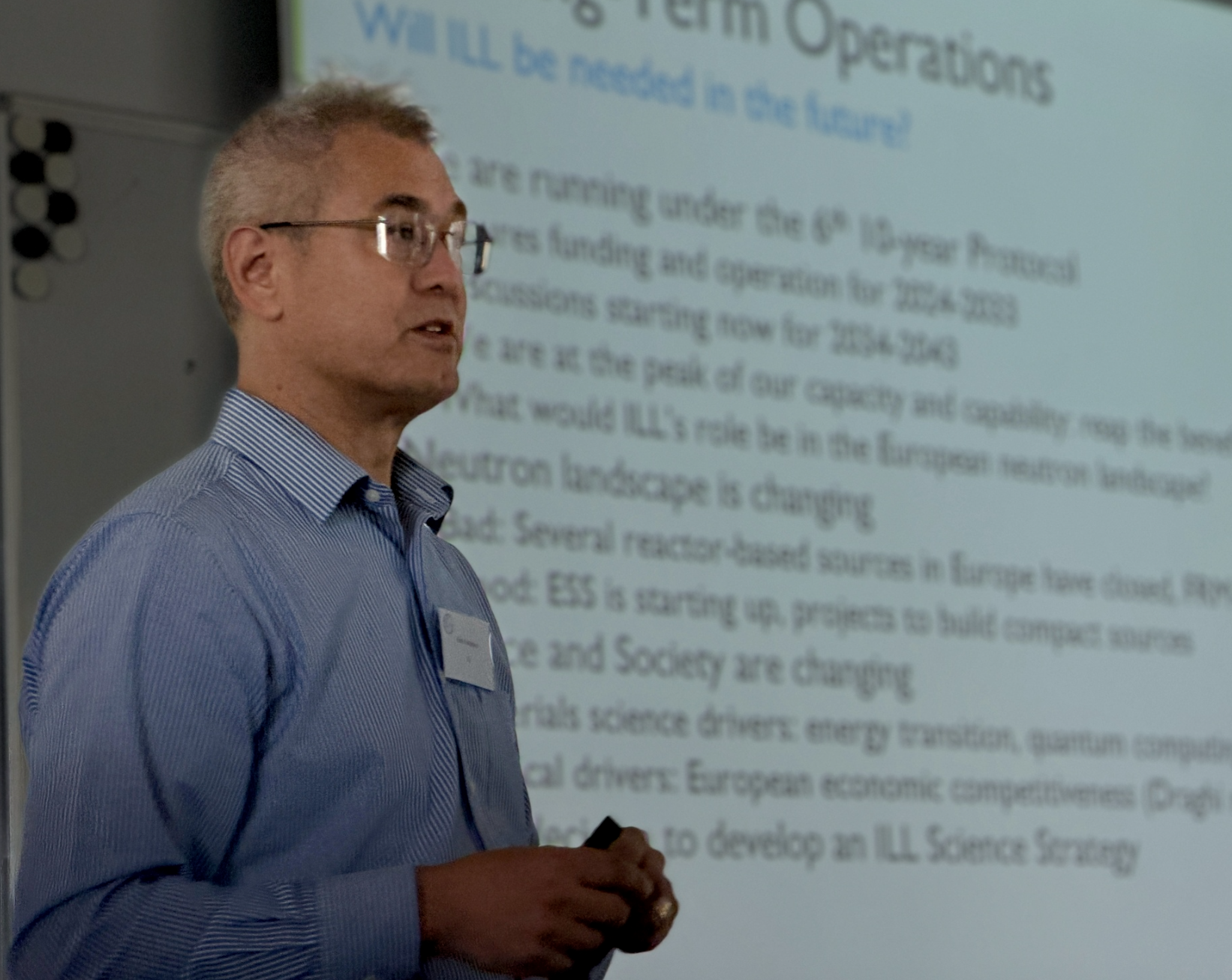
Ken Andersen giving a keynote address at LINXS Science Day.
“A construct like LINXS increases the value of the co-location of MAX IV and ESS by acting as a bridge between the facilities,” says Ken Andersen.
“ESS is about to open, and it will be interesting to see how LINXS can support collaboration between the user communities at ESS and ILL. All neutron facilities have different strengths, and it will be important to highlight their complementarity to researchers interested in using neutrons.”
Platforms for early-career researchers to meet
LINXS’ early-career researcher initiatives were also present, emphasising how they engage with scientists at the PhD and postdoctoral levels through creating strongly enabling platforms in the areas of hard matter, soft matter and life sciences.
“It is nice to see how links between LINXS’ early-career initiatives and other international activities are developing, such as the International Union of Crystallography Early Career Scientist Division,” says Trevor Forsyth.
Showcasing LINXS’ new workstations
The day ended with an interactive session showcasing LINXS’ new workstations – an initiative that has been funded by a large grant from the Crafoord Foundation. Each workstation is preloaded with analysis software for imaging, scattering, diffraction, and microscopy experiments and is free to use for all researchers working with X-rays and neutrons. The workstations are also used for targeted Data Clinics, providing support for specific techniques and methods based on researchers’ needs. The Data Clinics are hosted by invited experts.
“The participants had many questions about what can be done at the workstations,” says Martin Stankovski-Clark, senior strategist at LINXS. “It was great to highlight the different options for analysis and pre-processing.”
“There was also a great deal of interest in our Data Clinics. It will be exciting to develop this concept further together with the community. Our ambition is to help reduce the time it takes between experiments and publication by supporting users in analysing and processing their data.”
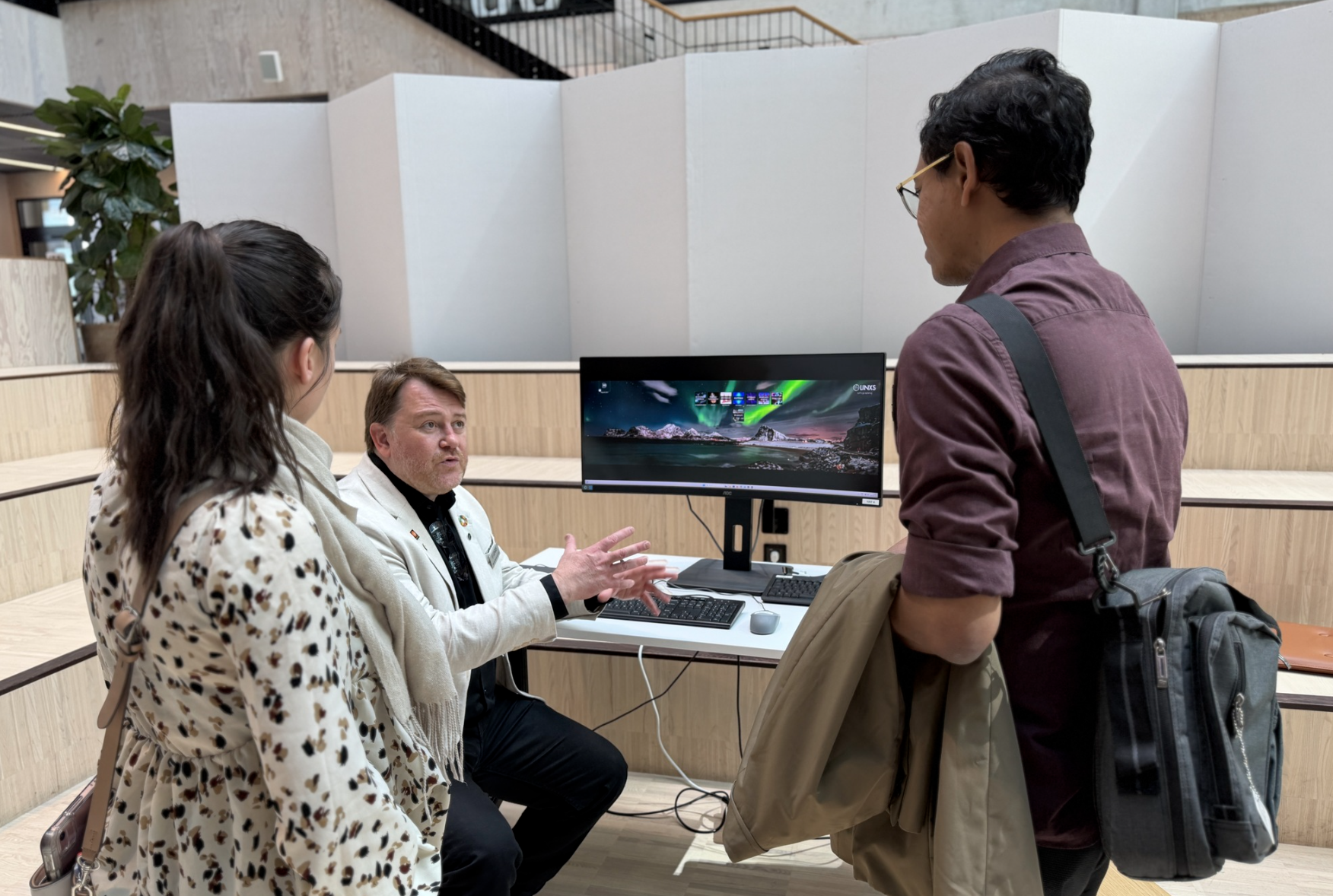
Martin Stankovski-Clark in conversation about LINXS workstations.