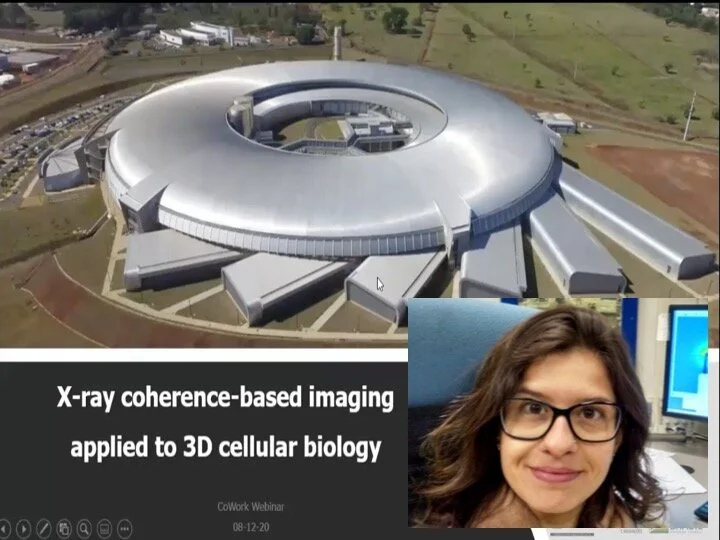
VIDEO - CoWork series - X-ray coherence-based imaging applied to 3D cellular biology, with Carla Cristina Pólo

X-ray coherence-based imaging comprises several powerful techniques which allow investigations in the different scientific fields, including biology and life sciences. The non-crystalline nature of such samples can be explored by coherent diffractive imaging (CDI) and ptychography and cellular…

Read More
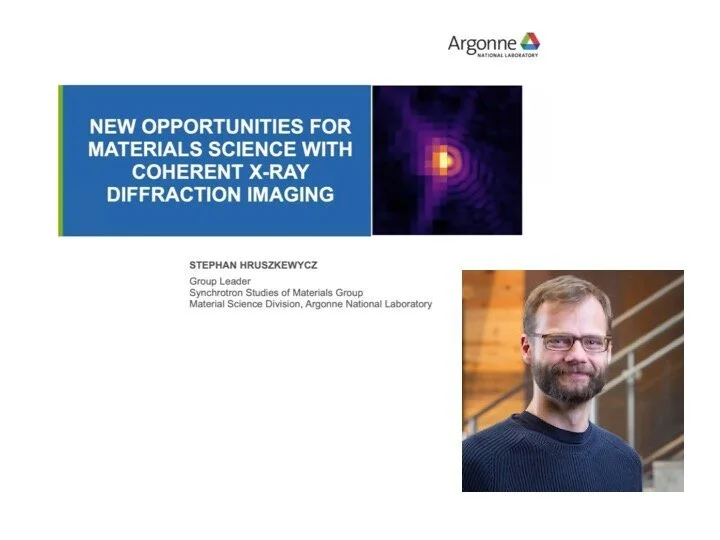
VIDEO - CoWork series - New opportunities for materials science with coherent x-ray diffraction imaging, with Stephan O Hruszkewycz

Recent progress in 3D coherent x-ray diffraction imaging methods can enable high resolution structural imaging of nano-structured crystalline materials. In this talk, I discuss developments in Bragg coherent diffraction imaging (BCDI) and Bragg ptychography that aim to broaden the envelope of…

Read More
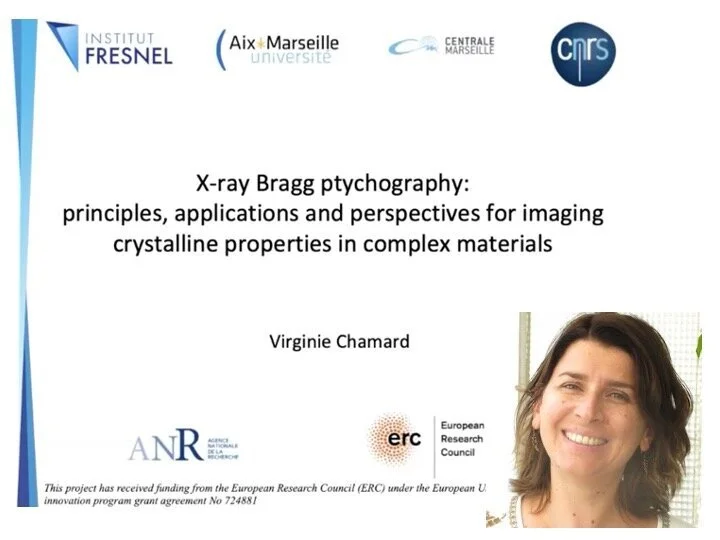
VIDEO - CoWork series - X-ray Bragg ptychography: principles, applications and perspectives for imaging crystalline properties in complex materials, with Virginie Chamard

In this presentation, I will first review the principles of the Bragg ptychography approach, before detailing a selection of scientific results obtained with this novel crystalline microscopy. I will finally discuss some exciting perspectives opened by the advent of the fourth generation…

Read More
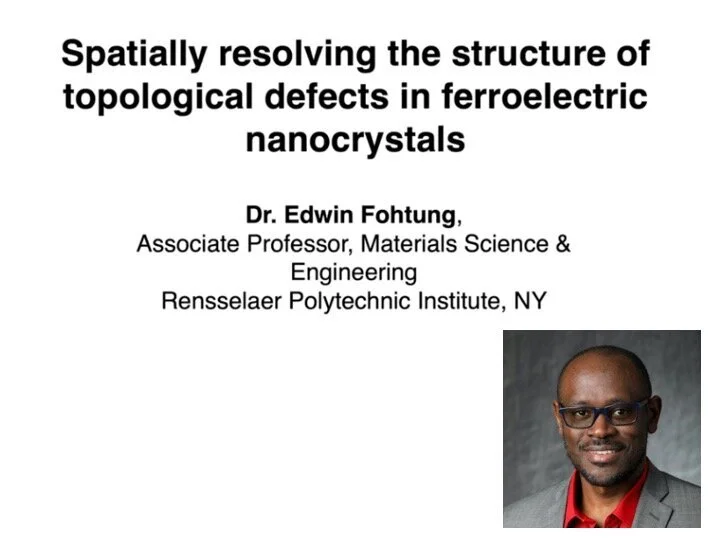
VIDEO - CoWork series - Spatially resolving the structure of topological defects in ferroelectric nanocrystals, with Edwin B. Fohtung

There has been much interest in topological defects of spontaneous polarization as templates for unique physical phenomena and in the design of electronic devices. Experimental investigations of the complex topologies of polarization have been limited to surface phenomena, which has restricted the…

Read More
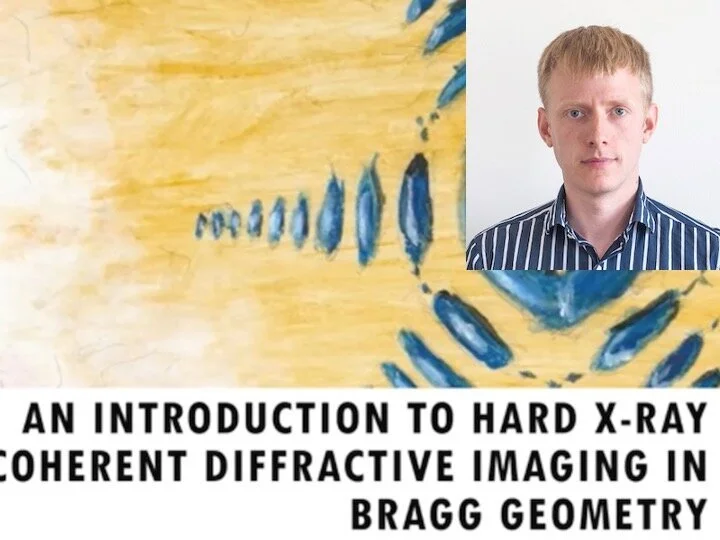
VIDEO - CoWork series - An Introduction to hard X-ray Coherent Diffractive Imaging in Bragg geometry and quantitative phase retrieval, with Dmitry Dzhigaev

Coherent Diffraction Imaging in Bragg geometry is used to study crystalline samples to access, along with morphology, also information on strain fields, defects and other atomic -scale features. This webinar will focus on the following points..... * the basic concepts of the technique and data…

Read More
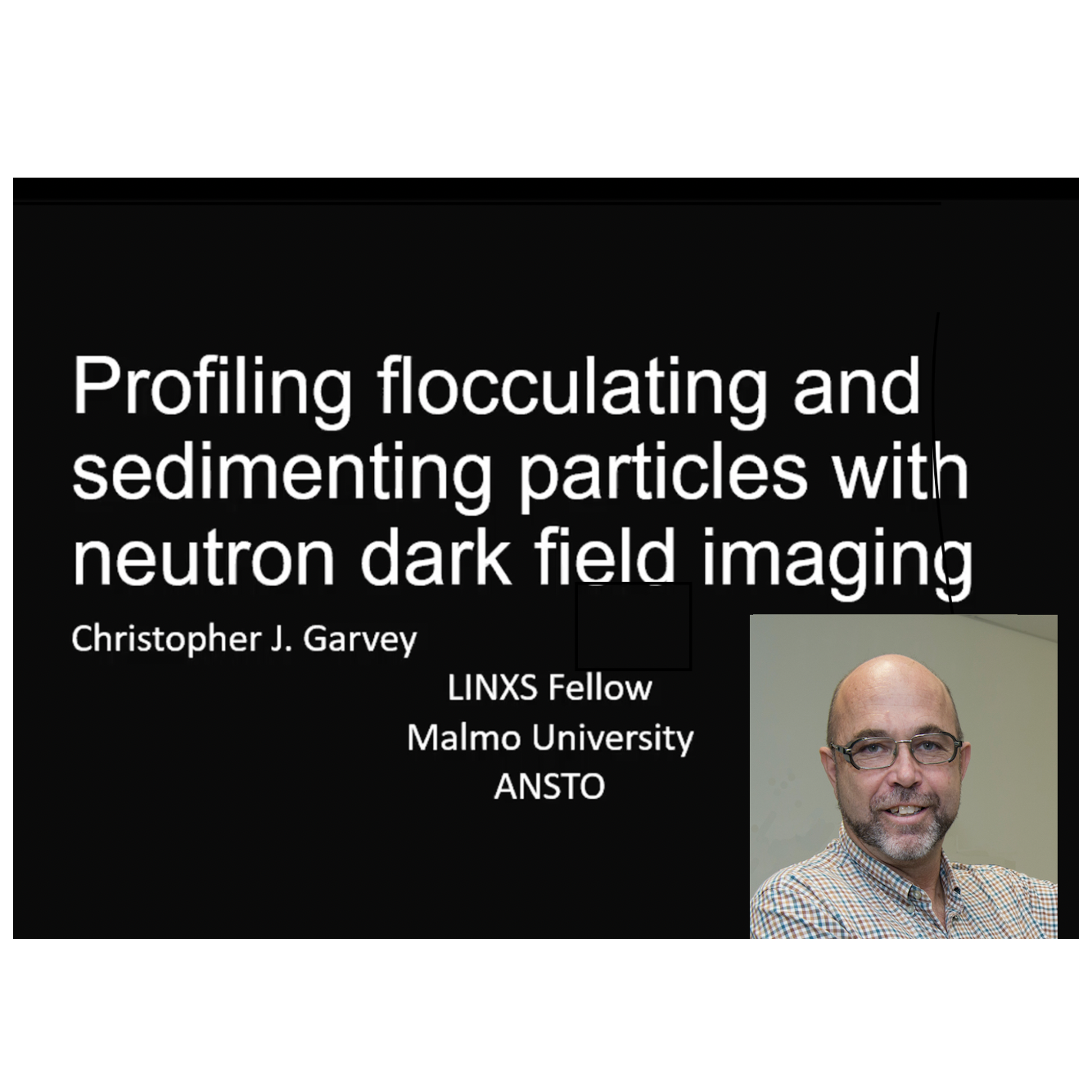
VIDEO - Profiling flocculating and sedimenting particles with neutron dark field imaging, with LINXS Guest Researcher Chris J Garvey

Flocculants are usually polymeric molecules which cause the aggregation of particles in suspensions and will modify the sedimentation of particles. The gravitational field and the hydrodynamics of the aggregates result in a situation where larger aggregates sediment more quickly for less efficient…

Read More
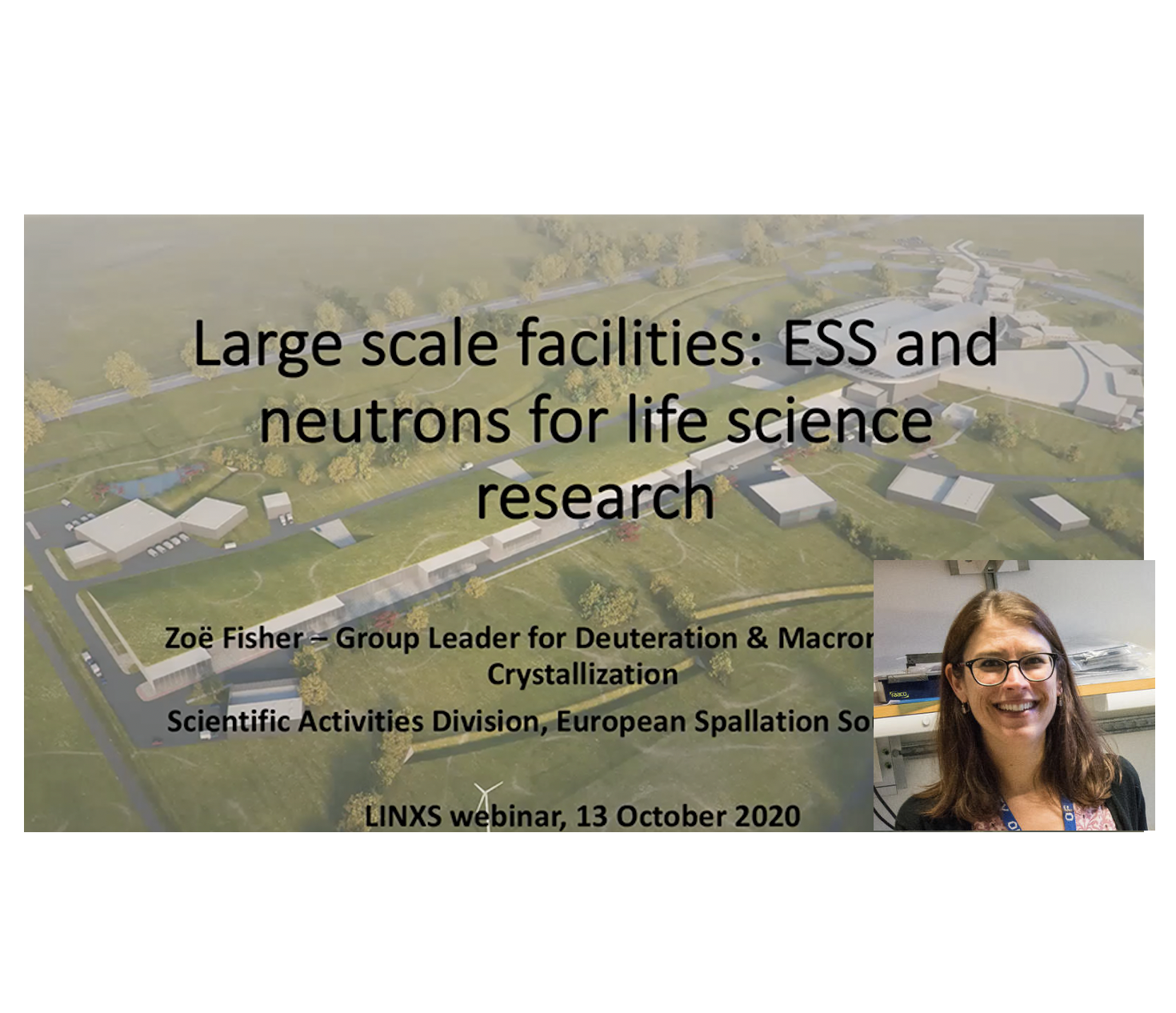
VIDEO - Webinar series: Let's Dive into the Atoms! - Large scale facilities: neutrons for life science research, with Zoe Fischer

Neutrons are powerful probes for the study of biological samples as they are very sensitive to hydrogen(H)-rich materials and can discriminate between isotopes of the same element. Due to this property of neutrons, they can be used to observe hydrogen and it’s isotope, deuterium in materials. To…

Read More
VIDEO - Webinar series: Let's Dive into the Atoms! - Supra and Sub molecular investigation of pathology tissues by X-ray scanning microscopy, with Cinzia Giannini

Video lecture on LINXS YouTube - watch the video at YouTube.com Speaker: Cinzia Giannini, National Research Council, Bari This webinar is part of LINXS webinar series, Let's Dive into the Atoms. The aim is to create a fundamental understanding of how you as a researcher can use x-rays and neutrons…

Read More
VIDEO - CoWork Series - Introduction to coherent X-ray imaging, with Prof. Pablo Villanueva-Perez

This webinar presents the fundamentals behind coherent X-ray imaging techniques that exploit the high-brilliance provided by X-ray free-electron lasers and diffraction-limited storage rings. For such purpose, we will introduce the fundaments of i) interactions of X-rays with matter, ii) coherence…

Read More
VIDEO - Webinar series: Let's Dive into the Atoms! - EasyDiffraction: New easy-to-use software for analysis of diffraction data, with Andrew Sazonow

The efficient use of X-ray and neutron diffractometers is often hindered by complicated data analysis software that creates barriers to entry for novice users and may even reduce efficiency for advanced users. The talk presents easyDiffraction, a software developed to interface with a very wide…

Read More
VIDEO - Webinar series: Let's Dive into the Atoms! - Small Angle Scattering Data Analysis with SasView, with Wojciech Potrzebowski

SasView is an open source, collaboratively developed software for analysis and modeling of small angle scattering (SAS) data. The core functionality of SasView includes fitting of model functions, pair-distance distribution function inversion, model-independent analysis and correlation function…

Read More
VIDEO - Webinar series: Let's Dive into the Atoms! - Science and data analysis at the European Spallation Source, with Thomas Holm Rod

After an introduction introduction to neutron scattering and the ESS, the challenges associated with providing scientists with appropriate tools to analyze their data from ESS is discussed together with a discussion on how the demand for reproducible results, FAIR data, and the promotion of the…

Read More
VIDEO - Webinar series: Let's Dive into the Atoms! - Beyond the E0 state of nitrogenase: Spectroscopic studies of Intermediates in biological dinitrogen reduction, with Serena DeBeer

The conversion of dinitrogen to ammonia is a challenging, energy intensive process, which is enabled biologically by the nitrogenase family of enzymes. The Mo-dependent nitrogenases contain two cofactors, the 8Fe-8S P-cluster and the Mo-7Fe-9S-C iron-molybdenum cofactor, known as “FeMoco”, which is…

Read More
VIDEO - Webinar series: Let's Dive into the Atoms! - How to exploit chemical sensitivity in X-ray spectroscopy, with Pieter Glatzel

Matter absorbs and scatters X-rays. Spectral analysis of the X-rays reveals a wealth of information about the electronic structure of the X-ray absorbing element (the analyte). Pieter Glatzel explains the mechanisms that lead to the chemical sensitivity and show how they influence the spectral…

Read More