
Erik van Loon: “X-ray and neutron capabilities in Sweden offer exciting possibilities for probing quantum effects in solids”
Erik van Loon is an associate senior lecturer at Mathematical Physics at Lund University and a member of LINXS QMat theme. In February, he co-organised a workshop on how neutron and X-ray techniques can reveal quantum correlations and electronic topology in quantum materials.
“We wanted to connect theorists and experimentalists working on quantum materials to discuss ways in which the interesting new physical effects predicted by theories can be detected, especially with neutron and X-ray techniques,” says Erik van Loon.
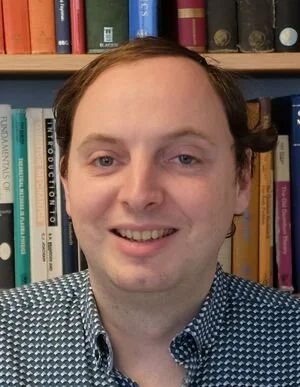
Erik van Loon reflects that it was great to see the constructive discussion between the two sets of scientists – the theorists and the experimentalists.
Creating platforms where scientists can explore how to experimentally validate theoretical concepts is important to advance the field, explains Erik van Loon. Many predictions, relating for example to wavefunctions and their entanglement, or to quantum geometry, are formulated in terms of abstract models and concepts.
“These concepts are not always what is directly accessible in a real X-ray or neutron experiment, even though there are successful cases of making these connections”, says Erik van Loon.
During the workshop, they highlighted these cases as an inspiration and departure for further discussion. One example is the angular-resolved photo-emission experiments for topological electronic structures. Another is the recent experiments on altermagnetic materials that have been performed at MAX IV.
“We also discussed possible approaches for areas that are more difficult. One such area is so-called odd-frequency superconductivity, where a big challenge is that there is not yet a way to do an experiment that gives direct "smoking gun" evidence that a material is an odd-frequency superconductor.”
Goal: to create connections beyond the theme to advance the field
To ensure active participation, Erik van Loon and the organising group included a number of "lightning talks" where each workshop participant had five minutes to introduce their research. The participants in the lightning talks ranged from undergraduates who were just starting their thesis project to someone weeks away from retirement.
“Our aim was to create connections beyond this event, and even beyond the theme itself. By actively engaging participants to share their work, we can make it easier for people to strike up conversation with each other.
Erik van Loon reflects that it was great to see the constructive discussion between the two sets of scientists – the theorists and the experimentalists.
“The event confirmed our sense that the new X-ray and neutron capabilities in Sweden offer exciting possibilities for probing quantum effects in solids. It was particularly nice to meet theory researchers who had not previously had the opportunity to engage with these particular experimental techniques.”
Opportunities for collaboration
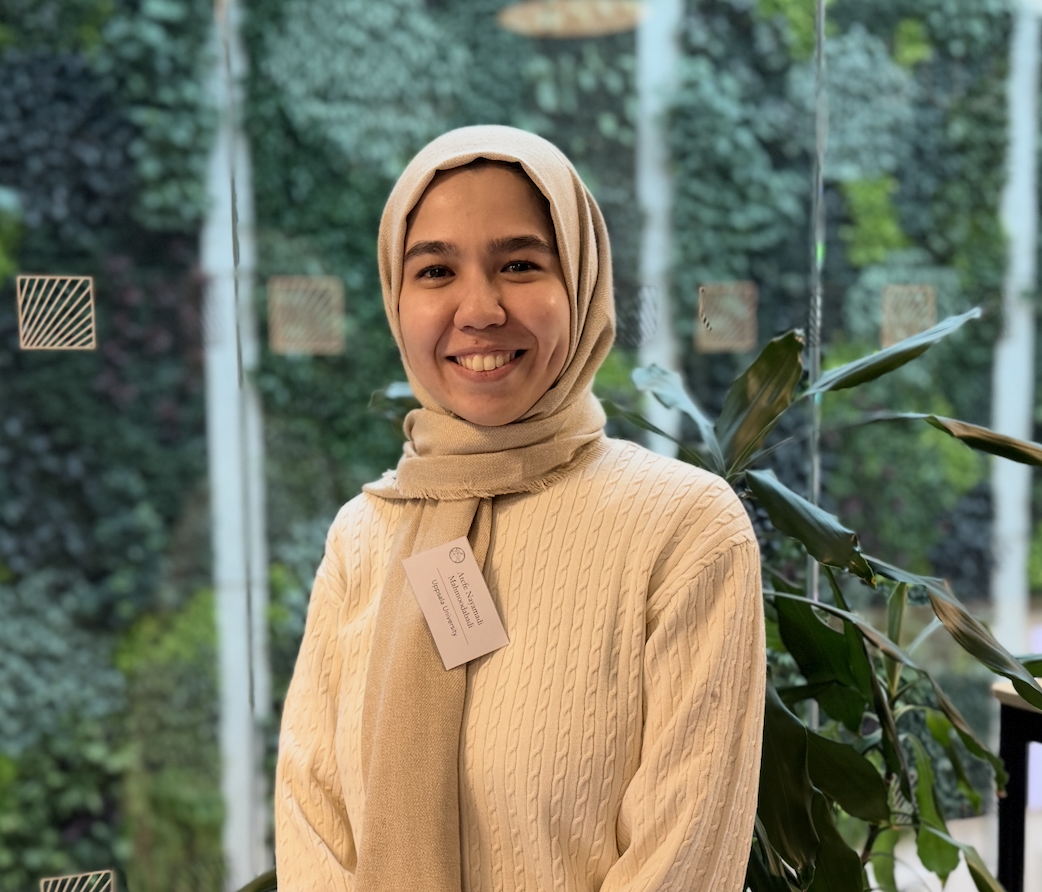
Atefe Nayamadi Mahmoodabadi is a postdoctoral researcher at Uppsala University, exploring how to use dynamical mean-field theory and machine learning to understand magnetic materials.
Atefe Nayamadi Mahmoodabadi was one of the partcipants at the workshop. She is a postdoctoral researcher at Uppsala University, exploring how to use dynamical mean-field theory and machine learning to understand magnetic materials. She came to Lund for the event, having just arrived in Sweden two months ago to start her postdoc.
"It was my PI who encouraged me to register," Atefe explains. "I had just come to Sweden and didn't know about MAX IV and ESS, so that was interesting in itself."
After reviewing the programme beforehand, she doubted the topics would relate to her research, but the workshop proved to be highly beneficial.
"Coming here, I found some connections between the talks and my own work! It is nice to realise how easily collaborations can be formed with people outside my own field. You may have quite a lot in common even if you're not working on exactly the same topics."
The workshop has already led to concrete opportunities. Atefe Nayamadi Mahmoodabadi now sees how she could use the MAX IV and ESS facilities in her research, and she has even started discussions about a possible collaboration with one of the speakers, who is an experimentalist, whereas she is a theorist.
"You do not always meet naturally, so this event was really great from that perspective. It will be really cool if an experimentalist can test some of my results."
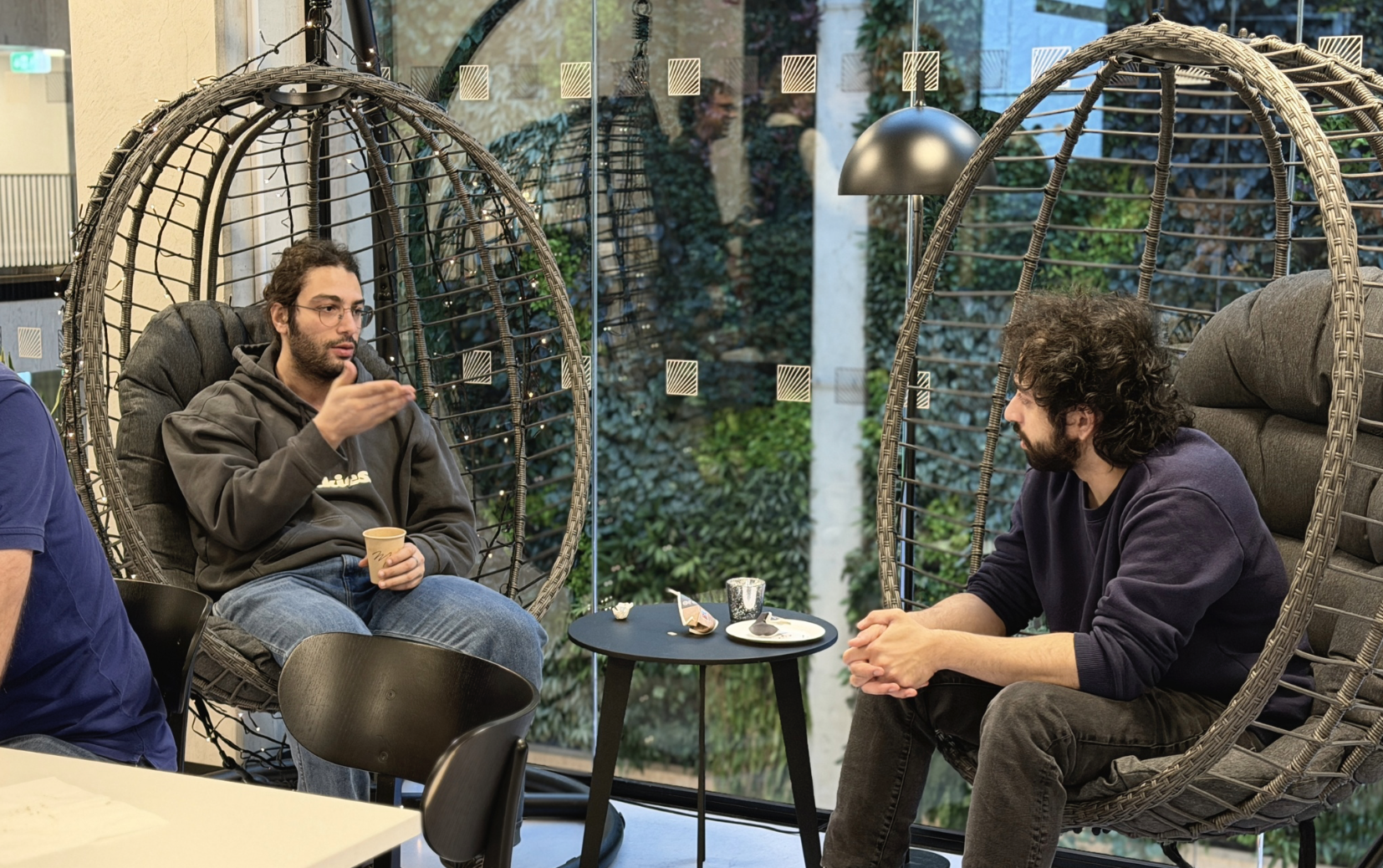
The workshop gathered researchers working with quantum theory and experimentalists with experience from large-scale infrastructures such as MAX IV and ESS.